
































![A Ledger of the Soul: Navigating the Allah-Bhagavant Nexus in a 19th-Century Puruṣākāra Jñāna Caupara [Gyan Chauper]](https://counterpointbd.com/uploads/images/202608/image_430x256_6a93baa3b09a7.jpg)




















The Elephant in the Room
That the stability and sustainability of Bangladesh’s renewed tryst with democracy will depend on how maturely Tarique Rahman deals with the thorny issue of Sheikh Hasina and the Awami League.
In my earlier writing I had referred to the political presence of the AL as the elephant in the room. It loomed large but no one in the political spectrum was willing to talk about it.
Now that the elections to the 13th Sangsad have been peacefully concluded the elected regime can hardly afford to continue ignoring the presence of the elephant which still looms.
The AL was embargoed by the Interim Government (IG) from participating in the February 12 elections. This was legally questionable since the AL as a party had not been banned. Under an executive order of the IG it had prohibited the AL from participating in any political activity.
The order did not clarify whether the ban precludes the AL from contesting any election, applies only to outdoor activity or it also extends to AL members meeting in their office or even a private residence for a political or even a social conversation.
Many from the AL leadership, a large number of their rank and file and a number of fellow travelers from the buddhijibi or professional community, have been kept in detention for over much of the lifetime of the IG. The charges in most cases related to tendentious allegations of ‘murder’ of protestors during the July uprising.
In reality few of those detained murdered anyone or were anywhere near the killing of protestors. As a result no case has been prepared and filed by the police over the last year against most of those detained, nor have their bail petitions been accepted by an as yet far from independent judiciary.
A small number of the senior AL members have been charged, along with Sheikh Hasina, for ‘crimes against humanity’ which implies that they were directly or indirectly involved in ‘command’ positions where they aided and/or abetted in the direct killing of protestors.
The trials of Sheikh Hasina and her Home Minister, Asaduzzaman Khan Kamal, have been completed and both have been convicted and sentenced to death by the Tribunal for their direct involvement with the mass killings during the protests.
The case against a few of those AL leaders charged with abetting the killings continues but charge sheets against most of those accused of ‘war crimes’ remain under preparation with only a few exposed to the trial process.
AL’s Invisible Presence in the Election
Prior to the February 12 election a multitude of rank and file AL leaders and workers at various levels who had neither committed any act of violence against anyone during July/August or have been accused of any wrong-doing remained embargoed from any political activity.
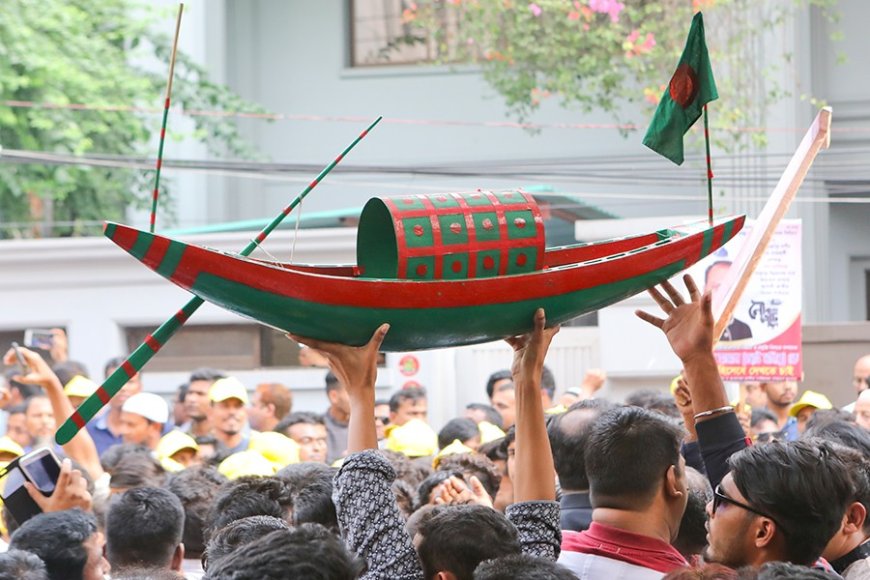
AL members could thus neither file nominations for elections nor formally seek the electoral symbol of the nouka to contest elections. Some AL members who had contested the elections to the 12th Sangsad as independents were forcibly discouraged from filing nominations.
As a result of AL’s absence, millions of AL voters were effectively disenfranchized from voting for a party of their choice in the 12th February election.
Sheikh Hasina issued a call from her refuge in Delhi to AL supporters not to vote in the election. This was possibly observed by around 20% of the electorate. This number is based on the evidence that in the last competitive elections held under a Caretaker government in 2008, 87% of the electorate voted, compared to 60% who voted in the 12th February election.
It is further presumed that at least 10/15% of votes cast for the victorious BNP in this election may have originated from traditional AL voters who, in the absence of the AL from the poll, voted for the BNP with the express objective of keeping the Jamaat-e-Islam (JI) out of power.
More concrete evidence for this is provided by the comfortable victory of BNP candidates in traditional vote bank areas for the AL, particularly among religious minorities.
Interestingly, some BNP leaders of consequence claim that in some constituencies the JI victory and their elevated vote share owed to AL voters keen to defeat the BNP candidate!
Either way there is evidence of AL votes being strategically exercized in the 12 February elections.
From those rough numbers, it could be argued that anything upto a third of the voters still remain ready and willing to vote for the AL if given the opportunity. However, this remains an estimate, until more definitive evidence to the contrary can be generated through more intensive electoral analysis.
In the absence of the AL from the ballot box both the BNP and the JI enhanced their electoral presence in the 13th Sangsad. A three way contest involving the AL, BNP and JI in direct competition with each other would have reduced the majority of the BNP, cut down the JI’s seats in the Sangsad and may even have ended in a hung parliament.
Coming Out of the Closet
Beyond the official embargo on AL political activity, one of the more substantive factors in explaining the invisibility of AL activists from the political landscape remains the threat of violence by sundry ‘extremist’ constituencies as also a section of the BNP acting at the local level.
The party with the strongest antipathy to the AL, the JI, have not publicly sought to exclude the AL from the political scene, but may be less publicly active in creating pressure to keep the AL out of the game.
As a major electoral beneficiary from AL’s absence the JI’s position is understandable.
It is not to be ruled out that many extremist proxies may have been encouraged by the JI to use violence to keep the AL off the streets and out of the polls.
The IG, led by their Home Minister, adopted a policy of arresting AL members whenever they appeared anywhere on the streets under his program of ‘devil hunt.'
The fact that thousands of AL activists could have, in spite of the risks of violence and arrest, been kept off the streets for so long reflects poorly on its leadership.
Along with Sheikh Hasina, a large number of prominent AL figures have abandoned their wards and remain ensconced as refugees, mostly in India but also across the globe.
No guidance has been given to party members as to how they should conduct themselves. Within this unsettled milieu, the AL workers, abandoned by their leaders, have been left to fend for themselves which they have done by staying at home, seeking shelter from the BNP and even the JI.
Only a few intrepid souls have made public appearances and been instantly arrested by the police during the IG tenure. Under the post-election dispensation some AL members have begun opening offices in various districts but this too appears to have also been embargoed by the BNP and attempts by the AL to appear on the streets have invoked arrest.
While the police continue to detain AL workers appearing in public places the BNP has yet to make up its mind about how to deal with the AL.
Under the IG, AL members at the local level may have sought shelter with the BNP during the IG and voted for them in the elections.
With the BNP now in power, there is less need to look out for AL support. Many BNP activists who had been locally victimized by the AL over 17 years may feel inclined to seek payback from their former oppressors.
At the leadership level there is a recognition within the BNP that the AL will need to be brought back into the political process. They are still unsure when and how to manage this.
How Tarique deals with the AL may also in some measure impact on his relation with India.
Mending Fences
Much obviously depends on Sheikh Hasina whose authoritarian regime not only overshadowed the country, but extended to her party where not a mouse stirred without her say so.
She neither permitted nor nurtured any succession process nor did she encourage local party leaders to exercise any political authority.
The immediate retreat of the AL may indeed owe to the repressive regime which it faced under the IG, but that is no excuse for one of the oldest political parties in South Asia to have sunk into immobility with thousands of workers distributed across the country.
While Sheikh Hasina may hold the fate of the AL in her hands she is herself no longer a free agent as long as she depends on the hospitality of PM Narendra Modi.
Since the arrival of Hasina in Delhi, the Modi government had much difficulty in digesting the political eclipse of a leader and party with which they had maintained cordial relations for 17 years.
As a consequence, the government of India (GoI) had maintained cool, bordering at times on unfriendly, relations with Prof. Yunus and the IG.
This appears to have changed in the aftermath of elections in Bangladesh.
In contrast to its dealings with the IG its approach to Tarique Rahman and his newly-elected government is distinguished by its warmth. This was demonstrated, even before the election, by the effusive condolences conveyed to Tarique by Modi at the passing of Khaleda Zia.
Modi’s latest warm greetings to Tarique on his election, backed by an invitation to visit India along with his wife and daughter, remains in conspicuous contrast to his unwillingness to deal with Prof. Yunus.
Further gestures of cooperation by the GoI have been expressed by its decision to hand over two murderers, involved in the killing of Osman Hadi prior to the elections, who had taken shelter in West Bengal.
A further gesture has been made through the promise of prioritizing delivery of diesel supplies from India to help Bangladesh cope with its ongoing fuel crisis as a consequence of the war waged on Iran.
It is clear that India would like to re-build its fraught relations with Bangladesh, but they can hardly be oblivious to the elephant who is now residence in their guest room.
The GoI are mindful of their long standing cordial relations with Sheikh Hasina but have presumably realized the hazards of such a one-sided relationship.
If a meaningful and sustainable relationship is to be constructed with the BNP regime, the Modi regime will have to re-define their position towards Sheikh Hasina.
This, in turn, may be premised on Tarique Rahman re-defining the place of the AL in Bangladesh so that it can participate once again in the democratic process.
For this to happen, a number of bridges will need to be crossed beginning with the fate of Sheikh Hasina. This would need to address the issue of her conviction for her role in the killings of July/August.
Of more relevance to the course of Indo-Bangladesh relations would be Hasina’s willingness to relinquish her hegemony over the AL and withdrawal from the political scene in Bangladesh.
It is only when Sheikh Hasina relinquishes her hold over the AL that any realistic policy may emerge for the party to reconstruct and reposition itself within the new democratic process.
It can be argued in conclusion that the stability and sustainability of Bangladesh’s renewed tryst with democracy will depend on how maturely Tarique Rahman deals with the elephant in the room.
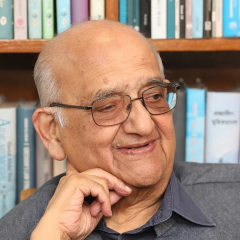
Rehman Sobhan is an eminent economist and founder of the Centre for Policy Dialogue (CPD).