































































How to Tackle the Energy Crisis? Hint: Not Like This.
A month into the conflict, we have yet to see any meaningful adjustment in fuel prices. Even as international crude prices have skyrocketed, the domestic market remains insulated, standing in stark contrast to almost all other Asian nations, including our neighbors, which have already implemented price hikes.

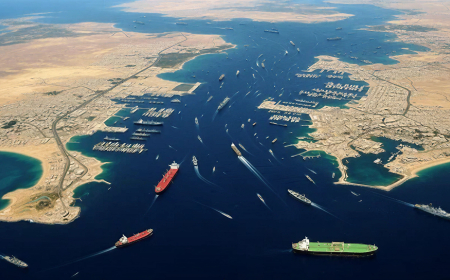
It was entirely predictable that the onset of the Iran-Israel conflict would send shockwaves through the global energy market. With supply chains disrupted,particularly through the Strait of Hormuz, global crude oil prices have nearly doubled.
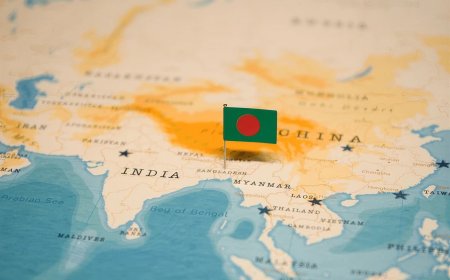
Bangladesh imports roughly 95% of its fuel, almost all of it from the Middle East. Consequently, for an import-dependent economy like ours, this regional war has rapidly escalated into a national crisis.
This crisis, however, is not unique to Bangladesh. Almost every nation relies on Middle Eastern energy to some degree, and our neighbors are grappling with similar challenges. Yet, compared to most of our neighbors, let alone the developed world, Bangladesh’s economic resilience and energy security remain fragile. This underlying weakness makes the current shock far more severe for us.
Despite this, the government’s response thus far lacks a sense of urgency. A month into the conflict, we have yet to see any meaningful adjustment in fuel prices. Even as international crude prices have skyrocketed, the domestic market remains insulated, standing in stark contrast to almost all other Asian nations, including our neighbors, which have already implemented price hikes.
The Cost of Unsustainable Subsidies
To be fair, the government’s reluctance is not entirely unfounded. A spike in fuel prices triggers inflation across the board, affecting everything from food to transportation. This disproportionately hurts low-income citizens.
However, while shielding them is a valid goal, keeping prices artificially low across all sectors also subsidizes the affluent, leading to a massive waste of state resources. Ultimately, the burden of these colossal subsidies falls back on the ordinary taxpayer.
The sheer scale of this waste is staggering. Throughout March, diesel was sold domestically at 100 Taka per liter, while it cost the Bangladesh Petroleum Corporation 189 Taka. Octane retails at 120 Taka against an actual cost of 150 Taka. If this trajectory continues, the Energy Minister estimates the government will bleed an additional 310 billion Taka by June 2026.
If this subsidy were exclusively targeted at low-income households, agriculture, or critical sectors, it might be justifiable. Under the current blanket system, however, it is entirely unsustainable.
Regional Comparisons and Smart Rationing
This is why India’s approach of sector-specific price adjustments is instructive. Rather than placing the burden directly on low-income earners, the Indian government selectively raised prices on premium fuels and bulk industrial supplies. State-owned oil companies increased premium fuel prices by 2 to 3 Rupees per liter, while keeping standard petrol and diesel prices stable for everyday consumers. Essentially, those who can afford luxury vehicles bear the cost, protecting public transit and agriculture. Meanwhile, 'bulk diesel' sold to large industries and commercial enterprises saw a price hike of roughly 25%.
Conversely, Pakistan, burdened by a severe foreign exchange crisis and strict IMF mandates, took a drastic route. Within a week of the war’s outbreak, Islamabad hiked fuel prices by up to 55 Rupees per liter, triggering a severe cost-of-living crisis and widespread public outrage.
Bangladesh, too, is only just beginning to recover from the economic wreckage left by the previous Awami League administration.
It is inevitable that we will not be able to freeze fuel prices for much longer. While we must avoid Pakistan's extreme shock therapy, we can adopt India's nuanced strategy: Aligning the price of octane -- predominantly used in private vehicles -- with global markets, while capping increases on the diesel that powers our public transport and agricultural sectors.
Beyond market-driven pricing, there are innovative, non-market strategies to consider. Following its unprecedented economic collapse in 2022, Sri Lanka successfully leveraged technology to manage its fuel supply. They introduced the National Fuel Pass, a QR-code-based digital rationing system that allocated weekly quotas for specific vehicle types. This initiative not only curbed hoarding but effectively eliminated the black market and the agonizing queues at gas stations.
Other nations are also adopting behavioral and administrative measures. Some are moving to four-day workweeks to conserve energy. In Thailand, office workers are encouraged to swap suits for T-shirts to reduce the need for air conditioning, alongside mandates to keep government office temperatures at 26-27 degrees Celsius. Vietnam has curtailed domestic flights and expanded work from home policies, while large tech companies are urging employees to bring packed lunches to save the LNG used in corporate cafeterias.
The Limits of Law Enforcement in Economics
While Bangladesh has floated similar ideas, the government’s primary strategy still relies on unsustainable subsidies and heavy-handed administrative crackdowns. Neither approach is viable long-term.
Prolonged, massive subsidies will inevitably drain our national reserves. Meanwhile, to combat hoarding and artificial shortages, the government has deployed police force and mobile courts. Nearly 300 mobile courts are currently scouring the country, handing out fines and jail sentences for fuel hoarding.
Deploying law enforcement to police markets is a tired and ineffective playbook in Bangladesh. Whenever prices rise, the default narrative from authorities and the media is that a syndicate of greedy businessmen is manufacturing an artificial crisis.
The prevailing logic assumes that arresting these 'criminals' will magically stabilize prices. We saw this repeatedly during the Awami League era: Police raids and harsh penalties aimed at controlling prices. Yet, every single time, these measures failed, often exacerbating the very crisis they sought to solve.
When a market faces a genuine supply shortage and the government enforces artificial price caps, the natural economic response is to hoard goods in anticipation of future price hikes. This inevitably fuels a black market where commodities are sold closer to their true, market-clearing value.
Furthermore, if prices are significantly higher in neighboring countries, it creates a powerful, lucrative incentive for cross-border smuggling.
These are fundamental economic realities that cannot be legislated or policed away. A genuine supply deficit is an economic problem; treating it as a criminal issue to be solved by law enforcement is fundamentally flawed.
In fact, administrative coercion often breeds panic among suppliers, further constricting market availability. Sri Lanka’s recent success clearly demonstrates that data-driven digital monitoring and rational demand management are vastly superior to the blunt force of police raids and mobile courts.
Moreover, Bangladesh’s current policy of adjusting fuel prices just once a month is ill-suited for the present volatility. While a monthly review works in stable times, in a crisis where global prices fluctuate daily, it creates a massive incentive for speculative hoarding. Vendors naturally restrict sales at the end of the month, waiting for the anticipated price hike to maximize profits. This is a basic business strategy. To counter this, the government should transition to adjusting prices weekly -- or even every few days -- for specific fuels, as outlined earlier.
Escaping Fossil Fuel Dependency
Simultaneously, we must look beyond immediate firefighting and address the structural roots of our energy vulnerability. The primary reason Bangladesh is hit harder than its neighbors is our near-total reliance on fossil fuels. While India relies on fossil fuels for roughly 90% of its needs, Pakistan 81%, and Sri Lanka 77%, Nepal has remarkably reduced its dependence to just 26%.
Nepal and Bhutan are leveraging their geography and hydroelectric resources as a vital shield in this 2026 energy crisis. Rather than remaining shackled to imported oil, they are exporting surplus electricity to India and utilizing the Indian grid to supply power to Bangladesh.
This regional integration not only boosts their foreign exchange reserves but significantly cushions them against global oil shocks. By prioritizing renewable energy, they are forging a sustainable security model that offers long-term dividends for the entire South Asian region.
In stark contrast, Bangladesh is lagging miles behind. Its 2008 renewable energy policy set an ambitious target of generating 10% of our power from solar and other clean technologies by 2020. More than a decade and a half later, we are struggling to generate even 1% from renewables.
At that time, our geographical location positioned us as a potential powerhouse for solar energy. Tragically, under the extractive economic governance of the Awami League, those prospects were systematically dismantled.
To make matters worse, our domestic energy landscape has only deteriorated. The supply of natural gas from local fields has plummeted due to a glaring lack of state investment in exploration and extraction. To plug this growing deficit, the country began importing expensive liquefied natural gas (LNG) from the Middle East in 2018, alongside an increasing reliance on imported coal.
Cumulatively, these failures have left Bangladesh dangerously exposed to any disruption in the global energy market. We must treat this Middle Eastern conflict as a definitive wake-up call.
If the newly-elected BNP government can successfully navigate the short-term turbulence while decisively pivoting away from our crippling dependence on fossil fuels in the long run, this crisis may yet prove to be a blessing in disguise.
Rushad Faridi is a faculty at the Department of Economics in University of Dhaka.