






























































Between Innocence and Immorality
Gen Z or Alpha loves beauty and boldness, not beast, humility with harshness when necessary, eloquence, not quiet. The leaders who hide behind humility or show arrogance from the pulpit to conceal the purpose of rule are obsolete.


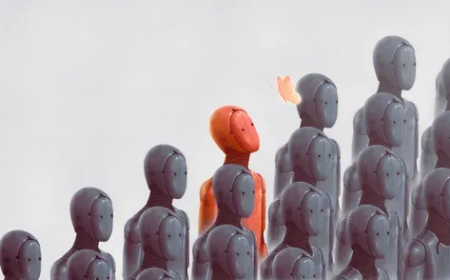
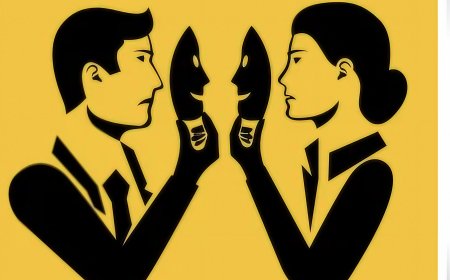
We live in a world crowded with the innocent and the immoral; a minority dominates it. As the world advanced into modernity, immorality took hold, with greed, envy, might over right, and evil becoming routine in the pursuit of survival of the fittest. The world's fall into the evil design of a political and economic system continually drives civilization toward a destination it can never reach.
The end is happiness; greed is the means; morality is an obstruction, hence termed a weapon of the weak. Against this moral bankruptcy, a generation rose, Gen Z, to upend the system they were exhausted with and set in one that will read them in their language and cope with them in the manner they desire.
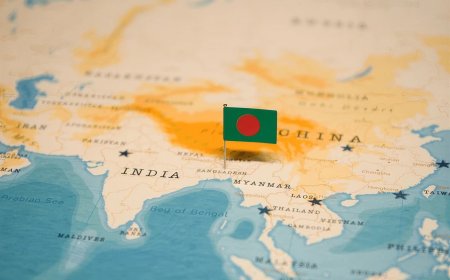
The world is in their wrist; they don’t learn within the geographic boundaries of their own country, but rather connect with others beyond and fight their innocence against immorality. What began with Sri Lanka spread to Bangladesh and then to Nepal to oust the immoral political regime, ultimately shaking the whole world for a change in political and geopolitical outlook.
The immoral aggression of the world power had to be subdued by the changed mindset of Iran, not only of Gen Z but also of the previous generations. The space for leaders across the world narrows to sustain itself by the legal coverage for democracy alone. The strategy of hide-and-seek, or of ruling the fool under legal cover, could be difficult.
The questions pop: Can a leader be immoral yet rule? Can innocence, with humility alone, get a pass? Can old wisdom win against the fast-changing mood of Gen Z, who don’t care about the past but race against the time theory?
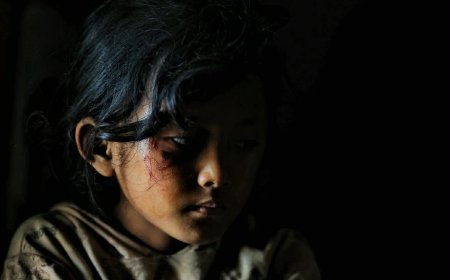
The novel by Fyodor Dostoyevsky, ‘The idiot’ of the 19th century, haunts us and draws us to read it again and again. The story of a man, Prince Myshkin, who has returned from abroad, after treatment for epilepsy, to the corrupt, materialistic society of 19th-century St. Petersburg. Despite his seemingly royal title, his innocence was trivialized because of his poverty, naivety, extreme sincerity, compassion, and childlike trust in others.
By the composure of the above character, he was drawn into a fierce love triangle of conflict between Nastasya, a mistress of a wealthy nobleman, beautiful but deeply traumatized by the sins of society, and Aglaya Yepanchina, the youngest daughter of a respectable general’s family, who was pure but proud. His short engagement of love ended tragically with Nastasya, when, out of greed, she left with Rogozhin, who was killed by him out of jealousy of the bond between her and Myshkin.
Dostoyevsky portrayed the story in the theme of innocence versus society, the conflict between compassion and passion, and the criticism of moral perfection as weakness. He concluded that in the eyes of society, there is no use for true humility, honesty, and compassion. Dostoyevsky asked what happens when a truly good person tries to exist in a world ruled by greed, passion, and pride, and he answered himself that absolute goodness is not only misunderstood but also destroyed.
It is no longer the generation of Baby Boomers, Millennials, or X; it is now faster-moving and led not even by Gen Z but soon by Alpha. They live in the era of Semiconductors and AI; they don’t go back to the past, but to the future they can visualize, just as with the past. They follow not what happens in their own land, but the whole world, to choose a direction for the future, not necessarily based on one of their own tradition and norms.
Their freedom has no boundary, fear is out of their lexicon, and they are ready to snatch from the hand of the power that any ruler can't rightly handle. Mistakes are irreversible; traditional narrative politics succumbs; the choice of leadership is abundant and not limited to the dynasty and elites. Innocent but bold survives, immorality lives in the realm of a minority to circumvent the majority, and the wits of morality, not only the fits of immorality, survive.
The strength of morality and compassion alone doesn’t help today’s rulers rule and succeed. The power of money wins, but fear wits, which is abundant not only among the rich. Power is defined differently in today’s world amid a series of events in which rulers fled from the people. The patent in progress doesn’t lie in the land of the West only. Information can’t be controlled as before, and misinformation and disinformation dominate journalism.
The art of success lies not in the realm of immorality against the aspiration of many, but in the capable, who can be ruthless against wrongs, spot good from bad, and distinguish between individual gains and collective sacrifice. Humility, mere will, obviate the journey, however noble the route or destination it sets.
Gen Z or Alpha loves beauty and boldness, not beast, humility with harshness when necessary, eloquence, not quiet. The leaders who hide behind humility or show arrogance from the pulpit to conceal the purpose of rule are obsolete. Innocence isn’t a weakness; it can be converted into power if used with wit.
If not, nature will fill the blank, shifting politics out of the four walls of monumental parliamentary buildings to the streets and open fields that the new generation loves.
Brigadier General AF Jaglul Ahmed (Retd) is a regular contributor to national dailies. He can be reached at [email protected].