



































































Why Bangladesh’s Urban Workforce is Quietly Gaining Weight
This economic progress is worth celebrating, but it is arriving with a metabolic cost that the nation’s healthcare system is not equipped to handle yet

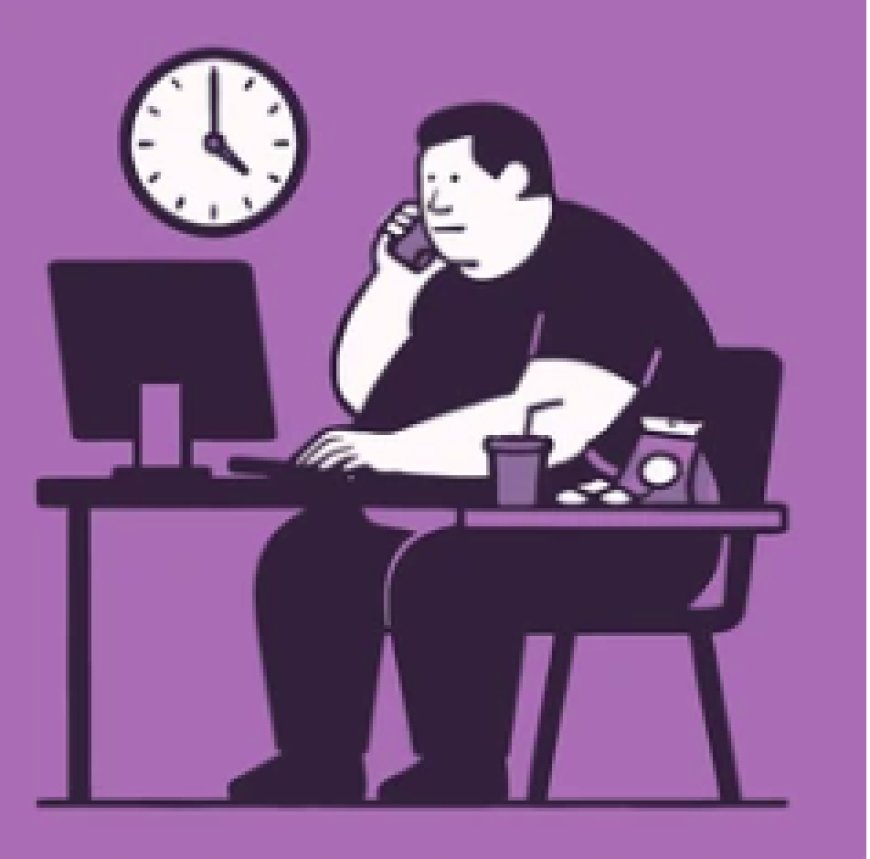
Picture the morning rush hour on Dhanmondi Road or the congestion-packed buses crawling through Jahangir Gate, hundreds of professionals in Dhaka city spending hours just reaching to an office chair they will hardly leave for the next eight to nine hours.
When they return home, tired and famished, the nearest roadside snack bar feels like the most rational option. A plate of kacchi from the office canteen or a quick fried chicken bucket from the famous restaurants becomes dinner.
This daily loop, repeated across the nation’s growing white-collar workforce, is fueling what researchers are now calling a slow-moving obesity crisis among Bangladeshi desk workers.
Bangladesh is often considered of as a nation where undernutrition is the main concern and historically that was not false. Although the scenery has shifted dramatically.
From 2004 to 2018, overweight and obesity among the country’s women increased from 17% to 49% and 21% to 34% in men. According to the Bangladesh Demographic and Health Survey, the prevalence of overweight has reached around 24%, compared to 14% in rural areas.
The connection between obesity and desk jobs is now backed by strong evidence. A 2024 study published in PLOS Global Public Health, drawing on BDHS 2017-18 data, found a gap between sedentary and non-sedentary employees.
Sedentary workers had a 32.9% rate of overweight and obesity, while non-sedentary workers had a percentage of 18%. The same population also faced significantly higher odds of diabetes and hypertension.
In many countries, employees engage with physical activities such as, walking in the parks, running errands, participating in Zumba classes. But in our country that safety valve does not exist.
Approximately 5% of physical activity is achieved through recreation, with the majority coming from work-based movement itself.
Lack of green areas and parks, jam-packed streets, restricted recreational options discourage outdoor activity.
Next is the transportation. Research has shown that sitting in the same posture for a prolonged period can not only adds to total sedentary time but also contributes to anxiety, stress and musculoskeletal problems.
By the time an individual reaches the workplace after an hour in traffic, they have already started the day in a physically passive state.
Back in 2025 a study was conducted that gave information on what a high-stress desk career can do to the body. According to the study, the prevalence of undiagnosed hypertension and prehypertension among bankers was 22.5% and 55.3% respectively, meaning more than three-quarters had elevated blood pressure, they may have been unaware of.
Being overweight was found to raise the odds of hypertension by more than 5 times, while obesity raised it by 10 times among this group. This research also noted that bankers live sedentary and highly stressful lives that often lead to non-communicable conditions such as, diabetes, hypertension and mental disorders.
Dhaka, the capital of Bangladesh, now faces a dual challenge of both undernutrition and overnutrition. While a group of people faces a rising prevalence of obesity and non-communicable diseases driven by changing dietary patterns and sedentary lifestyles, others still struggle with food insecurity.
Doctor Gulam Muhammed Al Kibria of Johns Hopkins Bloomberg School of Public Health, who led the 2024 BDHS-based study, has stressed that the nature of one's occupation is a critical but often overlooked determinant of metabolic health in Bangladesh.
He notes that because work accounts for the overwhelming bulk of daily physical activity in the country, a shift to sedentary employment effectively strips people of their primary defense against weight gain, high blood pressure and blood sugar disorders, making workplace-level intervention not optional, but urgent.
Researchers have continuously called for workplace-level interventions. Providing workplace support to improve physical activity among workers, particularly those in sedentary occupations, is considered essential.
The World Health Organization recommends at least 150 minutes of moderate-intensity physical activity throughout the week or do at least 75 minutes of vigorous-intensity physical activity or an equivalent combination of both.
For additional health benefits, adults should increase their moderate-intensity physical activity to 300 minutes per week, or equivalent.
Simple, actionable steps for desk professionals include taking short walks during lunch breaks, using stairs instead of elevators, opting for home-cooked meals over processed office canteen snacks, and decreasing screen time after hours. Employers, too, have a role- standing desks, walking board meetings and on-site fitness spaces are not luxuries; in the context of Bangladesh’s non-communicable diseases burden, they are practical investments.
Bangladesh’s skyline is rapidly changing; glass towers are replacing paddies on the outskirts of Dhaka city, Chittagong and Sylhet, and young people than ever are entering desk-based careers.
This economic progress is worth celebrating, but it is arriving with a metabolic cost that the nation’s healthcare system is not equipped to handle yet. The paddy fields of an older Bangladesh kept people moving. The office chair of the new Bangladesh may not.
Fahima Hossain Muna, Founder and Health Content Writer at Antioxidant Pathways; Research Team Head at BESS.