


























































A Permanent Stain on the Global Conscience
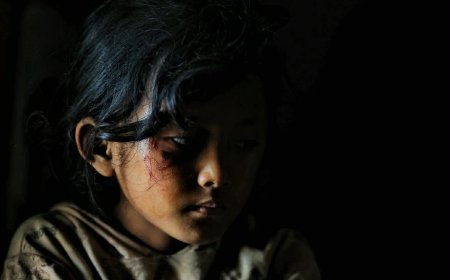
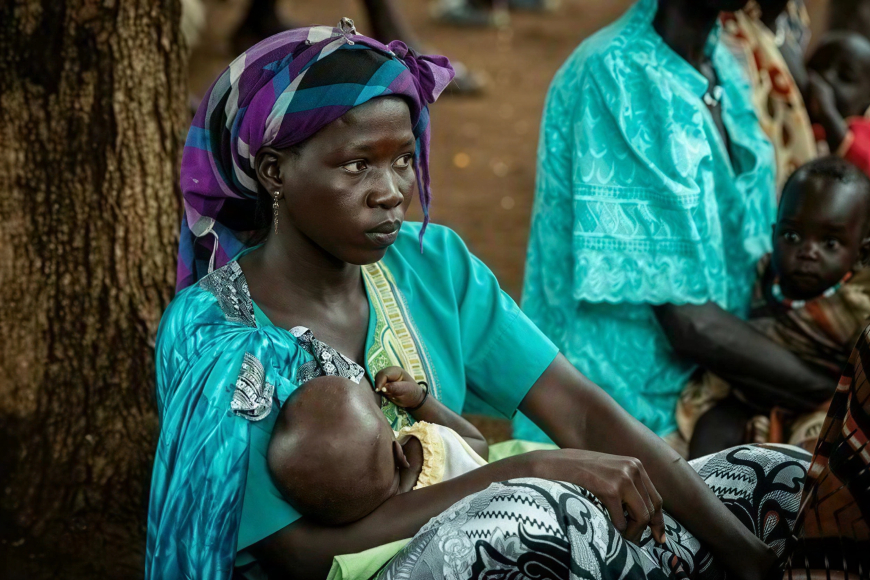
As we sit at our dining tables day in and day out, perhaps we cannot picture a mother sitting at home in Sudan, unable to silence her shrieking child because she must feed him or her boiled leaves or grass.

As for the very earth of civilization itself, the silt of the Nile that once saw seeds of life planted, even now drenched in blood shed by innocent persons.
The struggle between different factions that broke out in April 2023 has grown so inhumane in 2026, it has become the genesis of one of the worst humanitarian disasters of our era.
When we gaze at the ruins of Sudan from a distance on the pages of newspapers or through screens, its grimness may fail to penetrate deep within us.
However, if we dive into today, the current events in Sudan itself, we will slowly start to realize that an entire nation and its future are turning to wasteland just like the dreams of millions. Sudan has this blood-soaked landscape that throws a huge question mark in front of the global conscience.
The Blind Battle to Seize Power
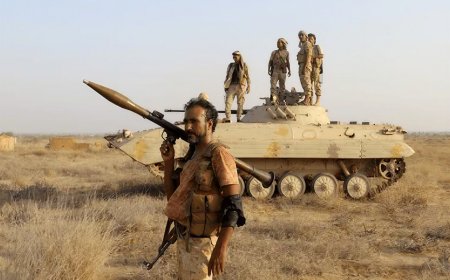
The main game in this most recent tragedy in Sudan is between two players: The Sudanese Armed Forces (SAF) and the paramilitarized Rapid Support Forces (RSF).
This absent minded tussle for power and loot has made them fire-fighting machines who have forgotten all about the most basic of people they promised to guard. Now you are seeing how the capital, Khartoum, used to be one of the most active cities in the world and now has turned into a city full of death.
The stories unfolding in Darfur, Kordofan and the Blue Nile, which the UN has failed to report that 10m people face dire humanitarian conditions are yet more grim.
Now, this war has fought for new and destructive technologies added to 2026. If left to run free, drones and long range artillery do more damage to civilian houses, schools and hospitals than to military targets.
We see the military muscle of a nation being turned on itself. It is a self-destructive war where there are no winners, only the shame of losing.
This is the Largest Displacement Crisis in the World
The sidestep from this war is the displacement of people from their homelands which has been the most tragic. And now we are seeing the great displacement crisis of our time.
With almost 15 million people displaced, it is thus considered the world's current largest refugee crisis. Did we ever ask ourselves how cruel it is to abandon a life you built and homes filled with memories, running towards an unknown destination with only your life in arm?
Within the nation, around 10 million individuals are internally displaced however staying from everything aside for subhuman conditions. The remaining ones take refuge under tarpaulins along the harsh borders in neighboring nations including Chad, Egypt, South Sudan and Ethiopia.
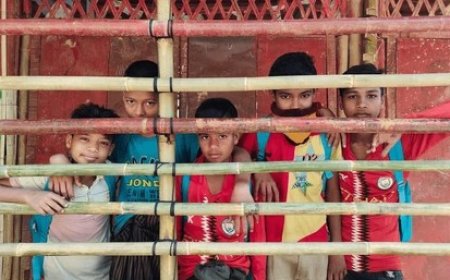
We witness the plight of those in the refugee camps asking for drinking water, food and just a roof over their heads.
Each tent is a testament to silent tears. They have not even committed a crime, they were born in a land led by leaders with insane appetite for power.
The Deadly Hold of Famine and the Hunger Pangs of a people
In the midst of this evacuation saga, the mortal mantle of famine has over Sudan. Today we are too busy in a world where one side has such food waste and another side 25 million people of Sudan spending their days with acute insecurities in food.
The famine has now been declared in large parts of El-Fasher in North Darfur and Kadugli in the region of Khartoum.
Children after children are dying of malnutrition from a lack of adequate relief, despite constant warnings from the World Food Programme (WFP).
As we sit at our dining tables day in and day out, perhaps we cannot picture a mother sitting at home in Sudan, unable to silence her shrieking child because she must feed him or her boiled leaves or grass.
This famine is not a natural disaster, but all man-made. Warring parties are weaponizing food supplies, which would amount to the highest crime against humanity.
The Fall of the Healthcare Sector and a Quiet Pandemic
As if this absence of food was not enough, Sudan's healthcare system has today entirely disintegrated. More than 70 percent of the hospitals and medical centers in the country have been turned into rubble.
Dreading to discover that there is no minimum medicine and even a mild fever or infection no relief. The 8000 or so doctors who are putting their lives on the line to provide whatever care they can manage, but this is a drop in the ocean compared to what such a massively needed service has been.
Amid all of this, deadly diseases such as cholera, dengue and malaria have also swigged. Cholera has infected hundreds of thousands of people already.
How many lives, in increasing jocular proportion, are being wasted daily without the essential treatment. It is beyond description the condition of dialysis or cancer patients. We are awed in disbelief at how a fundamental right to live can so coldly be stripped away even in modern times.
Extreme Human Rights Violations and a Lost Generation
Sudan has become a horror show of human rights abuses in the 30 years since. We witness in anguish that this war is costing the most to women and children.
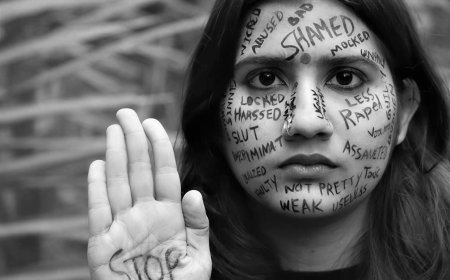
Such claims to civilization are rendered absolute mockeries by the systemic use of rape and sexual violence on the battlefield.
Close to 17 million children in September 2023 have been robbed of the hope of education. Instead they are handing them not books, but deadly weapons.
The children expected to take Sudan into the next generation are either being forced into the armed forces as child soldiers or falling into the bottomless pit of darkness as malnutrition. Is there any way we can be free of the burden of this lost generation?
History, Culture and Nature destroyed
Sudan possesses a rich history. From the ancient Kingdom of Kush to the Islamic Sultanates, millennia of heritage are an integral part of this nation. Khartoum, once home to priceless artifacts of Africa's great civilization museums Seminar with scholars trained on nationalism by the communists.
Yet today we watch in bewilderment as artillery shells crunch the precious archaeological deposits into powder. Now, a nation doesn't only have its present and future wiped out: It has also had its past erased.
We all know that the end of culture poses a risk to identity. Libraries are set ablaze; universities nominally converted to army barracks. Because of this death in knowledge and intellectual practice, Sudan's social structure is headed toward a darkness from which it may be unable to return for decades.
It's not just the people or the culture either; relentless bombardment, gunpowder and poisonous fumes of chemicals are contaminating air and water out there. Farming lands have been turned into lethal minefields.
Impotence and Apathy of the International Community
We are disappointed by the international community's neglect of this terrible tragedy in Sudan. You were trained on various peace talks as they appeared between Jeddah, and Berlin.
However, despite all this effort, by the time it is 2026 not a single negotiation has been able to achieve peace on Sudanese soil. Underneath the empty words of world leaders and symbolic humanitarian assistance lurks an extreme indifference.
Maybe the Security equation in Sudan does not match other countries where the international rules apply -- Europe or Middle East -- hence another reason for lack of support compared to other hot spots around the globe.
We watch the importance of international organizations, which are unable to send assistance to disaster-stricken areas due to the war and whose personnel and volunteers are dying.
In the end, what we see in Sudan now is more than an African nation contending with its own problems. It is the most severe human moral test for all of us.
If we all refuse to hear this screaming Snyder of Sudan, history will judge us and our children will not forgive us. We certainly cannot do without the dubious distinction of permitting tens of millions in a country next to die slowly in plain sight.
We must raise our voices. World leadership has to be forced so that they do not just vent their outrage or hold a meaningless negotiating table.
It is imperative to exert pressure on the warring parties, stop arms supplies and ensure humanitarian aid without restrictions.
The ordinary Sudanese have a right to live as well; do they not too deserve to dream of a wonderful tomorrow? We hope this dark night is over, and dawn to rise again on the banks of the Nile.
We are not spectators waiting for sunrise, but we will raise our voices to the maximum for humanity in that obedient here!
Md Shihab Uddin is an independent researcher and a student of Folklore and Social Development Studies at the University of Rajshahi.