
































































Is Bangladesh the First Collateral Damage?
Already, there are signs of classic crisis behaviour. Panic buying, hoarding, informal resale of fuel at inflated prices, and rising tensions at petrol pumps. These are not the symptoms of a stable system. They are the early tremors of a breakdown in trust.

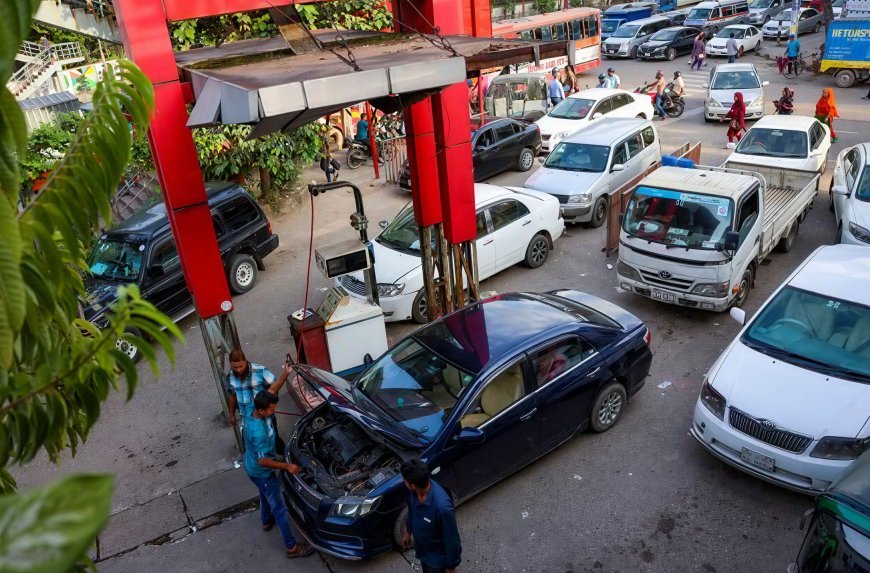
The image is almost cinematic. Long queues of motorbikes curling around petrol pumps in Dhaka, bamboo barricades guarding empty stations, dispensers wrapped in plastic like relics of a vanished normalcy. A man waits two hours for fuel to travel 22 kilometres. Behind him, dozens return empty-handed. The city, once defined by its relentless motion, begins to slow. Streets thin out, not by design but by depletion.
This is not fiction. It is a warning.
Recent reporting by The Independent UK, alongside detailed data from Bonik Barta, presents a stark possibility that would have sounded alarmist only months ago. Bangladesh, a country of 175 million people, may find itself among the first casualties of a prolonged US-Iran conflict, not through bombs or sanctions, but through the quiet suffocation of energy.
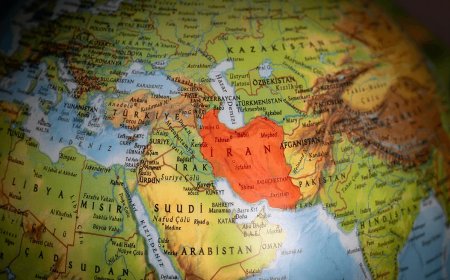
The Strait of Hormuz, that narrow artery through which nearly 90% of Asia’s crude oil flows, has once again become a geopolitical choke point. When it tightens, countries like Bangladesh, heavily dependent on imported fuel, feel the pressure almost immediately. The numbers tell a story that rhetoric cannot conceal.
Bangladesh imports roughly 95% of its fuel. Its reserves, at certain points in recent weeks, have hovered around levels sufficient for barely 10 to 14 days. Diesel stocks have dropped to around 115,000 tones, while octane reserves linger at levels covering just a couple of weeks of demand.
Yet, in the face of these figures, the official line insists that there is no crisis.
This dissonance between reality and rhetoric is not merely a political inconvenience. It is a dangerous gamble.
Denial has never been a substitute for preparedness. It neither fills fuel tanks nor reassures markets. Instead, it risks deepening panic. Already, there are signs of classic crisis behaviour. Panic buying, hoarding, informal resale of fuel at inflated prices, and rising tensions at petrol pumps. These are not the symptoms of a stable system. They are the early tremors of a breakdown in trust.
The deeper problem, however, predates the current war. The crisis is not being created in real time. It is being exposed.
For years, Bangladesh has steadily increased its dependence on imported energy, particularly liquefied natural gas. According to Bonik Barta, local gas production has declined by approximately 37% over the past eight years. From a peak of around 2.7 billion cubic feet per day in 2018, output has fallen to nearly 1.7 billion cubic feet. This decline has not been offset by aggressive exploration or investment. Instead, it has been compensated through imports.
Imports that are now vulnerable.
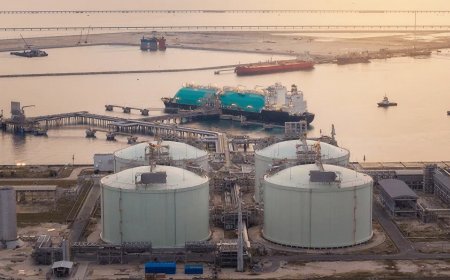
The structure of this dependency is revealing. Bangladesh signed long-term LNG deals with Qatar and Oman, and supplemented these with purchases from the volatile spot market. Over seven years, the country spent nearly Tk 199,706 crore on LNG imports.
For the current fiscal year alone, the projected cost exceeds Tk 51,000 crore. These figures might have been sustainable under stable global conditions. They are not sustainable under geopolitical shock.
When LNG cargoes suddenly cost two or even three times their previous price, the strain is immediate. Foreign exchange reserves come under pressure. Subsidy burdens balloon. Fiscal space shrinks. And the government is forced into a reactive posture, scrambling to secure supplies at any cost.
This is precisely what is unfolding now.
The BNP-led government, still consolidating its authority after a turbulent political transition, finds itself navigating a crisis that demands both immediate action and long-term vision. In the short term, it has turned to the spot market, sought alternative suppliers from countries as diverse as Nigeria and Australia, and attempted to secure external financing. These are necessary but insufficient measures.
The more pressing question is whether there is a coherent strategy beyond firefighting.
Is there a plan for demand management that goes beyond symbolic measures? Is there a roadmap for reducing import dependence? Is there a credible effort to accelerate domestic exploration, despite years of stagnation? Is there an institutional mechanism to prevent syndicates from distorting supply during crises?
Or is the approach still anchored in the hope that the storm will pass?
The temptation to rely on hope is understandable. The global energy system has a history of self-correction. Prices rise, supply adjusts, tensions ease. But hope is not a policy. And Bangladesh’s vulnerability is structural, not cyclical.
Consider the broader implications. Energy is not just about transport or electricity. It is the lifeblood of industry, agriculture, and urban life. A prolonged disruption would mean reduced industrial output, particularly in energy-intensive sectors like textiles.
It would mean irregular power supply, affecting both households and businesses. It would mean rising costs of production, feeding into inflation. It would mean a slowdown that could ripple through employment and social stability.
In extreme scenarios, the phrase “grinding to a halt” ceases to be metaphorical.
The irony is that Bangladesh has faced warnings before. The Russia-Ukraine war in 2022 offered a preview of how global conflicts can disrupt energy markets. Prices surged, supply chains tightened, and countries scrambled to adapt. That moment should have triggered a strategic rethink. Instead, as energy experts have repeatedly pointed out, the response remained largely tactical.
Exploration projects stalled. Planned drilling targets were missed. Infrastructure for gas transmission remained incomplete, with discovered reserves in places like Bhola still disconnected from the national grid. Even tenders for offshore exploration failed to attract sustained investment.
In effect, the country continued to withdraw more energy than it discovered, bridging the gap with imports.
This model works until it doesn’t.
The current crisis is that moment of reckoning. It exposes the fragility of a system built on external dependence and internal inertia. It forces a confrontation with uncomfortable questions. Why has domestic exploration lagged for so long? Why has energy diversification been slow? Why does policy often react to crises rather than anticipate them?
And perhaps most importantly, can the current leadership break this pattern?
The BNP government faces a test that is as much about governance as it is about energy. It must move beyond denial and engage with the reality of the situation. This does not mean creating panic. It means building credibility. Transparent communication, clear policy direction, and visible action can do more to stabilize public confidence than blanket assurances.
At the same time, it must think beyond the immediate crisis. Conservation measures, including work-from-home policies and reduced non-essential consumption, can provide short-term relief. But long-term resilience requires deeper reforms. Accelerated exploration of domestic gas fields. Investment in renewable energy. Development of storage infrastructure to buffer against supply shocks. And a regulatory framework that curbs market manipulation.
None of these are quick fixes. But they are necessary.
The geopolitical context adds another layer of urgency. The US-Iran conflict may or may not escalate further. The Strait of Hormuz may reopen fully or remain partially constrained. These are variables beyond Bangladesh’s control. What is within its control is how it prepares.
History often remembers wars not just by their direct participants, but by their unintended victims. Economies that falter, societies that strain, governments that stumble under pressure. In that sense, the idea of Bangladesh as a potential “first casualty” of this conflict is less about sensationalism and more about structural vulnerability.
The question, then, is not whether the crisis exists. It clearly does. The question is whether Bangladesh is willing to acknowledge it, confront it, and learn from it. Because if the response remains rooted in denial, the queues at petrol pumps may only be the beginning.
H. M. Nazmul Alam is an Academic, Journalist, and Political Analyst based in Dhaka, Bangladesh. Currently he teaches at IUBAT.