


































































The Rebel, the Ruler, and the Reckoning
Mamata Banerjee governed Bengal through emotional familiarity. She spoke the language of neighbourhood grievances, middle class anxieties, and Bengali insecurity about national marginalization. For years, that intimacy protected her from anti-incumbency.

In Bengal, political endings rarely arrive quietly. They arrive with processions, symbolism, wounded pride, and the unsettling feeling that history is mocking itself.
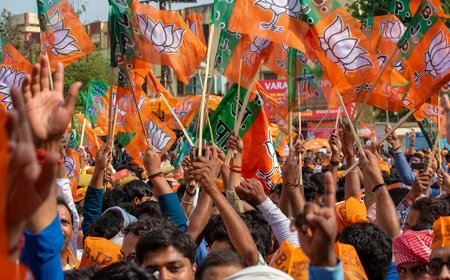
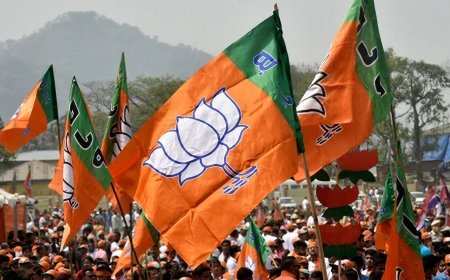
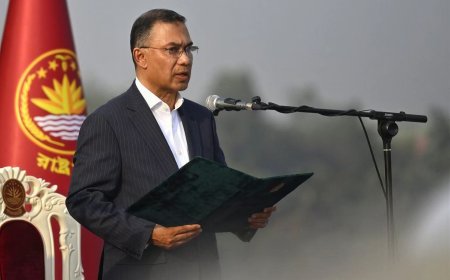
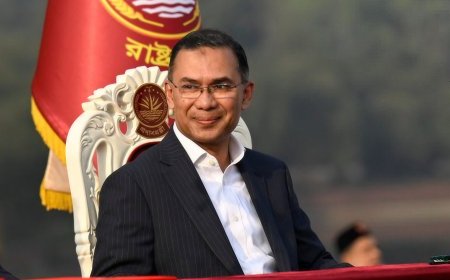
So while the Brigade Parade Ground in Kolkata erupted with saffron celebration as Subhendu Adhikari took oath as West Bengal’s first BJP Chief Minister in the presence of Prime Minister Narendra Modi, another scene was unfolding almost silently on Harish Chatterjee Street.
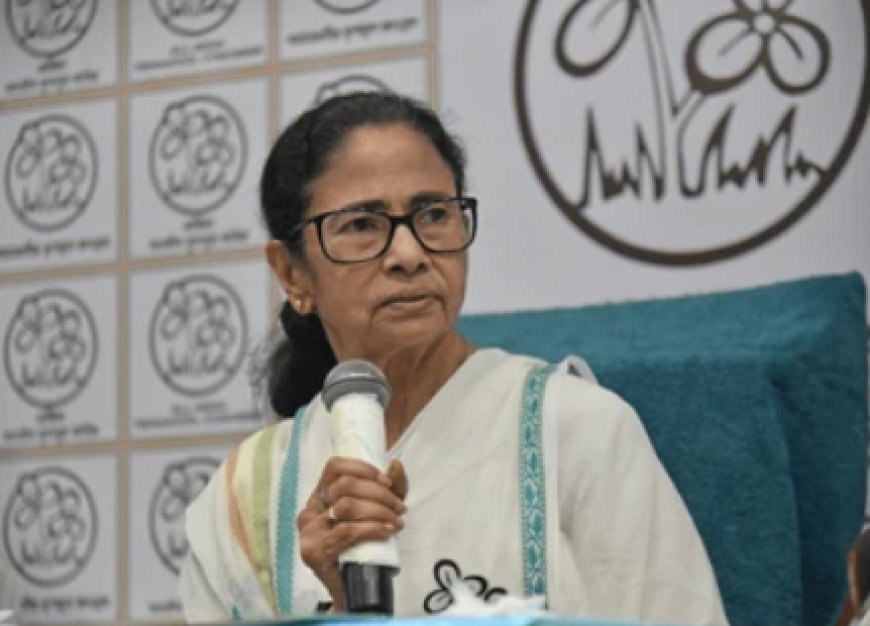
There sat Mamata Banerjee, once the fiercest enemy of Bengal’s Left establishment, now calling upon left, ultra left, and anti BJP forces to unite beside her.
The image carried a strange historical poetry. 15 years after storming power by dismantling the Left Front’s seemingly immortal rule, Mamata Banerjee found herself reaching back toward the very political universe she once declared exhausted and irrelevant.
In that single moment, Bengal’s politics seemed to complete a full and deeply ironic circle.
Mamata Banerjee now faces the greatest political challenge of her life because she is confronting a force she unknowingly helped create. For years, she built her politics around permanent agitation. She taught Bengal that institutions were secondary to emotion, that movements mattered more than structures, and that anger was more powerful than ideology.
That method worked brilliantly against the Left Front because the communists had become distant, bureaucratic, and emotionally exhausted after thirty four uninterrupted years in power. Mamata entered that vacuum like a storm.
But political cultures rarely disappear after power changes hands. They mutate. The BJP carefully studied Mamata’s rise and learned from it.
The party understood that Bengal no longer responded only to ideological discipline or organizational machinery. It responded to spectacle, confrontation, symbolism, and emotional polarization. In many ways, the BJP defeated Mamata Banerjee using a modified version of Mamata Banerjee herself.
That is why this election defeat feels larger than a routine transfer of power. It marks the collapse of a political formula that once looked unbeatable. Mamata Banerjee’s greatest strength was always her image as an outsider fighting entrenched authority. The problem with remaining in power for 15 years is that eventually the outsider becomes the establishment.
The rebel acquires bureaucrats, syndicates, loyal businessmen, ambitious nephews, and layers of political insulation. The street fighter slowly becomes the system she once attacked.
This transformation damaged Mamata more deeply than corruption allegations alone. Bengal’s voters tolerated accusations against Trinamool leaders for years because many still believed Mamata herself remained personally austere and emotionally connected to ordinary people.
Her slippers, cotton sarees, and rough language functioned almost as political armour. Yet emotional credibility survives only while people believe simplicity is accompanied by moral authority. Once administrative fatigue and corruption become too visible, symbolism starts looking theatrical rather than authentic.
The tragedy for Mamata Banerjee is that she never fully transitioned from protest leader to institution builder. Bengal under her rule often appeared trapped in a permanent election campaign. Every criticism became conspiracy. Every opposition protest became sabotage. Every central intervention became an existential attack on Bengali identity.
Such mobilization kept her politically alive for years, especially against an aggressive BJP. However, constant confrontation gradually weakened governance itself. A state cannot permanently survive on emotional mobilisation without eventually confronting economic reality.
The BJP exploited this exhaustion with precision. It presented itself not merely as a Hindu nationalist alternative but also as a promise of administrative certainty, investment, and political order. Whether it can actually deliver those things remains uncertain. Yet perception matters enormously in politics.
After years of industrial stagnation, unemployment, corruption scandals, and political violence, many voters no longer wanted resistance. They wanted stability. Mamata Banerjee spent years convincing Bengal that she alone represented struggle. Eventually Bengal became tired of struggling.
Her appeal to left and ultra left forces after the defeat reveals another uncomfortable truth. Mamata Banerjee has completed a full political circle. The woman who destroyed the Left Front now seeks ideological shelter from fragments of the same political tradition. This is not merely tactical desperation. It reflects how profoundly the BJP has reorganised Bengal’s political landscape.
Anti BJP politics now risks becoming dependent on strange and historically contradictory alliances. The old binaries of communist versus anti communist or Congress versus regional forces no longer fully explain Bengal.
The Abhishek Banerjee factor complicates this crisis further. Dynastic politics damages regional parties most severely when charisma cannot be inherited. Mamata Banerjee built Trinamool through sacrifice, imprisonment, street battles, and relentless personal risk. Abhishek Banerjee inherited an organisation already in power.
That difference matters psychologically to party workers and voters alike. Many within the Trinamool Congress may obey Abhishek administratively, but obedience is not the same as emotional loyalty. Regional parties built around singular personalities often discover too late that succession cannot be managed like a corporate transition.
Age also changes political rhythm. Mamata Banerjee’s politics depended heavily on physical energy, surprise appearances, emotional spontaneity, and relentless public engagement. Bengal became accustomed to seeing her walking injured through protests, climbing onto vehicles, shouting through microphones, or confronting opponents directly.
Those spectacles created an aura of invincibility. At 71, reproducing that intensity becomes harder. Politics punishes slowing bodies mercilessly because democratic systems reward visible vitality as much as ideological consistency.
Yet writing Mamata Banerjee’s political obituary would still be premature. Bengal’s political history repeatedly demonstrates that resentment against ruling parties accumulates quickly. The BJP may currently appear unstoppable, but governing Bengal and conquering Bengal are entirely different tasks.
The state possesses a long tradition of intellectual suspicion toward concentrated power, especially when authority begins appearing culturally overconfident. If the BJP government mishandles unemployment, communal tensions, linguistic identity, or federal relations with Delhi, Mamata Banerjee could rediscover political oxygen.
Her real challenge, however, is not electoral mathematics. It is reinvention. She can no longer survive merely as the emotional centre of anti BJP resistance. Bengal already witnessed that version of Mamata. To return meaningfully, she would need to offer something far more difficult: Institutional credibility after years of personalized politics.
She would need to convince voters that she has learned from power rather than simply lost power. Few politicians successfully manage such transformations because political identities become prisons over time.
The deeper lesson of Mamata Banerjee’s decline extends beyond Bengal. Across South Asia, charismatic populist leaders often rise by attacking decayed institutions, centralised authority, and political arrogance. They promise to restore dignity to ordinary citizens through direct emotional connection.
But once in power, many gradually reproduce the same centralisation, personality cults, and patronage networks they originally opposed. The cycle continues because rebellion itself eventually becomes an establishment.
There is also a cultural dimension to this defeat that many observers underestimate. Mamata Banerjee governed Bengal through emotional familiarity. She spoke the language of neighbourhood grievances, middle class anxieties, and Bengali insecurity about national marginalization. For years, that intimacy protected her from anti incumbency.
But familiarity can slowly transform into suffocation when political space narrows. Many Bengalis who once admired her defiance gradually began feeling that the state itself revolved too completely around one personality and one household. Ironically, the same centralization that once gave Trinamool extraordinary coherence eventually produced stagnation.
Bengal’s electorate has historically admired powerful leaders, but it has also distrusted excessive political permanence. From the Congress decline to the collapse of the Left Front, the state repeatedly demonstrated an instinctive urge to puncture dominance before it hardens into inevitability.
Mamata Banerjee ignored that psychological pattern for too long. Now she confronts the same restless electorate she once mobilised against others, only this time from the opposite side entirely politically.
Mamata Banerjee once represented Bengal’s impatience with political permanence. Today, Bengal has shown impatience with hers. That may be the most brutal irony of all. The leader who taught Bengal how to overthrow political inevitability has now become a victim of the same democratic instinct she awakened 15 years ago.
H. M. Nazmul Alam is an Academic, Journalist, and Political Analyst based in Dhaka, Bangladesh. Currently he teaches at IUBAT.