



































































Why are Critical Ordinances not being Passed into Law?
The ordinances concerning the Human Rights Commission, the Anti-Corruption Commission, and the prevention of enforced disappearances, are all directly aimed at protecting citizens’ rights, and maintaining the separation of powers. Rendering them ineffective is deeply disappointing from the perspective of citizens.
Out of 133 ordinances promulgated by the interim government, Parliament is not taking steps to enact 20 into law. As a result, these ordinances will automatically cease to have effect.
The list includes ordinances related to the Human Rights Commission, the Anti-Corruption Commission, and the prevention of enforced disappearances, as well as two key ordinances concerning the judiciary -- one on the appointment of Supreme Court judges and another on establishing an independent Supreme Court secretariat.
These soon-to-lapse ordinances are closely related to the urgent legal, institutional, and constitutional reforms that have been under discussion since August 2024.
They were intended to help establish a governance structure accountable to the people and to promote a system of responsible government and separation of powers. In that sense, their significance is comparable to that of constitutional reforms.
The five ordinances mentioned above introduced significant amendments to the law and established new legal measures. For example, the Human Rights Commission Ordinance and the Anti-Corruption Commission (Amendment) Ordinance enhanced the independence of these two commissions and expanded their powers, making them more effective institutions.
Through these changes, efforts were made to bring various agencies, security forces, and other state institutions under greater accountability.
If the Human Rights Commission Ordinance becomes ineffective, the current commission may need to be reconstituted. As a result, like the Anti-Corruption Commission, the Human Rights Commission could also be compelled to resign.
The recommendation of the parliamentary special committee to repeal the two judiciary-related ordinances is equally concerning, as these were promulgated to enhance the independence of the judiciary.
The ordinance establishing an independent Supreme Court secretariat was particularly important, as it aimed to fully vest authority over the subordinate courts in the Supreme Court.
It is also linked to the implementation of a Supreme Court judgment concerning Article 116 of the Constitution.
Beginning with the Fourth Amendment to the Constitution in 1975, and through successive amendments to Article 116, authority over the subordinate courts was shifted from the Supreme Court to the President, or effectively to the Ministry of Law. After August 5, 2024, these successive amendments to Article 116 were challenged in a public interest litigation.
The court annulled the amendments and restored authority over the subordinate courts to the Supreme Court. In the same case, the court also directed the Ministry of Law to take steps to establish a separate secretariat for the judiciary within three months of the court’s judgment.
Subsequently, the ordinance establishing a separate secretariat was issued. Under this ordinance, several steps have already been taken.
A secretary for the secretariat has been appointed, and pursuant to the ordinance, a committee was formed to develop the human resources organogram.
The committee has held multiple meetings, finalized the organogram, and a significant number of personnel have already been appointed.
In addition, several technical steps have been completed for financial budgeting purposes. Budget allocations for the secretariat have been made up to June of the current fiscal year, and work is ongoing based on these allocations.
Preparations are also underway to release the budget for the next fiscal year.
In other words, significant progress has been made under this ordinance since its issuance. Both formal and practical measures have been taken to establish the secretariat, which is already operational.
If this ordinance were to become ineffective, the secretariat’s status would be put into uncertainty, potentially creating a vacuum and administrative complications.
Since the Supreme Court’s ruling imposes a legal obligation to establish a separate secretariat, a question arises as to how the Ministry of Law would fulfill this obligation if the ordinance becomes ineffective.
Failure by the Ministry to comply could constitute contempt of court, thereby giving rise to potential difficulties.
It is essential to consider whether, at the very outset of the current government’s tenure, this could trigger an unnecessary and entirely avoidable conflict between the judiciary and the executive over a matter of significant importance.
The ordinances concerning the Human Rights Commission, the Anti-Corruption Commission, and the prevention of enforced disappearances, along with the ordinances on the appointment of Supreme Court judges and the establishment of an independent Supreme Court secretariat, are all directly aimed at protecting citizens’ rights, ensuring accountability within the governance structure, and maintaining the separation of powers.
Therefore, the significance of these ordinances is in no way less than that of constitutional reforms. Rendering them ineffective is deeply disappointing from the perspective of citizens.
The extensive reform efforts undertaken since 2024 to restructure the country’s governance system have, at the very outset of the new government, faced a substantial setback.
Surely, the people would expect that Parliament will give this matter the attention it rightfully deserves.
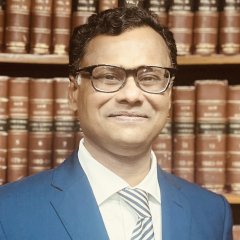
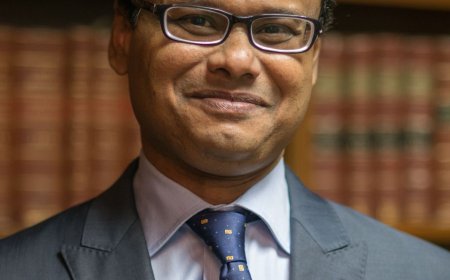
Dr. Sharif Bhuiyan is senior advocate at the Supreme Court of Bangladesh, and has served as a member of the Constitution Reform Commission and as a legal expert for the National Consensus Commission.