






























































What Our Teen Performers Really Need on the Field
Knowledge is not power in sport; it is fuel

Every morning at Bangladesh Krira Shikkha Protishtan(BKSP) in Savar, before the sun fully rises, hundreds of young athletes wake to chase their dream.
They lace up their sports shoes, step onto the field and push their bodies to their limits. But a quiet question lingers off the field and into the dining hall, “are they eating enough of the proper food?”
Studies claim that most are not, and the results go far beyond a poor performance. Teenager sportspersons face nutritional pressure unlike any other group, influenced by the simultaneous demands of growth and development.
A grown-up’s body is simply a system under construction -- forming bone, muscle, nervous system at a pace that will never be repeated. Intensifying game on top of that is an intricate piece of work, and one that is not receiving enough attention in Bangladesh.
In 2025, a cross-sectional study was conducted by researchers among 260 adolescent trainee athletes across 11 sports departments.
The study found that while more than half of the populations showed satisfactory nutrition knowledge, it revealed an important connection as well. Those who knew more regarding nutrition were more likely to practice better eating habits than others who did not know much. In other words, knowledge is not power in sport; it is fuel.
However, there is a troubling gap. Researchers also noted that many youngsters come from low-income communities in Bangladesh lack access to proper nutrition education materials and training, leaving them in a state without the knowledge required to make health-conscious decisions about food, nutrition and supplementation.
In nations like Bangladesh where many aspiring athletes belong to a modest background, this is not a small issue but a structural one.
The global science reinforces what is unfolding at residence. Researchers have identified what they call “low energy availability”, the state that happens when a young athlete does not take in enough calories to cover both growth and training.
Whether unintentional or not, this state can trigger hormonal disruption, suppression of the reproductive system, thyroid changes and serious modifications to the human body’s metabolism.
In practical words, missed periods, weak bones, persistent fatigue and a frustrating ceiling on athletic improvement, but hard the teen trains.
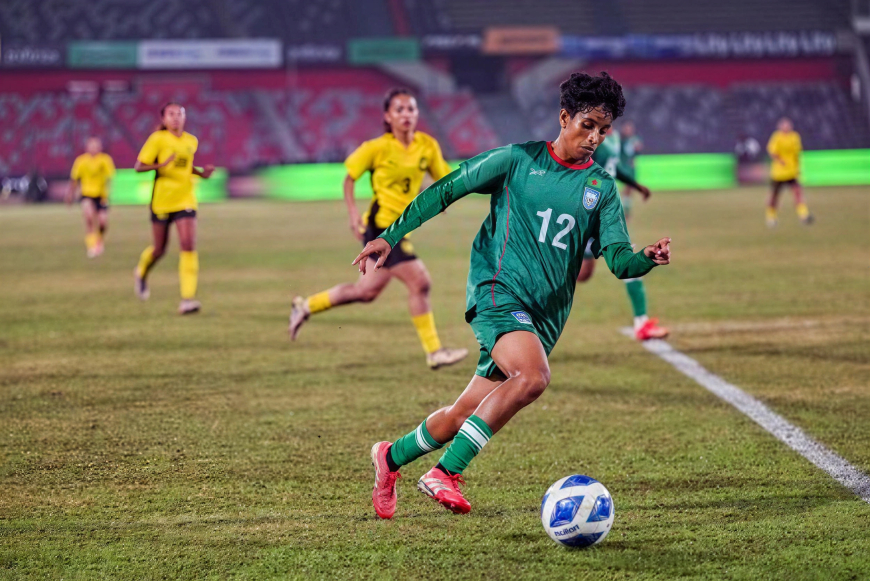
This issue is not confined to elite academics abroad. In the heat and humidity of our country, where teenage athletes often train twice regularly and travel long distances to competitions, the risk of low energy availability is acute, with studies in elite adolescent female football players finding that up to 88% were underfuelled on training days alone.
Then, what should Bangladeshi teens need to eat? A 2025 study claimed that carbohydrate intake during recovery is vital for young athletes, who deplete glycogen faster than adults and are therefore prone to earlier tiredness without enough Rice, lentils, flatbread are excellent source of carbohydrate in Bangladesh athletes need.
The problem is not what is available, but whether they are taking enough of it and at the right times.
Protein does matter as well; however, the obsession with expensive protein supplements among athletes may be misplaced. Generally, any kind of dietary supplement does not help to enhance performance in young athletes.
A finding that is worth sharing with the growing number of Bangladeshi teens reaching for protein powders and energy drinks they see promoted on social media or advertisements. Eggs, meat, fish, lentils, milk are already within reach in most Bangladeshi households, provide what the body needs the most.
Micronutrients complete the picture. Iron, sunshine vitamin or vitamin D, calcium are considered pivotal for athletic performance and healthy development. But three deficiencies are already a recognized public health concern in Bangladesh, and it takes on added weight when the affected individuals are also training intensively.
The Bangladesh Krira Shikkha Protishtan(BKSP) research offers one precise and actionable message for policymakers, coaches and parents alike.
Previous nutrition training was found to be a considerable and modifiable predictor of better eating practices, and the researchers called for daily, structured nutrition education interventions for young athletes. Teach them well, and they will eat better eventually. (Bakhtiar et al., 2021) It is as easy and urgent as that.
Bangladesh is producing more teen sporting talent than ever before. From the cricket academies of Mirpur to the football grounds of Chattogram, a new generation of performers is emerging -- faster, more competitive and more ambitious than any that came before. But talent, however raw and promising, cannot thrive on an empty stomach or a poorly fuelled one.
The infrastructure of BKSP is slowly improving. On the other hand, nutrition remains the missing chapter in Bangladesh’s sporting development story. Coaches track speed, agility, skill, strength but rarely what their trainees had for breakfast. Guardians celebrate victories but may not know their child is iron or vitamin D - deficient.
Sport nutritionists are scarce in grassroots sports. If Bangladesh is so sure about competing on the world stage in the upcoming decades, investing in sports nutrition education at the school level and the national academy level is not optional. It is the next mandatory step.
Fahima Hossain Muna is Research Team Head, BSES;Health content writer and Founder, Antioxidant Pathways.