


































![A Ledger of the Soul: Navigating the Allah-Bhagavant Nexus in a 19th-Century Puruṣākāra Jñāna Caupara [Gyan Chauper]](https://counterpointbd.com/uploads/images/202608/image_430x256_6a93baa3b09a7.jpg)





















A (Darwinian) Manifesto for Dhaka’s Walkers
Dhaka’s walkers are not Darwinian subjects -- they are Darwin’s teachers. They have mastered the art of evolving within the apocalypse, turning every sidewalk and sewer into a classroom.
The City as a Darwinian Gymnasium
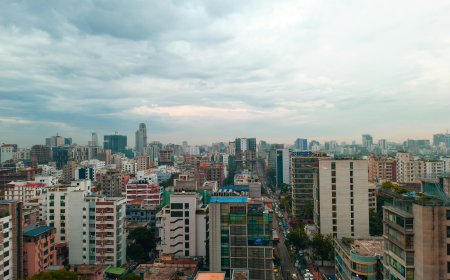
Dhaka does not sleep. It trains. Every dawn, 3.6 crore bodies rise to rehearse a survival ballet choreographed by chaos. The air, thick enough to chew, tastes of diesel and defiance. The streets hum with a primal question: How much can a body endure? Here, walking is not a choice -- it’s an evolutionary gauntlet.
To walk in Dhaka is to enrol in a masterclass in human persistence, where the syllabus includes dodging buses, deciphering sidewalk hieroglyphs (a pile of bricks? a vendor’s stall? a crater?), and negotiating with the gods of monsoon puddles.
Welcome to the city where resilience is the only currency, and every pedestrian is an unwitting Olympian.
Act I: The Body as a Tactical Archive
The body remembers. In Dhaka, muscles memorise the rhythm of survival. A leftward sidestep to avoid a rickshaw’s jagged edge. A reflexive duck under low-hanging construction wires. A sprint across six lanes of traffic, timed between the crescendo of a bus horn and the decrescendo of a driver’s curse.
These movements are not thought; they are etched into the marrow.
The city’s walkers are cartographers of the impossible. They map routes through landscapes designed to repel them: sidewalks colonised by tea stalls, roads ruled by the tyranny of speed. When the footpath ends abruptly -- a cliffhanger of urban planning -- they pivot, leaping onto the road with the grace of parkour athletes.
This is not recklessness. It is tactical ingenuity, a silent rebellion against a city that treats pedestrians as afterthoughts.
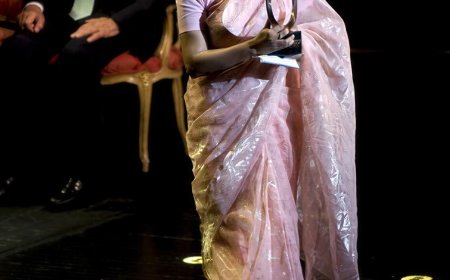
Consider the grandmother in Mirpur. Her sari flares like a battle flag as she navigates a “zebra crossing” obscured by dust. She pauses, presses the button of a newly installed portable traffic light -- a pilot project’s promise -- and waits.
The light turns red. A bus roars past anyway. She crosses anyway. Her body, bent by decades, becomes a manifesto: I persist.
Act II: The Burnout Waltz
Exhaustion is Dhaka’s lingua franca. Walkers here are fluent in the dialect of fatigue -- the kind that seeps into bones and blurs the line between stamina and stupor. The air, heavy with PM2.5, turns lungs into parchment. Eyes sting. Throats rasp. Yet, the city demands more: Faster. Smarter. Luckier.
This is not the exhaustion of rest denied. It is the exhaustion of endless negotiation. Every walk is a calculus of risk: Is that alley safer than the main road? Will that driver brake or accelerate? The brain becomes a frayed spreadsheet, tallying near- misses and oxygen debt. The body, once a temple, becomes a ledger of urban neglect.
But Dhaka’s walkers are not martyrs. They are alchemists, transmuting fatigue into wit. A rickshaw driver laughs as he weaves through traffic: “If I die, at least I’ll skip the traffic jam!” A student, late for exams, sprints past a billboard advertising luxury condos -- “Live the Dream!” -- and mutters, “My dream is a sidewalk.”
This gallows humour is both armour and indictment.
Act III: Solidarity in the Trenches
Walking in Dhaka is a solo sport played in a crowd. Strangers become co-conspirators. A nod to the woman beside you—Now?—and you surge forward together, a phalanx of bodies against the onslaught of steel. A child’s hand grips yours mid-crossing, a fleeting covenant of trust. Even the vendors hawking single cigarettes or pirated DVDs are part of the choreography. They know the rhythms, the pauses, the pockets of calm.
This is the city’s open secret: survival is a team effort. When the monsoon swells the streets into rivers, office workers form human chains to cross. When a traffic jam freezes time, pedestrians trade jokes and fuchka from a roadside cart. The city, for all its cruelty, breeds solidarity in the trenches.
Act IV: The Aesthetics of Resistance
Dhaka’s walkers are unwitting artists. Their movements -- a pirouette to avoid a pothole, a sprint timed to the flicker of a dying streetlight -- are brushstrokes on the canvas of chaos. The city itself is their gallery:
Street Art: Murals of Bengal tigers and half-finished political slogans peek through layers of grime.
Soundscapes: The syncopated clang of rickshaw bells, the bass-line of idling engines, the soprano of a chai-wallah’s call.
Textures: The slickness of rain-soaked asphalt, the grit of construction dust, the fleeting softness of a jasmine garland bought from a girl in a faded dress.
Even the act of walking becomes art. A labourer balances a bamboo ladder on his shoulder, its shadow a cathedral arch over the street. A teenager texts while navigating a sidewalk minefield -- a multitasking virtuoso. These are not just acts of survival. They are performances of defiance, proof that beauty thrives in the cracks.
Act V: The Myth of Resilience
Resilience is Dhaka’s most marketable myth. The city sells it in NGO reports and political speeches: “Look how they endure!” But endurance is not virtue -- it is necessity. When 71% of trips are under 5km and public transport is a lottery, walking is not resilience. It is captivity.
The true rebellion lies not in enduring, but in demanding more. In the gaps between survival, Dhaka’s walkers script quiet revolutions: The Pedestrian Army: In Banani, a pilot project widens sidewalks and plants trees. Walkers flock there, not for the greenery, but for the novelty of space.
The Hashtag Resistance: #DhakaWalks trends as commuters post videos of their daily gauntlets. The city’s chaos goes viral, shaming planners into half-hearted reforms.
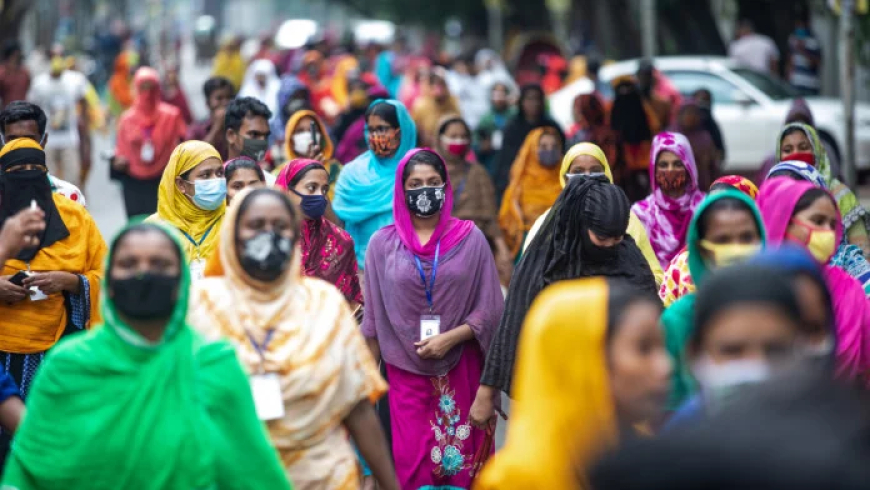
The Invisible Strike: On days when the AQI hits 500, masks bloom like urban flowers. Each mask is a mute protest: We see the poison. We count the cost. The Manifesto
To walk in Dhaka is to draft a manifesto with your feet. Each step is a clause, each near-miss a footnote. Here, then, is the unwritten creed of the city’s pedestrians:
1. We Refuse to Be Ghosts: Our bodies -- sweating, stumbling, surviving -- are monuments to existence.
2. We Reject the Speed Trap: We will not morph into the machines that oppress us. Our pace is our protest.
3. We Demand the Right to Stroll: Not as guerrillas, but as citizens. Not as survivors, but as dreamers.
4. We Are the City’s Conscience: When we choke, the city chokes. When we rest, the city stalls.
Dhaka’s walkers are not Darwinian subjects -- they are Darwin’s teachers. They have mastered the art of evolving within the apocalypse, turning every sidewalk and sewer into a classroom. The exam question is always the same: How do we outlive a city trying to kill us? The answer, scrawled in sweat and smog, is eternal: Together.
P.S. For those who dare to walk: Wear sturdy shoes. Carry water. And remember -- every step is a vote for a city that does not yet exist.
Zakir Kibria is a Bangladeshi writer, policy analyst and entrepreneur based in Kathmandu, Nepal. His email address is [email protected].