


































































Coups, Countercoups, and the Politics of Power
Coups are not accidents. They are outcomes of institutional design shaped by fear, mistrust, and the imperative of survival. Bangladesh’s history, from 1975’s cascading coups to 2007’s indirect intervention, shows how the struggle to control the guardians of the state can redefine politics itself.

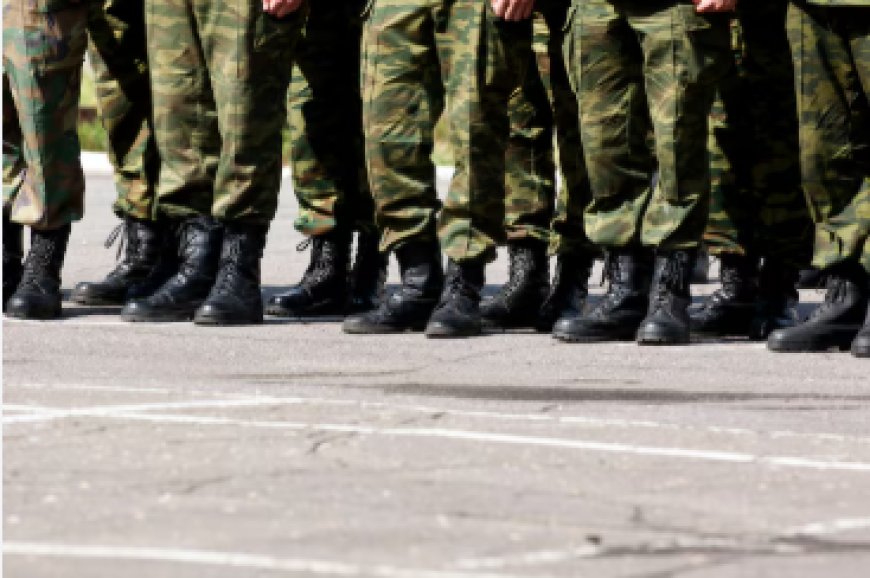
The same military that protects a state can also overthrow it. This paradox lies at the heart of modern coups. Institutions designed to guarantee national security often become the very instruments through which political authority is seized, reshaped, or destroyed.
A coup is therefore not simply a sudden event, nor merely a violent interruption of constitutional order. It is a political outcome rooted in how power is organized, how fear circulates within institutions, and how regimes design security structures in order to survive.
A coup, or countercoup, generally refers to the sudden or coercive overthrow of an existing government by a small, organized group embedded within the state apparatus, most often the military. A revolution, by contrast, signifies a political transformation carried out in the name of a broader population and through mass participation. This distinction goes to the core of legitimacy and representation.
Coups and countercoups are typically organized to protect the interests of narrow groups through secrecy, control of armed force, and command over the state’s coercive institutions, while public consent and political aspirations are sidelined. A coup captures power, but in most cases it does not secure the interests of the majority.
Modern coups are best understood not as sudden breakdowns of loyalty or purely ideological rebellions, but as outcomes shaped by how regimes deliberately design, divide, and manage their security institutions in order to survive.
Drawing on Erica De Bruin’s theory of counterbalancing, coups emerge as strategic contests over coercive organization, where rulers attempt to reduce the risk of overthrow by fragmenting the very institutions that defend the state. The tragedy is that the strategies rulers use to prevent coups often generate long-term political instability.
Coups as Political Design, Not Accidents
One of the earliest and most symbolic countercoups in modern history took place on 9 November 1799, 18 Brumaire, during the French Revolution. After returning from Egypt, Napoleon Bonaparte plotted to overthrow the five-member Directory. He assumed bribery and intimidation would secure legislative compliance.
Instead, legislators denounced him. Yet Napoleon’s control of armed force proved decisive. Step by step, he subdued resistance, neutralized rivals, and by 1804 crowned himself emperor. This episode is widely seen as the first successful modern coup, a moment when institutional fragility and military loyalty intersected.
The French case reveals an enduring lesson. When political institutions are weak and armed forces are politically central, the boundary between constitutional order and military intervention becomes thin. Where coercive authority is not firmly subordinated to civilian rule, control over armed force becomes the ultimate arbiter of power.
A century and a half later, Spain in 1936 showed that coups do not always lead to swift power transfers. After left-wing forces won elections, General Francisco Franco joined a military conspiracy. His call to rebellion ignited a devastating civil war.
Here, fragmentation of authority within the armed forces did not produce immediate seizure of power, but prolonged violence. The episode illustrates a core insight from coup theory: when coercive institutions are divided and rival chains of command emerge, struggles over power can escalate beyond elite politics into armed conflict.
Coups, in other words, are not lightning strikes. They are visible explosions of deeper structural tensions rooted in institutional design, mistrust, and contested control over coercion.
From 1945 to 2025, coups have remained a recurring feature of global politics, encompassing large numbers of both successful seizures of power and failed or aborted attempts, with their frequency and outcomes varying sharply by region. Data drawn from 140 countries reveal a sharply uneven global landscape, where repeated coups cluster in a limited number of states, while the majority of countries experience only rare or isolated attempts.
Countries such as Bolivia (48 total coups), Sudan (31), Haiti (28), Argentina (25), Venezuela (24), and Syria (23) stand out for exceptionally high levels of coup activity, reflecting prolonged periods of political instability and repeated military intervention in governance.
Africa and Latin America dominate the upper end of the distribution over the long run, with repeated and often successful coups in countries including Burkina Faso, Nigeria, Ghana, Mali, Panama, Haiti, and Bolivia, underscoring enduring weaknesses in political institutions and civil-military relations.
Parts of Asia and the Middle East record fewer total incidents overall, but once coups are attempted they have historically shown higher success rates, as seen in cases such as Thailand, Myanmar, and Syria. By contrast, North America, Western Europe, and several Gulf and small island states show very low coup incidence, typically limited to a single attempt or conspiracy, highlighting comparatively stronger institutional constraints on military intervention.
These long-term regional patterns continued into 2025, when global instability persisted, particularly in Africa, marked by a combination of successful coups, failed attempts, and the consolidation of earlier military takeovers in the Sahel, reinforcing the broader association between weak political institutions, strained civil-military relations, and the persistence of both successful and unsuccessful coups worldwide.
These uneven global patterns raise a deeper question: Why do rulers in coup-prone states come to fear their own security institutions so intensely and how does that fear reshape the way power is exercised and preserved?
Why Preventing Coups Becomes More Important Than Coming to Power
In many regimes, staying in power becomes more important than attaining it, especially when authority rests on the support or silent consent of the military. Egypt’s 2013 coup, Musharraf’s takeover in Pakistan in 1999, and the recent wave of coups across West Africa underline a contemporary reality. Rulers often fear their own security institutions as much as external threats.
This fear is not abstract. It is psychological, constant, and deeply personal. Leaders govern with an awareness that the officers guarding the state also possess the capacity to end their rule overnight. Suspicion becomes routine. Loyalty is monitored. Promotions, transfers, parallel commands, and institutional restructuring become tools of political survival.
From a theoretical perspective, this behavior reflects what De Bruin describes as the coup dilemma. Rulers need strong coercive forces to defend the state, yet unified and autonomous armed forces pose the most immediate threat to the regime. Because coups are fast, unpredictable, and often fatal for incumbents, leaders rationally prioritize coup prevention over long-term military effectiveness. This leads them to adopt strategies that deliberately fragment coercive power.
Bangladesh’s history starkly reflects this dynamic. Since independence, roughly 18 of the country’s 50 years have been shaped by direct or indirect military rule or intervention. These episodes were not isolated aberrations. They reconfigured civil-military relations, state institutions, and the political imagination of power itself.
The Social Science Perspective: Erica De Bruin and the Logic of Survival
Political scientist Erica De Bruin, in How to Prevent Coups d’État, shows that coups depend heavily on how rulers design and manage security institutions. They are not simply betrayals. They are institutional outcomes shaped by incentives, expectations, and organizational structure.
Her central concept is counterbalancing, a strategy in which regimes deliberately fragment the coercive apparatus into parallel power centers outside the regular military chain of command. Presidential guards, paramilitaries, intelligence agencies, interior troops, and special units report directly to the ruler rather than through unified military hierarchies. What matters is not simply numbers or weapons, but organizational autonomy and loyalty structures.
Counterbalancing works not by overpowering coup plotters, but by reshaping the strategic environment in which coups unfold. Most coup attempts hinge on the behavior of uncommitted officers in the first critical hours. These actors often adopt a wait and see approach, supporting whoever appears most likely to win. Counterbalancing alters these expectations.
First, it creates incentives to resist. Counterbalancing forces often have institutional interests tied directly to the incumbent regime. If a coup succeeds, they risk dissolution, marginalization, or punishment. Neutrality becomes dangerous. Resistance becomes rational.
Second, it produces information disruption. Successful coups depend on projecting inevitability through control of communication and key institutions. When multiple security actors control different nodes of power, it becomes harder for coup plotters to monopolize information. Uncertainty spreads, hesitation grows, and momentum falters.
Third, it lowers the psychological and political costs of violence. Soldiers may hesitate to fire on members of their own unit, but feel fewer inhibitions when confronting rival forces. Violence between institutions becomes more likely than violence within a unified military.
A statistical study by Professor Hwalmin Jin supports this institutional logic. When at least two independent military units operate outside the regular chain of command and are stationed near the capital, the probability of a successful coup drops sharply. Counterbalancing makes coups messier and more likely to fail.
Yet this strategy carries a cost. Fragmentation may prevent unified action, but it also breeds mistrust, rivalry, and declining professionalism within the security forces.
Bangladesh: Coups, Countercoups, and the Politics of Institutional Fragility
These theoretical insights resonate strongly with Bangladesh’s political history, where struggles over power have repeatedly unfolded within the security apparatus.
1975: A State Shaken at Its Core
The assassination of Bangabandhu Sheikh Mujibur Rahman on August 15, 1975 exposed deep fractures within the military and the state itself. Junior officers carried out the killings, but the conditions that made such an act possible had developed over time through grievances, factional tensions, and contested authority within the armed forces.
The Indemnity Ordinance shielding the killers from prosecution did more than protect individuals. It altered the moral and legal foundation of the state and signaled that control over coercion could override constitutional norms.Yet the coup did not produce stability. Instead, Bangladesh entered a cycle of countercoups, demonstrating how divided security structures can generate recurring interventions rather than order.
November 1975: Power in the Streets, Loyalty in Question
On November 3, Major General Khaled Mosharraf led a countercoup aimed at restoring discipline within the armed forces. What followed was confrontation between competing armed factions. Tanks and troops aligned on different sides, turning Dhaka into a city where authority was unsettled and dangerously fluid.
Only days later, on November 7, another upheaval unfolded. The so-called Sipahi-Janata uprising again altered the balance of power. Ziaur Rahman emerged as the central figure in the aftermath. This period illustrates how fragmented coercive authority and rival loyalty networks can transform the military into an arena of political contestation rather than a unified institution.
1982: Intervention in the Name of Stability
Following Zia’s assassination in 1981, civilian politics grew fragile. General H. M. Ershad moved gradually, capitalizing on paralysis and corruption allegations. When he took power in 1982, the intervention was framed as a corrective step to restore order. Military involvement, in this framing, appeared not as rupture but as stabilization. This normalization of intervention reflects how prolonged institutional imbalance can reshape political expectations.
2007: Influence Without Formal Rule
The events of January 11, 2007 marked a different model. The military did not formally assume power, yet its influence over the caretaker government was unmistakable. This episode illustrated a modern variation of political control, where authority is exercised indirectly through civilian structures. It reflects a form of guardianship politics in which the boundary between civilian and military authority becomes blurred rather than openly broken.
The Cost of Counterbalancing
Counterbalancing is not a perfect solution. De Bruin shows that it often increases coup attempts in the short term. Officers interpret the creation of parallel forces as signals of mistrust and declining status. Resentment can push them toward preemptive action.
This produces a paradox. More coups may be attempted, yet fewer succeed. Regime survival improves, but political instability deepens.More dangerously, divided security institutions can transform failed coups into civil wars.
When counterbalancing forces resist violently, conflicts no longer remain confined to elite power struggles. Armed institutions fragment along factional lines. Defeated coup plotters may retreat with loyal forces. Ousted leaders may mobilize supporters. Spain, Yemen, and the Dominican Republic illustrate how fragmented coercive authority can prolong violence rather than prevent it.
The trade-off is stark.
Strategies that prevent a swift coup can produce long-term instability.
Regime survival and state stability are not the same thing.
The Paradox of Protection
Coups are not accidents. They are outcomes of institutional design shaped by fear, mistrust, and the imperative of survival. Bangladesh’s history, from 1975’s cascading coups to 2007’s indirect intervention, shows how the struggle to control the guardians of the state can redefine politics itself.
The deeper tragedy is structural. The very institutions built to prevent the sudden collapse of power can slowly erode the foundations of the state. Leaders, acting from fear of overthrow, create systems of divided loyalty that weaken professionalism and trust. The military that guarantees security also embodies the possibility of overthrow. Between protection and threat lies the architecture of survival and the enduring paradox of modern political power.
A Contemporary Bridge
These dynamics are not confined to history. From the recurring cycle of coups across West Africa to the prolonged militarization of governance in Myanmar, civil-military relationships continue to shape political outcomes in real time. Bangladesh, by contrast, occupies a more ambiguous equilibrium, marked less by overt military rule than by a constant negotiation of influence, legitimacy, and restraint.
This uneasy balance points to a larger lesson for postcolonial states. Democratic stability depends not only on constitutions or elections, but on everyday practices of accountability, professional military norms, and civilian oversight strong enough to ensure that the guardians of the state never become its arbiters.
Counterbalancing may reduce the likelihood of successful coups, but fragmented coercion is not the same as democratic control. The ultimate safeguard against coups is political legitimacy, a system in which authority rests on public trust rather than fear within the barracks.
In the end, the question is not only who controls the instruments of force, but whether the structure of power itself allows governance to endure without depending on permanent suspicion. Where fear shapes institutions, instability follows. Where legitimacy shapes them, survival need not come at the cost of the state.
Nafew Sajed Joy is a writer, researcher, and environmentalist. He can be reached at [email protected].