


























































Against All Odds
To return to democracy, we endured another undemocratic government after removing one. During this time, there were many human rights violations, many provocations. The people of Bangladesh gritted their teeth and waited for stability.

From where we stood in 2024, a relatively peaceful transfer of power through an election is -- statistically speaking -- not a typical outcome. If you look at autocratic regimes around the world and the transitions that follow them, most such situations end in a military takeover or civil war.
In Bangladesh, even though conditions for such outcomes emerged multiple times, even though there were many provocations, it ultimately didn't happen.
The military didn't attempt to seize power. Despite calls for "five years of interim government," the interim is stepping down after holding elections in February. Political parties are coming to power through elections.
Let me explain why I said "statistically speaking." The regime from 2014 to 2024 can be characterized as a personalist autocracy. People call this regime by various names. But if we look at it closely -- the autocrat Sheikh Hasina was not constrained by the party or the military; rather, she controlled both the party and the military.
So, we can call it a personalist autocracy.
Barbara Geddes, Joseph Wright, and Erica Frantz built a dataset of all autocratic regimes and their subsequent transitions from 1742 to 2010. Their data shows that personalist autocracies like Sheikh Hasina's typically don't end through elections.
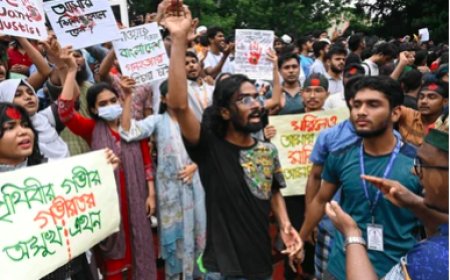
The most likely outcome is a military coup. Then popular uprising. Then civil war. In Bangladesh, we witnessed a popular uprising.
In this dataset, of the 20 cases where popular uprisings occurred, 10 subsequently transitioned to democracy, and 10 returned to autocracy.
Examples of personalist autocracies transitioning to democracy through popular uprising include Georgia (after the 1993–2003 regime), Serbia (after the 1992–2000 regime), Azerbaijan (after the 1992 regime), Mali (after the 1969–1991 regime), and Bangladesh (after the 1983–1990 regime).
Examples of returning to autocracy after a popular uprising include Kyrgyzstan (after 2006–2010, and after 1992–2005), Armenia (after 1995–1998), Haiti (after 1958–1986), and Sudan (after 1970–1985).
Bangladesh experienced a popular uprising, followed by an election. It's too early to say whether a full transition to democracy has occurred.
In 2026, for the first time since 2008, the people of this country voted in an election filled with uncertainty. If we see elections in 2031, 2036, and 2041 where the ruling party has at least some possibility of losing power, perhaps we can say we have become a democracy.
The past year and a half under the interim government has not been comfortable. To return to democracy, we endured another undemocratic government after removing one. During this time, there were many human rights violations, many provocations. The people of Bangladesh gritted their teeth and waited for stability.
I don't like reducing Bangladesh to just another data point to compare with others. But still -- perhaps because of my training over the past year and a half -- when I look at the other examples, the outcome following our personalist autocracy could have been far worse. It wasn't.
For this alone, we must praise the patience and resilience of all stakeholders and the people of Bangladesh. The greatest reward for this would be never returning to autocracy again.
Yasin Shafi is a PhD Candidate of political science at Penn State University.