



















































![A Ledger of the Soul: Navigating the Allah-Bhagavant Nexus in a 19th-Century Puruṣākāra Jñāna Caupara [Gyan Chauper]](https://counterpointbd.com/uploads/images/202608/image_430x256_6a93baa3b09a7.jpg)



















From Collateral to Customers: Rethinking Capital Allocation in Bangladesh
The country has already demonstrated remarkable resilience and creativity in its economic journey -- from garments to remittances to microfinance. The next chapter will require an equally bold shift in how capital is allocated.


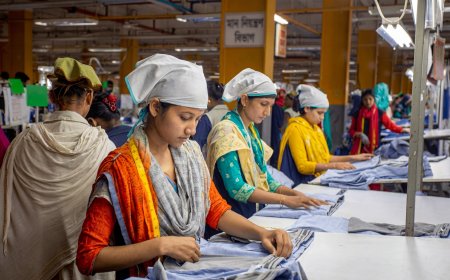
For most of modern economic history, capital has flowed toward tangible assets. Banks financed land, factories, ships, and machinery because these assets could be seen, touched, and seized in the event of default. This logic shaped the financial architecture of the industrial era.
Bangladesh’s capital allocation system still largely operates within this paradigm.
To obtain financing, entrepreneurs must typically pledge land, buildings, or heavy equipment as collateral. The system works well for industries that resemble the 19th and early 20th century -- manufacturing plants, real estate, or physical infrastructure.
But the world economy has changed. Increasingly, the most valuable businesses are built not on land and machinery, but on networks, customers, data, and digital platforms.
In the global economy today, the real engine of enterprise value is reach -- how many people transact with you, how frequently they do so, and how deeply integrated your service is in their daily lives. Yet Bangladesh’s financial system struggles to recognize these forms of value.
A company serving hundreds of thousands of customers digitally may struggle to secure bank financing if it lacks collateralized land. Meanwhile, a firm owning real estate may obtain credit more easily even if its productivity and growth potential are far lower.
This mismatch between how value is created in the modern economy and how capital is allocated has become one of the quiet constraints on Bangladesh’s next phase of growth.
There is another risk for Bangladesh. If capital continues to flow primarily toward asset-heavy industries without careful coordination with infrastructure capacity, Bangladesh risks over-investing in sectors that the broader economy cannot efficiently support.
Industrial policy cannot operate in isolation from the realities of energy supply, logistics capacity, and infrastructure constraints. New factories financed by bank credit may face years of delay waiting for gas connections.
Production may expand faster than port capacity can handle. Containers accumulate at ports while ships wait offshore. Roads connecting industrial zones to ports remain congested. When capital deployment outruns infrastructure capacity, the result is not faster growth -- it is economic congestion.
Bangladesh has already experienced periods where rapid industrial expansion strained supporting infrastructure. As the economy grows larger and more complex, the cost of misallocated capital will only increase.
We need to not only consider what infrastructure to build, but also consider how to use this infrastructure more efficiently -- which means more investment in coordination technology and software. The question of capital allocation should be considered deeply as part of national economy strategy.
Bangladesh has already demonstrated the ability to innovate in financial thinking. The global microfinance movement, pioneered by Dr. Yunus, showed that credit could be extended without traditional collateral, relying instead on trust, community structure, and repayment behavior.
Microfinance proved that when capital flows to productive people rather than to assets alone, entire economies can be transformed.
However, this innovation largely stopped at the micro level. As businesses scale beyond small enterprises, the financial system reverts to the old industrial logic: Collateral, land titles, and machinery valuations. In a digital economy, these measures increasingly fail to capture where real value lies.
Consider how modern companies grow. A logistics platform’s strength lies in its delivery network, relationships and mapping backbone. An e-commerce platform’s value lies in the number of active buyers and sellers. A fintech company’s strength lies in transaction flows and trust in its payment network. These are intangible but measurable assets.
Globally, financial systems are beginning to recognize this shift. Venture capital, revenue-based financing, and data-driven credit models increasingly evaluate businesses based on customer acquisition, revenue growth, and transaction activity rather than fixed collateral.
Bangladesh must now begin the transition toward a similar framework. This does not mean abandoning prudence in lending. Rather, it means expanding the definition of what counts as productive capital.
The country’s next generation of companies -- digital commerce platforms, logistics networks, financial technology providers, and service marketplaces -- will not always be built on factories and machinery. They will be built on distribution networks, software systems, and millions of customer relationships.
If capital cannot flow to these sectors efficiently, Bangladesh risks slowing its transition into the next stage of economic development. The challenge, therefore, is not merely financial -- it is institutional.
Bangladesh must gradually evolve from a collateral-based lending system to a productivity-based capital allocation system. Such a transformation would require several policy shifts.
First, regulators and financial institutions should begin recognizing cash flows and transaction data as legitimate indicators of creditworthiness. Businesses with large volumes of verifiable digital transactions can demonstrate reliability and market demand even without traditional collateral.
Second, Bangladesh should encourage the development of revenue-based financing and venture lending frameworks that support companies whose value lies in customer networks rather than physical assets.
Third, credit scoring models should incorporate digital transaction histories, payment flows, and customer activity metrics. As digital platforms expand across the economy, these datasets can provide more accurate signals of business health than static asset valuations.
Fourth, financial regulators can enable innovation sandboxes where banks and fintech firms experiment with new lending models based on platform data, merchant revenues, and supply chain relationships.
Finally, Bangladesh should actively develop capital market pathways that allow growing technology and platform companies to access equity financing earlier in their life cycle.
These reforms would not replace the existing financial system overnight. Collateral-based lending will always remain important for infrastructure, manufacturing, and real estate development.
But alongside it must emerge a complementary system designed for the digital and network-driven economy. The Prime Minister’s office could play a catalytic role in accelerating this shift through several strategic directives:
1. Establish a National Task Force on Modern Capital Allocation bringing together Bangladesh Bank, the Ministry of Finance, fintech innovators, and private sector leaders to design frameworks for data-driven lending.
2. Mandate development of a Digital Transaction Credit Infrastructure, enabling verified platform transaction histories to be used in formal credit scoring.
3. Create regulatory space for revenue-based financing and venture lending, allowing financial institutions to extend credit based on predictable revenue streams rather than physical collateral.
4. Launch a sovereign-backed Growth Capital Facility that co-invests with private investors in high-growth technology and platform companies.
5. Modernize capital market regulations to allow innovative companies access to equity financing earlier in their development cycle.
These reforms would help Bangladesh move from a system where capital follows assets of the past to one where capital supports the engines of the future.
The country has already demonstrated remarkable resilience and creativity in its economic journey -- from garments to remittances to microfinance. The next chapter will require an equally bold shift in how capital is allocated.
In the coming decade, the most valuable assets in Bangladesh may not be land titles or factory floors, but networks of trust connecting millions of citizens through digital platforms. A financial system that recognizes this reality will not only unlock new industries -- it will shape Bangladesh’s position in the global economy of the 21st century.