




















































Memory, Myth, and the Performance of War in Bangladesh’s Media
Bangladesh deserves better than slogan-driven geopolitics. It deserves journalism that can critique American power without romanticizing Iranian power, question Israeli policy without indulging conspiracy, and evaluate Russia, China, or Pakistan without reflexive alignment.

Growing up, I lived through two geopolitical eras that deeply shaped public imagination in our part of the world: The era of Saddam Hussein and the era of Osama bin Laden. Both were more than political figures -- they were cultural phenomena.
In poster shops, on T-shirts, and in tea-stall conversations, they were portrayed as defenders of faith, civilizational warriors, even messianic figures.
At times, reading parts of the local press, it felt as if the United States was on the verge of collapse -- that any day now it would “break.”
And then, suddenly, it didn’t.
One was captured, the other killed. The mythology evaporated. With time, both faded from popular imagination, reduced to historical footnotes rather than the apocalyptic turning points they once seemed to be.
The Recycling of Heroic Narratives
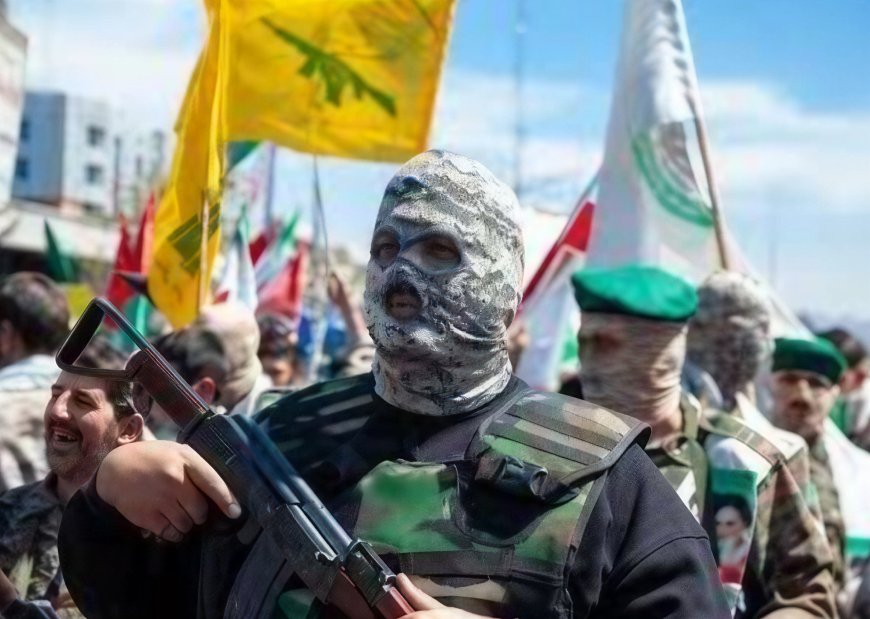
Today, amid renewed tensions between Iran and the United States, we are witnessing a familiar script. Sections of Bangladeshi media have once again adopted a moral posture that instinctively champions one side, this time Iran.
The attacks on outlets like The Daily Star and Prothom Alo in recent years illustrate the pressures within the media ecosystem -- pressures that reward emotional alignment over analytical distance.
Headlines drift from reporting into theatre. They are designed less to inform than to provoke -- to arouse identity, outrage, pride, or humiliation.
Cities are described as “reduced to dust.” Leaders are said to be “hiding in rat holes.” Aircraft carriers are imagined “sinking beneath the sea.”
Religious symbolism is invoked. Masculinity is dramatized. Complex military exchanges are reduced to mythic duels.
These are not informational headlines. They are emotional devices.
The Complexity We Avoid
Iran is neither cartoon hero nor cartoon villain. Its regional role is deeply contested. It has been accused of financing armed non-state actors, destabilizing neighboring countries, and carrying out mass executions domestically.
At the same time, it faces profound internal change -- visible dissent, growing secular tendencies among younger generations, and fatigue with clerical authority. None of this fits neatly into a slogan.
Yet instead of layered analysis, we are repeatedly offered binaries: resistance versus imperialism, Islam versus the West, hero versus oppressor.
A consistent strategic framework is rarely applied. Regional power balances, economic consequences, military realities, and human rights records across actors -- Iran, the United States, Israel, Pakistan, Russia, and China -are seldom examined systematically.
The inconsistency reveals something uncomfortable: Many narratives are driven less by principle than by tribal reflex.
Why This Matters for Bangladesh
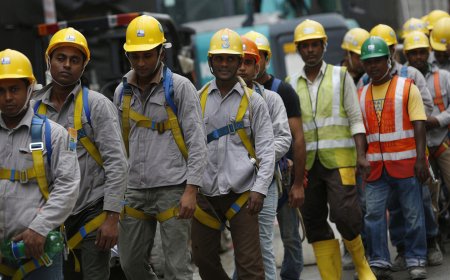
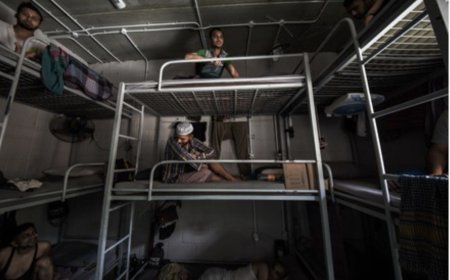
Bangladesh is not a distant spectator to Middle Eastern geopolitics. More than five million Bangladeshi workers live across Gulf countries such as Saudi Arabia, United Arab Emirates, Qatar, Kuwait, Oman, and Bahrain.
Their remittances form one of the pillars of Bangladesh’s economy. At the same time, Bangladesh’s largest export sector -- garments -- remains heavily dependent on Western markets, particularly the United States.
Yet while some commentary celebrates the imagined downfall of America, it rarely addresses a basic question: What would happen to the Bangladeshi economy if that actually occurred?
Serious geopolitical discussion would confront such contradictions.
Instead, we often see emotional cheering for outcomes that could severely damage our own national interests.
The Myth of the “Saviour of Islam”
Another recurring narrative is the idea that certain political figures are the “saviours of Islam.” It was said about Osama bin Laden. It was said about Saddam Hussein.
Yet Islam did not collapse after their deaths. In fact, it continues to grow globally. It is a curious claim that one of the world’s largest religions requires a political strongman to survive.
Civilizations rarely hinge on a single individual. Religions certainly do not.
The Lesson from Memory
The arc from Saddam to bin Laden offers a sobering reminder: Political mythologies are loud in the moment and quiet in retrospect.
The posters fade.
The slogans disappear.
The “inevitable victories” never quite arrive.
What remains are destabilized regions, economic consequences, lost lives, and societies that were never encouraged to think critically in the first place.
Bangladesh deserves better than slogan-driven geopolitics. It deserves journalism that can critique American power without romanticizing Iranian power, question Israeli policy without indulging conspiracy, and evaluate Russia, China, or Pakistan without reflexive alignment.
Because when geopolitics turns into theatre, public judgment weakens. And when public judgment weakens, nations eventually begin to misread the world and pay the price for it.
Muhaimen Siddiquee is a brand and communications professional with a strong interest in culture, politics, and history. An IBA graduate, he applies insights from consumer behaviour to understanding shifts in society and historical changes.