





































![A Ledger of the Soul: Navigating the Allah-Bhagavant Nexus in a 19th-Century Puruṣākāra Jñāna Caupara [Gyan Chauper]](https://counterpointbd.com/uploads/images/202608/image_430x256_6a93baa3b09a7.jpg)




















An Egg Today or a Chicken Tomorrow: The Economics of Time and Trust
Ultimately, the wisdom of “an egg today is better than a chicken tomorrow” is not a rejection of the future. It is a reminder that time, risk, and trust matter. The future must earn its value; it cannot merely be promised

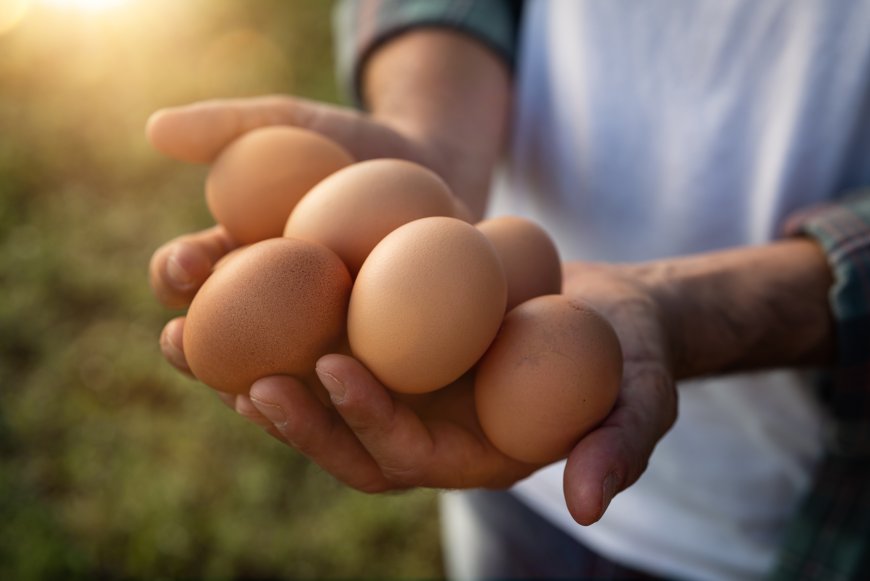
It is better to have an egg today than a chicken tomorrow?
This simple proverb captures one of the most powerful ideas in economics and human behavior: what we have now is usually worth more than what we are promised later.
Behind this everyday wisdom lies the concept of the time value of money -- the notion that money available today is more valuable than the same amount promised in the future.
While the idea sounds technical, its implications stretch far beyond finance textbooks. It shapes how people save, spend, invest, negotiate wages, make policy choices, and even how entire economies rise or stagnate.
At the heart of this principle is uncertainty. An egg in hand is real, tangible, and usable. A chicken tomorrow is only a possibility. The future is never guaranteed: plans may change, conditions may worsen, and promises may be broken.
Even if the chicken does arrive, it arrives later, after time has passed during which the egg could have been eaten, sold, or used to sustain life. Time itself has value, and anything deferred must compensate for that lost time to be considered equally attractive.
Money works in exactly the same way. One hundred taka today can be spent immediately on food, education, healthcare, or business. It can be saved in a bank to earn interest or invested in an activity that generates income.
One hundred taka promised next year cannot do any of these things today. To make people indifferent between money now and money later, the future amount must be larger. That additional amount is the price of time, risk, and lost opportunity.
Some form of return on deferred wealth has existed in every functioning economy because it reflects a basic human truth: time and uncertainty matter. People value what they can use today more than what is promised tomorrow.
Conventional finance expresses this reality through interest, while classical Islamic thought approaches it differently -- not by denying the cost of waiting, but by refusing to treat money itself as self-generating.
In Islamic reasoning, reward is justified only when it is tied to risk, effort, or real exchange, not merely to the passage of time.
The language differs, but the intuition is shared: giving up certainty today demands fair compensation tomorrow. If deferred exchange carried no reward at all, people would cling to immediate possession, trade would wither, and economic life would slow.
Across systems, the enduring principle remains the same -- no patience without the possibility of gain, no gain without bearing risk, and no future without trust that waiting will be worth it.
The egg-and-chicken analogy also helps explain why inflation is so corrosive. Inflation reduces the future purchasing power of money. If prices rise, the same amount of money tomorrow buys fewer goods than today.
In such an environment, people become even more reluctant to defer consumption. They rush to spend, convert money into assets, or demand higher interest rates. When inflation expectations become entrenched, the future is discounted heavily, and long-term planning suffers.
Why wait for a chicken tomorrow if today’s egg is steadily shrinking in value?
This logic extends beyond individuals to businesses. Firms face constant choices between immediate cash flows and future gains.
A project that promises large returns in ten years may look attractive on paper, but if it ties up capital today and exposes the firm to uncertainty, it may be rejected unless the expected return is sufficiently high.
This is why investment decisions rely on discounted cash flow analysis: future earnings are “discounted” back to today’s value. The farther into the future the earnings lie, the less they are worth today.
Governments, too, are not immune to the time value of money, though they often behave as if they are. Policy-makers routinely promise future benefits-higher growth, better infrastructure, social security, or climate resilience-while imposing immediate costs through taxes, borrowing, or inflation.
Citizens, however, live in the present. If today’s sacrifices are not clearly linked to tangible near-term benefits, public trust erodes.
The political economy of reform is often derailed because people are asked to give up today’s egg for a chicken that may or may not arrive under a different government.
Public debt illustrates this tension vividly. Borrowing allows governments to spend today while shifting repayment into the future. This can be justified when borrowed funds are used for productive investment that benefits future generations.
But when debt finances current consumption or inefficient spending, the logic of the egg and chicken turns against the state.
Future taxpayers inherit the obligation, while today’s benefits may already have been consumed. If growth fails to materialize, the promised chicken never comes, and society is left with neither egg nor chicken -- only the bill.
The proverb also sheds light on why credibility matters so much in economic systems. A promise of money tomorrow is only as good as the trustworthiness of the promisor.
Strong institutions, enforceable contracts, and predictable policies reduce uncertainty and raise the value of future promises. In such environments, people are more willing to defer gratification, save, and invest.
Weak institutions, by contrast, force people to live hand-to-mouth. When promises are unreliable, everyone prefers the egg today, even if that choice is inefficient in the long run.
This preference for immediacy often gets criticized as shortsightedness. But it is important to distinguish between irrational impatience and rational response to risk.
In unstable economies, choosing today’s egg is not a moral failing; it is survival strategy.
When inflation is high, employment insecure, and policy unpredictable, long-term promises lose meaning. Encouraging long-term thinking in such contexts requires more than lectures -- it requires stabilizing the environment so that tomorrow becomes believable.
The egg-versus-chicken idea also speaks to personal finance and life choices. People are constantly tempted by immediate consumption at the expense of future well-being. Spending today instead of saving for retirement, leisure instead of skill development, or convenience instead of health often reflects an undervaluation of the future. Here, the proverb needs a subtle reinterpretation.
Sometimes, the chicken tomorrow really is worth more than the egg today -- but only if the chicken is reasonably certain and significantly larger. Wise decision-making lies not in always choosing the present, but in correctly pricing the future.
Education is a classic example. Forgoing income today to study is like giving up an egg in hopes of a chicken later.
If the education is relevant and the economy can absorb skilled labor, the future payoff justifies the wait. But if education does not translate into employability, the promise collapses.
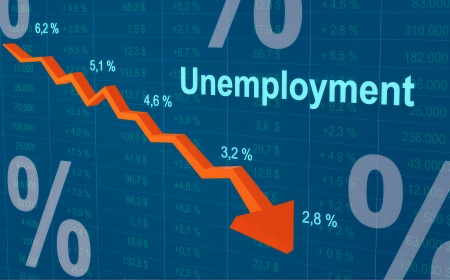
The growing frustration among educated but unemployed youth in many countries reflects a broken contract between present sacrifice and future reward. The chicken was promised, but never delivered.
In financial markets, this proverb explains why liquidity is prized. Cash on hand provides flexibility. It allows quick responses to opportunities and shocks. Assets that lock up value for long periods must offer higher returns to compensate for their illiquidity.
This is why long-term bonds pay higher interest than short-term ones, and why investors demand risk premiums for tying up capital. Liquidity is, in essence, the economic value of the egg today.
Yet, taken too far, the preference for immediacy can undermine collective prosperity. If everyone insists on today’s egg, long-term investments in infrastructure, research, environmental protection, and human capital may be neglected.
Societies then risk becoming trapped in a low-investment equilibrium, consuming their present without building their future.
The challenge is not to deny the time value of money, but to design systems where future chickens are credible, visible, and fairly distributed.
Ultimately, the wisdom of “an egg today is better than a chicken tomorrow” is not a rejection of the future. It is a reminder that time, risk, and trust matter. The future must earn its value; it cannot merely be promised.
Economies function best when today’s needs are met without mortgaging tomorrow, and when tomorrow’s rewards are solid enough to justify patience today.
When institutions are strong and policies credible, people willingly wait for the chicken. When they are not, the egg becomes king.
In that sense, the proverb is less about greed and more about realism. It urges us to respect the value of the present while being honest about the future.
In money, in policy, and in life, the challenge is to strike a balance-ensuring that today’s egg nourishes us, while tomorrow’s chicken is not just a hopeful story, but a meal we can genuinely expect to enjoy.