


































































The Iran Trap: Why War Could Become America’s Costliest Gamble
Instead of a single battlefield, the United States could find itself managing simultaneous crises across several countries, dramatically increasing the complexity and cost of military operations. Recent history offers sobering lessons about the limits of military power in such environments.

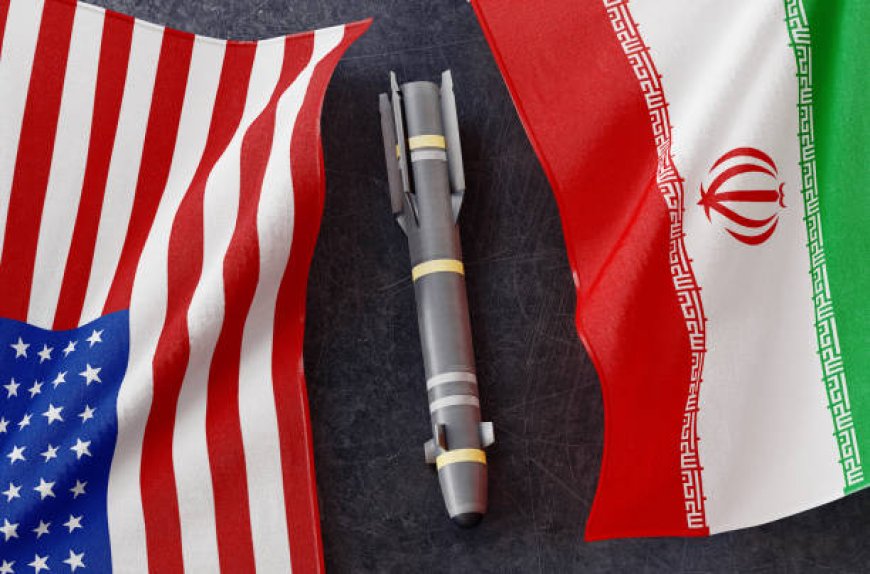
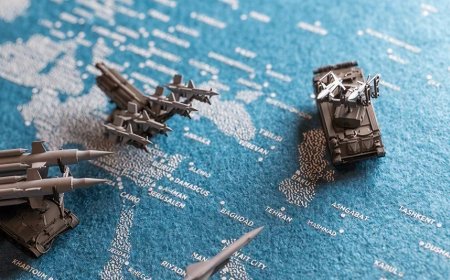
In an era marked by shifting allegiances and rising geopolitical tensions, one of the most volatile fault lines in international relations appears to be the one between the United States and Iran.
Although the possibility of direct military conflict between these two powers has been raised intermittently over the past two decades, the current strategic landscape appears to make such a conflict far more complex, and potentially far more dangerous, than many policymakers may assume.
At first glance, the balance of power appears overwhelmingly tilted in favor of the United States. Washington enjoys unparalleled global military power, technological sophistication, and access to numerous military bases and allied forces.
Iran, conversely, does not enjoy comparable military capabilities and continues to struggle with economic sanctions and political isolation.
Yet modern warfare rarely unfolds according to simple calculations of military superiority. In fact, if the conflict between the United States and Iran were to occur, it may not be a war between the two countries, but rather a multidimensional conflict influenced by asymmetric warfare, proxy wars, cyber warfare, and global economic warfare. In such an atmosphere, even a superpower may be forced into an uncertain conflict.
One of the major frameworks for understanding the above phenomenon is the theory of asymmetric warfare. Throughout history, weaker states have often managed to resist stronger opponents by avoiding direct military confrontations.
Rather than seeking decisive battlefield victories, these actors pursue strategies of attrition designed to raise the political and economic costs of war for their opponents.
Iran’s defense doctrine has been shaped by precisely this logic. Since the end of the Iran-Iraq War in 1988, Tehran has been steadily building a military strategy of resilience, deterrence, and the ability to fight an asymmetric warfare for a long period.
Instead of trying to match the USAs power directly, Tehran has focused on building military capability to prolong any military action against it.
One of Irans most important strengths is its geographical position. Its vast size, mountains, and the fact that its cities are not clustered together make it very difficult for an enemy to invade the country.
It has been reported that the country’s military centers, missile bases, and operational centers have been built underground and are resistant to aerial strikes.
Such defensive preparations significantly reduce the effectiveness of rapid “shock and awe” strategies that characterized earlier U.S. military interventions in the Middle East.
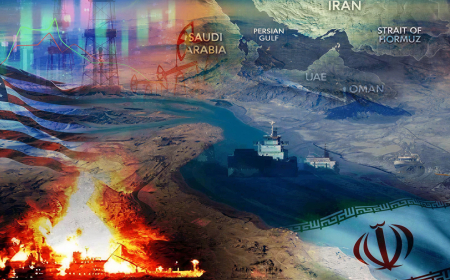
Beyond geography, Iran has invested heavily in a layered deterrence strategy built around missiles, drones, naval asymmetry, and cyber capabilities. Iran’s ballistic missile arsenal -- among the largest in the region provides the capacity to strike military bases and infrastructure across the Middle East.
Meanwhile, advances in drone technology have expanded Iran’s ability to conduct precision attacks against both military and economic targets.
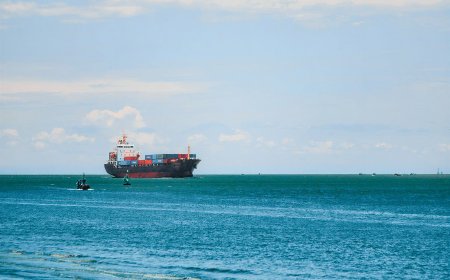
The maritime domain represents another potential flashpoint. Iran’s naval strategy follows the concept of asymmetric warfare, which focuses on disrupting maritime traffic in the Persian Gulf, particularly in the Strait of Hormuz, through which the bulk of the world’s oil supplies are transported. Any disruption of maritime traffic on this route may lead to economic instability.
Possibly the most intricate aspect of Iran’s strategic posture is its web of regional allies and affiliated groups in the Middle East. This group is often referred to as the “Axis of Resistance.”
This group consists of groups in Lebanon, Iraq, Syria, and Yemen. In the event of a direct conflict between the US and Iran, these groups may be able to engage the US and its allies on multiple fronts.
Such a scenario would transform a bilateral conflict into a broader regional confrontation.
Instead of a single battlefield, the United States could find itself managing simultaneous crises across several countries, dramatically increasing the complexity and cost of military operations. Recent history offers sobering lessons about the limits of military power in such environments.
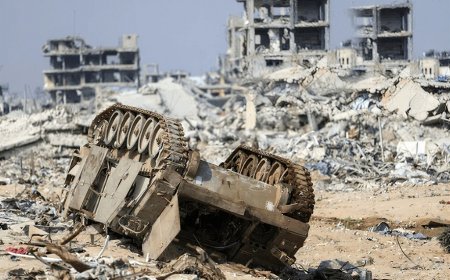
This is evident from the experiences of the United States in the Vietnam War, Iraq War, and the War in Afghanistan, where technologically advanced military forces have often struggled against opponents who have resorted to unconventional warfare.
Iranian strategists have closely studied these precedents. Their approach emphasizes patience, endurance, and the gradual erosion of an adversary’s political will.
For Tehran, the objective would not necessarily be an immediate victory but rather the transformation of the conflict into a prolonged struggle in which Washingtons political costs steadily increase.
A war involving Iran would also carry profound economic implications. The Persian Gulf remains a focal point of global energy production, and any issues with these routes could lead to significant increases in oil prices. These economic fluctuations would affect economies far removed from the conflict.
Equally significant is the broader geopolitical context in which such a conflict would unfold.
Today, the global scene appears to be witnessing a new kind of multipolar rivalry among major powers such as China and Russia. Although these powers may not directly intervene in a military conflict between the US and Iran, their relations with Iran may still affect the conflict.
What should be learned from this conflict, however, is not that war between the United States and Iran is inevitable, nor that the United States would automatically lose such a war.
What should be learned from this conflict is that, in an era of asymmetrical warfare and multipolar geopolitics, military power alone is not enough to guarantee strategic success.
The problem for policymakers is that they must grasp that the risks of escalation in this conflict can reach far beyond the field of battle.
A conflict with Iran will not be a mere military conflict; it will also be a geopolitical gamble with implications for regional stability, global energy markets, and the emerging structure of the international order.
In a world already marked by rising tensions and fragile alliances, the true cost of such a gamble could prove far greater than anyone anticipates.
Dr. Serajul I. Bhuiyan is professor and former chair of the department of journalism and mass communications at Savannah State University, Savannah, GA, USA. Contact: [email protected].