





































![A Ledger of the Soul: Navigating the Allah-Bhagavant Nexus in a 19th-Century Puruṣākāra Jñāna Caupara [Gyan Chauper]](https://counterpointbd.com/uploads/images/202608/image_430x256_6a93baa3b09a7.jpg)



















The Middle Eastern Job Market Is Dead
The countries that thrive in the next decade will be those that export skilled humans -- not bodies. The countries that survive will be those that build talent -- not hope for visas. And the countries that collapse will be those that cling to dead models and call it “tradition.”

Let’s drop the politeness. The Middle Eastern job market that carried rural Bangladesh for four decades is not “declining.” It is not “tightening.” It is not “challenging.”
It is dead.
Clinically dead.
Only Bangladesh hasn’t smelled the smoke yet.
Drivers are being deleted. Construction workers are being replaced. Helpers, loaders, cleaners -- entire categories of our migrant workforce -- are being written out of the Gulf’s economic script. And while this economic funeral is taking place in broad daylight, we are still standing at the gate asking whether the body is awake.
The first collapse is already visible: driving. For decades, Bangladeshi drivers formed the backbone of Gulf transport -- taxis, buses, logistics, private cars. Now look at reality. Dubai is rolling out robotaxis. Abu Dhabi is running fully driverless shuttles. NEOM is designing a mobility grid that treats human drivers as optional.
Saudi Arabia is preparing for Tesla-style robotaxis once regulation matures. Every autonomous trial, every new deployment, every small expansion of driverless fleets means one thing: a future Bangladeshi driver quietly erased from the workforce. A robotaxi never sleeps, never argues, never violates traffic rules -- and, crucially, never sends remittances home.
The second collapse is construction -- and it’s even more brutal. For years, our masons, helpers, shutter men, steel fixers, carpenters, and tile workers built the skylines of Dubai, Doha, Riyadh. That era is over. The Gulf is now building cities inside factories. NEOM, Dubai, Abu Dhabi, and Qatar are shifting to prefabrication, modular construction, robotic bricklaying, 3D printing, drone surveying, automated cranes, and AI-driven project management. The new construction model is not labour-hungry -- it is labour-resistant. A modular wall does not need a helper. A robotic arm does not need a visa. A 3D printer does not queue at BMET.
And here is Bangladesh’s fatal flaw: the workers we send to the Gulf -- the ones who are being replaced first -- are overwhelmingly operating with Class 5 to Class 8 education. No HSC. No English. No trade certification. No AI literacy. No foundation to adapt. We are exporting 1980s labour into a 2035 job market. It is a mismatch so catastrophic that no amount of wishful thinking can bridge it.
But the crisis doesn’t end there. On the opposite end of our pipeline -- the “educated” segment -- the situation is equally alarming.
Our undergraduate degrees are frequently perceived as low-tier abroad, and recently, Singapore’s Ministry of Manpower took the unprecedented step of downgrading Bangladeshi degrees: a bachelor’s is treated like a foundation course, and a master’s is treated like a bachelor’s.
UK universities are tightening scrutiny. Australian institutions are rejecting more applicants. In the US, India sends 360,000 students; we send 17,000 -- roughly one Bangladeshi for every twenty Indians. Why? Because India built low-interest student loans, accreditation reforms, and a global education strategy. We built consultancy shops and weak universities.
So here we are:
- Low-skilled workers are being automated out of existence.
- High-skilled workers lack globally credible degrees.
- And the middle -- our entire youth pipeline -- has no map.
This is not mismanagement. This is a national rupture.
The first step must be honesty. We must stop sending half-made young men abroad. Every Gulf-bound youth must be counselled -- at the district level -- to finish HSC. No more exporting Class 5 labour into a robotic economy.
Then comes the new backbone of Bangladesh: certified technical training. Certification -- not degrees, not “courses,” not agent-driven fantasies -- is the new passport.
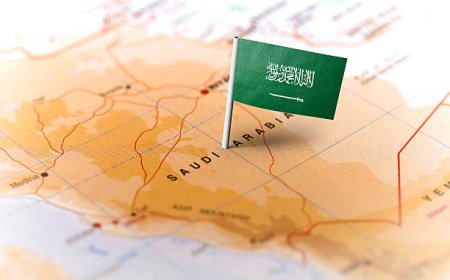
The Gulf, through the Saudi Skill Verification Program (SVP), has already declared exactly whom they want: electricians, plumbers, HVAC technicians, welders, solar installers, automotive technicians, healthcare technicians. These jobs survive automation because they require dexterity, judgment, and troubleshooting -- capabilities robots cannot replicate on chaotic real-world sites.
A young Bangladeshi with HSC + 12 - 24 months of certified training becomes employable not just in the Gulf but in Japan, Germany, Canada, Australia, and Eastern Europe. Certified skill is the only lifeline left for low-income families.
Then comes the national moonshot: the Nursing Revolution. Nursing is automation-proof. It is globally short by millions. Saudi and UAE now include nursing pathways within SVP. The US alone faces a shortage exceeding 500,000 nurses. Filipino nurses send USD 15-20 billion home every year -- equivalent to our garments exports if we subtract the raw material imports needed for production -- with a fraction of the investment.
If Bangladesh builds accredited nursing academies, English and OET/IELTS pipelines, and NCLEX-ready curricula at district level, we can unlock a middle-class export industry far more powerful than anything in our past.
But there is a missing link -- the one we ignored for 50 years and China perfected:
Early job mapping and placement.
China does not leave its youth to wander through random degrees and blind hopes. They map global labour demand, align districts with specific skills, and push students through structured pipelines from adolescence. Their schools do not guess which industries need workers; they match young people to future sectors with military precision.
Bangladesh must adopt the same discipline:
Class 6 counselling, district-level skill maps, clear pathways for trades, nursing, and global education -- and an end to the national lottery we call “career planning.”
This is where everything ties together:
The Gulf no longer needs our low-skilled labour. The world does not trust our weak university degrees. Singapore has literally stopped recognizing them.
And without China-style mapping, our youth have no direction at all.
If we do not rebuild the foundation -- schooling, HSC completion, certification, nursing, English, AI literacy, and structured placement — we lose both ends of the global labour market at the same time.
Bangladesh cannot survive that.
The way out is clear:
- Counsel from Class 6
- Mandatory HSC completion
- China-style skill mapping and placement
- Certified trades as the national workforce backbone
- Nursing as the flagship export
- Low-interest loans for global education
- Accreditation reform or closure for universities
- AI and English literacy for every student
The countries that thrive in the next decade will be those that export skilled humans -- not bodies. The countries that survive will be those that build talent -- not hope for visas. And the countries that collapse will be those that cling to dead models and call it “tradition.”
The Middle Eastern job market is dead. Whether Bangladesh dies with it depends entirely on what we choose to do next.
And the clock, unfortunately, is already ticking.
Kawsar Chowdhury is an entrepreneur, commentator, and Co-Chair of the Global Bangladeshi Alliance.