



















































When Transition Becomes a Gendered Battlefield
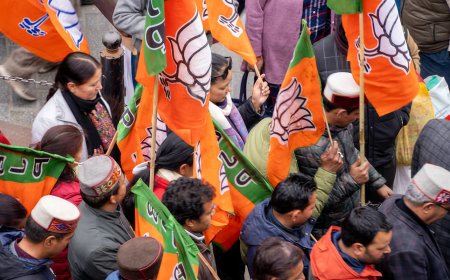
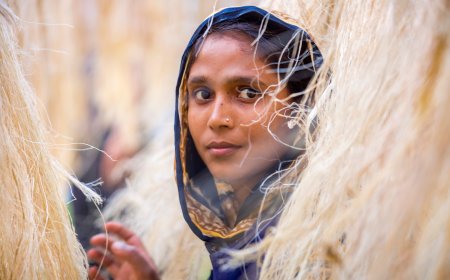
Bangladesh does not lack visible women, women in campaigns, women in commemorative posters, women seated at consultation tables, women repeatedly invoked in speeches. But visibility without authority is not empowerment; it is performance.

Political transitions are often framed as moments of democratic possibility, new rules, new actors, new beginnings. In Bangladesh, as in many post-authoritarian or transitional contexts, the language of reform, neutrality, and renewal has dominated public discourse.
Yet beneath this rhetoric lies a familiar contradiction: Women are highly visible in political conversations but largely excluded from political power.
Gender equality becomes something to be spoken about, debated, even moralized, while women themselves remain peripheral to decision-making processes.
This contradiction is not accidental. Feminist political theory has long warned that transitional moments tend to privilege stability, order, and national unity, concepts historically coded as masculine and frequently mobilized to sideline feminist demands as “secondary” or “divisive” (Phillips, 1995; Fraser, 2013).
In Bangladesh’s current political transition, we see this logic clearly. Women are invited to symbolize democracy but rarely trusted to shape it.
Empirically, this exclusion is visible in the architecture of power. Interim political arrangements, advisory bodies, negotiation spaces, and security-related decision-making remain overwhelmingly male-dominated.
Women appear far more often in press statements, commemorative events, or moral narratives than in rooms where electoral frameworks, law enforcement priorities, or economic recovery plans are decided.
As UN Women’s global research consistently shows, transitional governance structures rarely prioritize women’s representation unless it is explicitly mandated, and Bangladesh is no exception (UN Women, 2018).
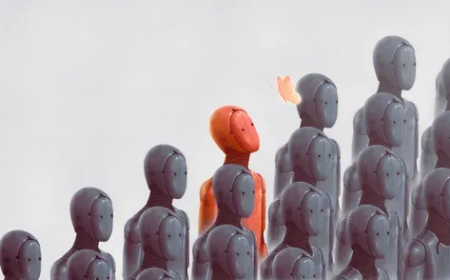
Where women do appear, their presence is often symbolic rather than substantive. This reflects what Anne Phillips describes as the persistent gap between “presence” and “power” (Phillips, 1995). The woman on the panel does not necessarily shape the agenda. The woman in the photograph does not control the budget. Visibility becomes a substitute for redistribution.
At the same time, women’s political participation in Bangladesh is increasingly mediated through sexual and moral scrutiny. Female political actors, whether elected representatives, activists, or family members of politicians, are routinely judged not by policy positions or organizational competence but by dress, lifestyle, sexuality, and perceived respectability.
This is not incidental sexism; it is a form of sexual politics that functions as political discipline.
Recent years offer multiple examples. Women associated with major political families have been publicly shamed for clothing choices, religious identity, or lifestyle, often through digitally circulated images and commentary framed as concern for “culture” or “national values.”
These attacks rarely target men with the same intensity. Male politicians’ corruption, violence, or misuse of power seldom becomes a moral crisis; women’s bodies do. Feminist scholars describe this as gendered political violence, acts that aim not to defeat women politically, but to silence them socially (Krook, 2020; UN Women, 2021).
This pattern is deeply rooted in South Asian political culture, where women’s bodies have long served as symbolic terrain for debates about nationalism, morality, and modernity.
From critiques of Sheikh Hasina’s family members to past scrutiny of Khaleda Zia’s appearance, or earlier regional examples involving Benazir Bhutto and Indira Gandhi, the mechanism is strikingly consistent. Women’s personal lives are politicized to delegitimize their public presence. This is not party-specific; it is patriarchal.
In Bangladesh’s transitional moment, this moral policing has intensified rather than diminished. As political authority becomes uncertain, control over women’s visibility becomes a way of reasserting order. Religion and culture are frequently mobilized not as lived ethical systems, but as performative tools. Who covers their head, when, and in which context becomes a proxy for political legitimacy.
Feminist theorists describe this as religion-as-performance, where women’s bodies function as visual certificates of moral purity rather than sites of personal belief.
This logic denies women what feminist scholars call contextual agency, the ability to navigate different social spaces with intelligence and autonomy (Kabeer, 2011). In Bangladeshi politics, a woman may be expected to perform religious respectability in one space and be condemned for social freedom in another.
The same flexibility that earns men praise as “strategic” or “balanced” is framed as duplicity when exercised by women.
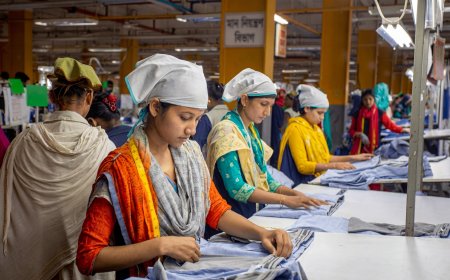
Meanwhile, women’s substantive political labour remains undervalued. During periods of unrest and transition, Bangladeshi women have played critical roles, organizing community support, documenting abuses, sustaining protest infrastructures, and mediating local conflicts.
Yet this labour rarely translates into leadership positions. Feminist political economists argue that this reflects a deeper pattern: Women’s work is treated as social glue rather than political capital (Federici, 2012; Fraser, 2016).
When women fail to convert activism into formal power, feminism itself is blamed. Feminist movements are accused of elitism, detachment, or ineffectiveness. This framing is profoundly misleading.
Feminist organizations in Bangladesh do not control party nominations, campaign financing, media ownership, or law enforcement, factors that research identifies as decisive for women’s political success (UN Women, 2018).
Holding feminists responsible for women’s exclusion is a way of deflecting accountability from male-dominated institutions.
The digital sphere has intensified these dynamics. Online platforms in Bangladesh have become sites of rapid moral policing, where women’s images are extracted, reframed, and weaponized.
Studies on digital misogyny show that such harassment is amplified by algorithmic systems that reward outrage and sexualized content (UN Women, 2021). Women near political power become particularly vulnerable, as digital shaming functions as a warning: Visibility comes at a cost.
This environment produces a profound chilling effect. Political participation no longer feels like a civic right but an endurance test, measuring how much surveillance, humiliation, and violence a woman can withstand before being declared “unfit” for public life. Competence matters less than resilience to abuse.
Women are not asked about policies or visions for governance; they are implicitly asked whether they can survive visibility.
This transforms democracy itself. Participation becomes conditional, uneven, and gendered. Men enter public life with presumed legitimacy; women enter knowing every gesture or photograph may be weaponized.
Power becomes accessible only to those willing to sacrifice privacy and dignity. Many women withdraw or self censor not from lack of capacity, but because the cost of engagement has been made deliberately prohibitive.
This is not formal exclusion, it is exclusion through exhaustion. As feminist theorists note, power often operates not by banning participation but by making it unbearable (Brown, 2015; Ahmed, 2017). Withdrawal is then misread as apathy rather than the result of sustained hostility.
As Brown argues, when inclusion is hollow, democracy becomes performance: Rituals of participation without real power. Women may be invited to appear and speak, yet remain structurally unable to shape outcomes. The spectacle of inclusion masks the reality of exclusion. In this sense, the silencing of women is not a side effect of political transition; it is one of its governing techniques.
International Women’s Day in Bangladesh is routinely marked by polished statements celebrating women’s resilience, sacrifice, and contribution to nation-building. Women are praised as “strong,” “patient,” “hard-working,” and “inspirational.” None of this is untrue.
Yet these narratives are profoundly inadequate. When resilience is endlessly applauded without a corresponding redistribution of power, it ceases to be a virtue and becomes a mechanism of normalization, one that makes inequality appear natural, even admirable.
In this framing, women are valued for enduring injustice rather than dismantling it. Their worth lies in how much political failure, economic insecurity, and social violence they can absorb with dignity, not in their right to shape policy, control resources, or determine political priorities.
Resilience becomes a moral compliment that quietly absolves institutions of responsibility. The state congratulates itself for recognizing women symbolically, while leaving intact the very structures that exhaust them.
Visibility operates in much the same way. Bangladesh does not lack visible women, women in campaigns, women in commemorative posters, women seated at consultation tables, women repeatedly invoked in speeches. But visibility without authority is not empowerment; it is performance.
A woman who is seen but not heard, consulted but not decisive, present but not influential remains structurally marginal. Feminist political theory has long warned that representation without institutional power risks turning women into decorative proof of progress rather than agents of political change.
This is why the language of “progress” during political transitions demands careful scrutiny. Transitional periods are often framed as neutral, technocratic phases in which “larger” concerns, stability, security, electoral order must take precedence, while gender justice is deferred to a later stage.
But postponement is itself a political choice. A transition that reproduces existing gender hierarchies under new leadership or softened rhetoric does not transform power; it simply repackages it.
Transition without gender justice merely rearranges who speaks about women, not who governs with them. It replaces overt exclusion with polite acknowledgment, structural discrimination with symbolic inclusion. The faces may change and the language may evolve, but the rules of political access remain largely intact. Women are invited to witness democracy, not to exercise it.
International Women’s Day should not be a moment of self-congratulation but a moment of reckoning. The question is no longer whether Bangladeshi women are resilient, they have proven that repeatedly, often at great personal cost. The real question is why they are still required to be resilient at all.
Until political transitions genuinely redistribute power rather than rebrand it, women will continue to be praised at the margins while decisions are made at the centre without them.
Feminist political theory is clear: Equality cannot be postponed for the sake of stability. Stability built on exclusion is managed inequality. A genuinely democratic transition must include women not as symbols of morality or endurance, but as political actors with authority, resources, and protection.
The issue is not whether women appear in transitional narratives, they always do. The question is why power continues to be negotiated without them, and why their bodies remain political battlegrounds instead of political voices.
Dr. Lubna Ferdowsi is an academic & researcher in England.