
































![A Ledger of the Soul: Navigating the Allah-Bhagavant Nexus in a 19th-Century Puruṣākāra Jñāna Caupara [Gyan Chauper]](https://counterpointbd.com/uploads/images/202608/image_430x256_6a93baa3b09a7.jpg)


















What is the UN Good For?
If the UN cannot prevent wars, cannot restrain powerful states, or even name the aggressors, then the world must confront an uncomfortable question: Is the United Nations still fulfilling its founding mission?

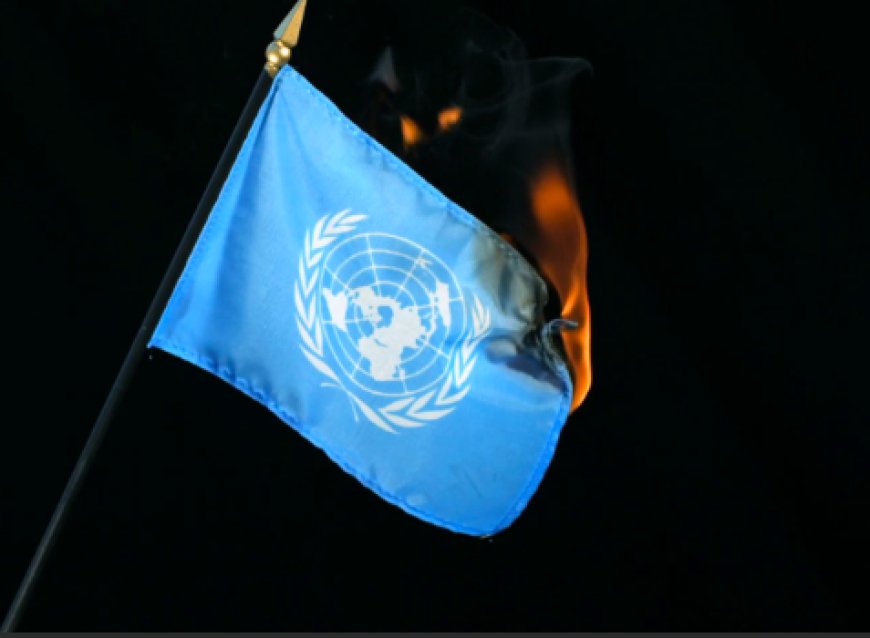
The ongoing conflict in the Middle East involving Iran, the United States, and Israel has revived a troubling question that many in the international community hesitate to ask openly: Has the United Nations outlived its purpose?
The crisis has forced me to confront a question I once thought unthinkable whether the UN still possesses the credibility, or even the courage, to uphold the principles of its own Charter.
For me, raising such a question is deeply uncomfortable.
I spent almost my entire diplomatic career working on United Nations affairs and was among its ardent defenders for much of that time. In international forums I often argued that, despite its imperfections, the UN remained the most important safeguard for smaller and weaker states.
Like many diplomats from the developing world, I believed it embodied a simple but powerful promise: that international law would restrain the arbitrary exercise of power.
Today, however, that belief is increasingly difficult to sustain. The recent war in the Middle East has forced me to confront a disturbing possibility -- that the institution created to prevent wars may now be little more than a spectator to them.
The persistent pattern of inaction, selective moral clarity, and quiet complicity in recent crises has been profoundly disappointing.
The Charter’s Promise
The Charter of the United Nations was adopted in 1945, following humanity's experience of the devastation of two world wars. Its opening pledge remains one of the most powerful statements ever written in international diplomacy: “To save succeeding generations from the scourge of war.”
The Charter established clear legal principles governing international relations.
Article 2(4) prohibits the threat or use of force against the territorial integrity or political independence of any state.
Article 2(3) obliges states to resolve disputes through peaceful means.
Article 51 allows the use of force only in self-defense if an armed attack occurs.
These provisions were supposed to end the era in which powerful states could attack weaker ones at will.
At the founding conference, US President Harry S. Truman described the Charter as “a solid structure upon which we can build a better world.”
The concept itself had been championed by Franklin D. Roosevelt, who believed collective security could replace the destructive power politics that had twice plunged the world into catastrophe.
But looking at today’s geo-political landscape, one cannot help wondering whether that structure is now crumbling from within.
Certain developments in contemporary geo-politics are quite disappointing. The removal of leadership of another country at will, targeted assassinations of leaders of other countries as instruments of state policy, is increasingly being normalised, suggesting a troubling erosion of the legal and moral norms that define the post-war international order.
These practices would have been condemned, but are now becoming quietly accepted. If this trend continues, it will not only weaken international law but also gradually unravel the value-based system espoused since the last world war.
The role of many Western nations, which have championed themselves as defenders of international law and a rules-based international order, has been troubling.
In some instances, these countries have strongly opposed aggressors, as seen in the case of Ukraine.
However, in other situations, they have either remained silent or offered only muted criticism in the face of unprovoked acts of war by powerful, aggressive states.
The Iran war is a case in point.
This selective positioning undermines the credibility of the very value-based system they claim to uphold. Their inaction, or even complicity, proves that political convenience takes precedence over principle, sadly indicating that the powerful are above the law.
The Iran War and the Collapse of Credibility
The military aggression against Iran and no visible action from the United Nations Security Council have once again exposed the fundamental weakness of the body.
Needless to say, military strikes were launched without provocation, even without any pretext of threat to security, as it happened during the last Iraq war, under the cover of the United Nations Security Council.
That raises serious questions about their compatibility with the UN Charter’s prohibition on the use of force.
Yet the United Nations -- supposedly the guardian of international law -- has remained largely powerless. Occasional appeals for restraint, statements of concern, and diplomatic expressions of regret have become routine.
These responses resemble the language of helplessness rather than authority, to say the least. In Ukraine, Gaza or in Iran, the role of the UN has been utterly disappointing.
If the UN cannot prevent or halt wars involving major powers, its central purpose -- maintaining international peace and security -- what is the use of having it in the first place?
The UN Security Council resolution just adopted on the conflict illustrates this moral paralysis more starkly.
The resolution, adopted by a vote of 13, with 2 abstentions, intended to address the humanitarian consequences of the war while deliberately avoiding any reference to the US and Israel, the countries that initiated the hostilities.
In other words, the Council spoke about the war but avoided naming those responsible for starting it. Silence in such circumstances is not neutrality -- it is institutional cowardice.
It is important to recognize that the United Nations reflects the political realities of the international system.
As an intergovernmental body, the decisions made within the UN are determined by the representatives of its member states.
Consequently, the organisation cannot escape the double standards that pervade international politics. It cannot rise above the collective will of the governments that comprise it.
A Choice for the International Community
The United Nations remains the only universal institution for the maintenance of global peace and security. Although it continues to perform important work through its humanitarian agencies, development programs, and peacekeeping operations, its credibility rests on the ability to uphold the principles.
The world desperately needs a functioning system of collective security. If the UN cannot prevent wars, cannot restrain powerful states, or even name the aggressors, then the world must confront an uncomfortable question: Is the United Nations still fulfilling its founding mission? Or, even worse, is it still relevant?
For someone who has spent a lifetime defending the UN, asking this question is painful -- but perhaps the more dangerous course would be not asking it at all.
Md Mustafizur Rahman was the Ambassador and Permanent Representative of Bangladesh to the UN Offices in Geneva and the Deputy Permanent Representative of Bangladesh to the UN in New York.