




































































Why Bangladesh’s Women’s Movement Must Include Men
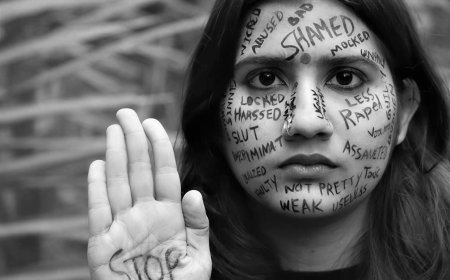
Frustration, when it has nowhere constructive to go, seeks a target. Too often, women become that target -- online through harassment and abuse, offline through control, intimidation, or violence.
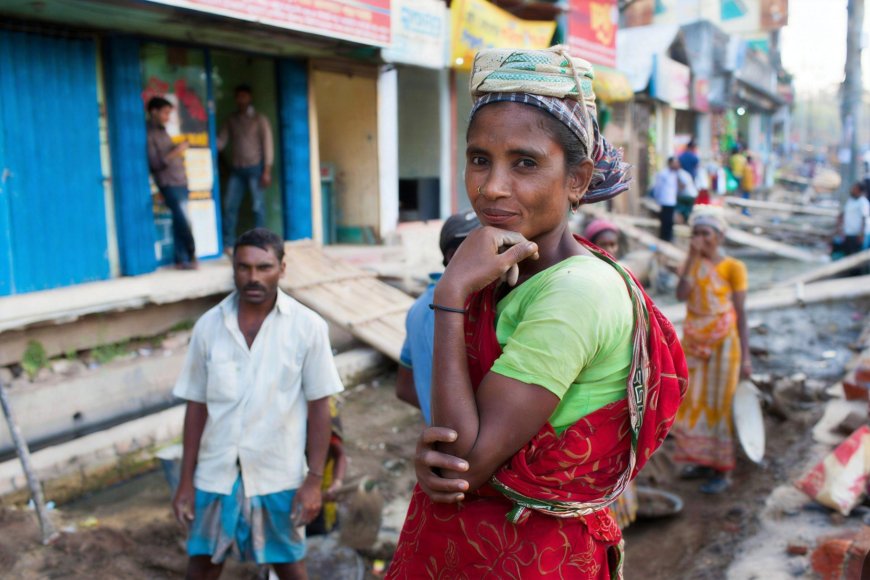
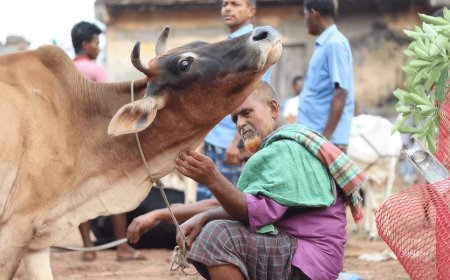
On a winter afternoon in Rangpur, during a courtyard discussion on women’s safety and rights, a man in his early thirties raised his hand. He wasn’t hostile -- just tired.
“Everyone talks about women’s rights,” he said. “But what about my rights? I don’t have a job. My son dropped out of school. Where do we fit?”
The room fell quiet. Not because the question was new, but because it is rarely addressed honestly.
A few months later, at a meeting of BRAC’s adolescent girls’ brigade in a rural area, a group of boys stood at a distance, watching with visible curiosity.
The girls were discussing consent, early marriage, and aspirations beyond school. The boys said nothing. They lingered -- half-interested, half-excluded -- as if this conversation about dignity and futures simply wasn’t meant for them.
These two moments capture a growing fault line in Bangladesh’s gender discourse. The women’s movement -- one of the most consequential in South Asia -- has delivered undeniable progress. But the social context has shifted.
If we do not update the narrative to include men and boys as partners and beneficiaries of equality, we risk deepening precisely what we are trying to overcome: Resentment, misunderstanding, and backlash.
Haed-won Gains in a Changing World
Bangladesh’s women’s movement was not born of comfort. It emerged from necessity -- from the aftermath of the Liberation War, from struggles against poverty, patriarchy, and exclusion. Women organized to claim space in education, health, livelihoods, and politics.
The results are visible and verifiable: Dramatic gains in girls’ schooling, maternal health, women’s workforce participation, and community leadership. For decades, Bangladesh became a global example of how investing in women could transform development outcomes.
For much of this period, women-centred programming was not only justified -- it was essential. Women were systematically denied rights, resources, and voice. Correcting that imbalance required sustained focus and political will.
But history does not stand still.
The Narrative and its Unintended Consequences
Today’s gender conversation unfolds in a very different Bangladesh. Social media amplifies grievance at speed. Economic anxiety runs deep and cuts across gender lines. And a growing number of men and boys feel disoriented -- and left behind.
The pattern is becoming difficult to ignore. Boys are dropping out of school at higher rates than girls in many districts, drifting into informal work, or worse -- into online gambling, substance use, and prolonged unemployment.
According to the Bangladesh Bureau of Statistics, male youth not in education, employment, or training has risen sharply over the past decade, even as female enrolment has improved.
Many young men face a labour market that no longer rewards physical labour alone, while lacking the skills demanded by a digital and service-oriented economy. With few prospects and little emotional scaffolding, a quiet sense of failure takes root.
Frustration, when it has nowhere constructive to go, seeks a target. Too often, women become that target -- online through harassment and abuse, offline through control, intimidation, or violence. A dangerous idea spreads quietly: That women’s gains have come at men’s expense; that gender equality is a zero-sum game.
This is not just inaccurate. It is combustible.
Insecurity Driving the Backlash
The evidence is sobering. Online spaces in Bangladesh are increasingly hostile to women. Public debates about women’s autonomy -- what they wear, where they work, whom they speak to -- have grown more aggressive and more organized. This is not confidence speaking. It is insecurity.
When men cannot fulfil socially prescribed roles as providers or protectors, shame and anger fill the vacuum. Without alternative narratives of masculinity -- ones that value care, partnership, learning, and adaptability -- some retreat into grievance. Women’s rights then appear not as shared progress, but as a direct threat.
We must ask ourselves an uncomfortable question: Will the strategy of advocating for women’s rights without explicitly engaging men still work in this environment? Or does it now risk increasing antagonism toward the very women we seek to protect?
Eqaulity is not Charity
An equal society benefits men as much as it benefits women -- economically, socially, and emotionally. When girls stay in school, boys gain peers who contribute to a stronger economy. When women work, households are more stable, easing the pressure on men to be sole breadwinners.
When care work is shared, men experience deeper relationships with their children and carry less stress. When violence against women declines, communities become safer for everyone.
These are not abstract ideals. They are practical outcomes with measurable consequences.
Yet we have communicated this poorly -- or not at all. Too often, gender conversations frame men as obstacles to progress rather than as stakeholders in it. Too often, boys are left as spectators, watching from a distance, curious but uninvited -- exactly like those boys at the girls’ brigade meeting.
From Opposition to Partnership
Changing course does not mean diluting the women’s movement. It means securing its future by building broader social ownership.
We need a movement that speaks directly to men and boys -- about their fears, their failures, and their futures. One that acknowledges male vulnerability without excusing male harm. One that says plainly: Your dignity is not threatened by women’s equality. It is enhanced by it.
Programs must evolve accordingly. Education systems must keep boys engaged -- not just academically, but emotionally and vocationally. Skills training must be anchored in economic realities, not last decade’s job market. And conversations about masculinity must expand beyond control and dominance to include care, cooperation, and resilience.
Organizations like Promundo and BRAC’s own male engagement work under its gender justice programming offer proven models worth scaling.
Most importantly, we must be explicit about what equality actually is: Not a zero-sum redistribution of power, but a redesign of society so that fewer people -- men and women -- are left to fail alone.
The Choice Before Us
Bangladesh stands at a crossroads. One path allows frustration to harden into hostility, pushing men and women further apart, feeding a culture war that serves no one. The other reimagines the women’s movement as a broader human movement -- one that insists equality is not about winning against each other, but about winning together.
The man in Rangpur was not asking to take rights away from women. He was asking to be seen. The boys watching from a distance were not rejecting equality. They were wondering where they belonged in it.
If we can answer them -- clearly, confidently, and inclusively -- we will not weaken the women’s movement. We will secure its future.
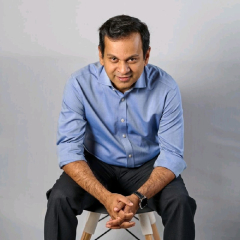
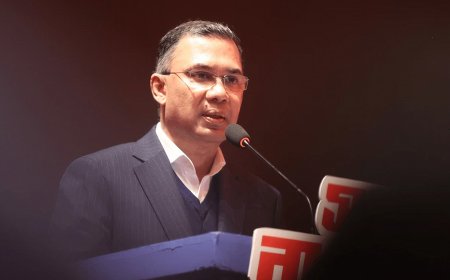
Asif Saleh is the Executive Director of BRAC, one of the world’s largest development organizations, headquartered in Bangladesh. The views expressed are his own.