
















































Preserving Places of Peace for Refugee Women and Girls
Beyond food, water and shelter, refugees make it clear that safety, dignity, and purpose are also essential to a meaningful life. But cuts under the prioritization exercise jeopardize this holistic commitment to Rohingya well-being.

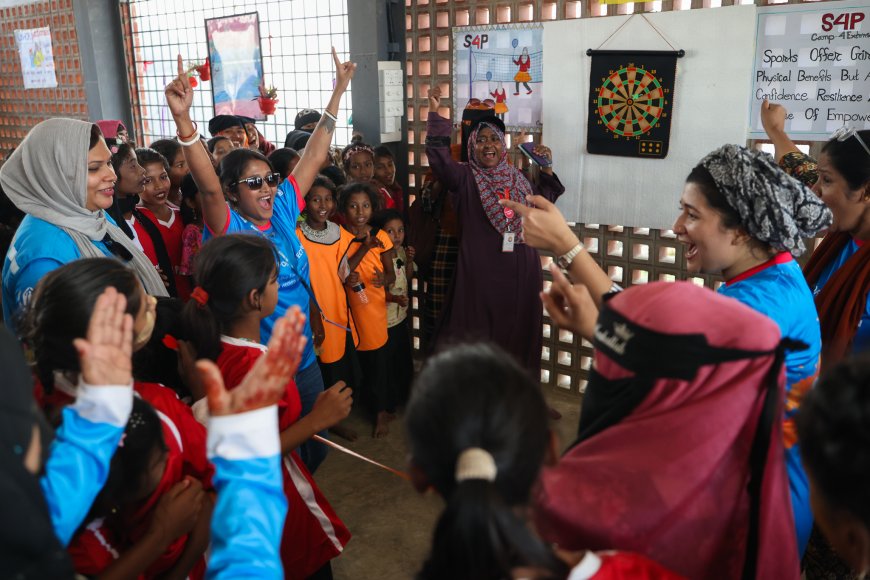
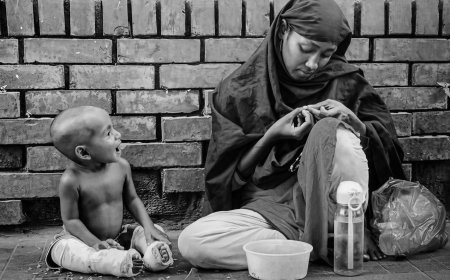
In the Rohingya refugee camps in Cox’s Bazar, home to nearly 1.2 million refugees, the shantikhana -- or ‘places of peace’ -- are women- and girl-only centres providing safety, while fostering empowerment, solidarity, and leadership.
Here, young girls and women robbed of vibrant childhoods by life in displacement find support in their peers and trusted afas -- skilled mentors, trainers and counsellors working with humanitarian partners including local NGOs.
Here they find respite from the uncertainties of camp life, share stories, and play games.
At the shantikhana, refugee women who fled violence and persecution in their homeland of Myanmar -- leaving everything behind -- develop skills to help reconstruct their lives, from hand embroidery and entrepreneurship skills to stress management and emotional regulation tools to basic reading and writing.
Nine years into the protracted Rohingya crisis, women, and girls -- comprising 52% of the refugee population -- have made important strides.
More girls in schools. More women finding voice, autonomy, and self-reliance through earning a small income while supporting their communities -- as volunteer firefighters, teachers, community health workers, mental health para-counsellors. Some dream of studying further, envisioning a future as doctors, lawyers, professors, engineers, and global leaders.
Significant progress has been made in women’s health and nutrition, and girls are increasingly expressing confidence and awareness of their rights, with many young women beginning to speak up for themselves and their communities.
Women and girls offer strength, creativity, and resilience. They hold their communities together. The Bangladeshi afas across the shantikhana, clinics, offices and schools inspire them, offering tangible role models.
Dedicated male engagement programs are leading men and boys to recognize that a just society is one that fully values the contribution of women and girls and offers them opportunities.
When the conditions in Myanmar’s Rakhine State make it possible for the Rohingya to return voluntarily and with safety and dignity, Rohingya women will play a crucial role in supporting their community not just rebuild but also thrive.
Last week, UNHCR and UN Women undertook a joint visit to the camps. The UNHCR team visited a women’s centre run by UN Women and heard firsthand how vital these dedicated spaces are for women and girls in a community largely dominated by men.
There is a reason these spaces are known as shantikhana -- without them, women may retreat further indoors, unseen by the community, and thus at greater risk.
Without trusted networks, spaces and afas, gender-based violence cases and other issues affecting women may go unreported. Keeping these spaces open demands steady, reliable funding, which has become increasingly harder to secure.
Core WASH infrastructure is a top priority. However, gender-sensitive elements -- such as solar street lighting and female-only bathing and washing centres -- are often harder to maintain under tightening budgets, although they are critical for women.
89% of women and girls highlight lack of lighting at night as their primary safety concern -- even a simple trip to the bathroom after dark can turn dangerous when camp pathways are unlit.
Gender equality and protection are lifesaving. The Rohingya Response imagined without women’s leadership on the frontlines risks failing the people it aims to serve. Over the last year, deep cuts to humanitarian funding have been forcing the UN and partners to make difficult choices, putting essential programs at risk.
As prioritization exercises focus on life-saving activities and divide assistance into tiers, the space for what we can do, who we can reach and how, begins to shrink. And as always, the first to bear the brunt are those with the least protection: People with disabilities, marginalized groups, older people -- and women.
Women and girls in the camps are not a niche constituency -- they are the system’s credibility check. The legitimacy of humanitarian action depends on whether it delivers for those most at risk. If we continue to cut services they rely on, exclude the refugee-led organizations they run, and ignore the data that reveals their needs, the response will fall short.
We and our partners know all too well the layers of vulnerability within Bangladesh’s refugee camps. Over the years, together with our sister UN agencies and local partners who understand best the culture and context, we have built programs shaped by what the community tells us they need, drawing on lessons from crises around the world.
Beyond food, water and shelter, refugees make it clear that safety, dignity, and purpose are also essential to a meaningful life. But cuts under the prioritization exercise jeopardize this holistic commitment to Rohingya well-being.
This year’s International Women’s Day theme calls for equitable, safe, and just systems. For Rohingya women and girls, this means ensuring women’s centres stay open; girls can access education, skills-training protection and gender-based violence prevention services, and streetlights are maintained so they feel safe at night.
It means ensuring that help is available whenever women need it, including referral systems for counseling, healthcare, and protection services, staffed by trusted afas.
Without solidarity from the international community and the generous Bangladeshi people hosting them, the strides made by Rohingya women and girls risk reversal. We must not allow that to happen.
We must continue to ensure -- and build on -- opportunities for learning and livelihoods while safeguarding the dignity and well-being of all refugees.
They are counting on us. Not just on March 8, International Women’s Day -- but every day.
Gitanjali Singh is the UN Women Representative in Bangladesh. Ivo Freijsen is the UNHCR Representative in Bangladesh. UNHCR and UN Women are among 150 humanitarian partners assisting and protecting 1.2 million Rohingya refugees in Bangladesh. As the UN agency mandated to protect refugees, UNHCR facilitates overall coordination of the Rohingya Response.