













































![A Ledger of the Soul: Navigating the Allah-Bhagavant Nexus in a 19th-Century Puruṣākāra Jñāna Caupara [Gyan Chauper]](https://counterpointbd.com/uploads/images/202608/image_430x256_6a93baa3b09a7.jpg)




















How Do We Stop Giant Corporations Taking Over Bangladesh?
Society needs a new compact to rein in the empire of corporate giants. This is as true for Bangladesh as it is for the rest of the world. Else we will all descend into the servitude of a new feudal system headed by giant corporations and the handful of their beneficiaries.

The multi-national corporation (MNC) is the most mighty and efficient economic construct to concentrate power -- spanning countries and continents, i.e. the world -- into the hands of people that otherwise do not have an explicit role in politics, at least, on paper.
At the beginning of 2026, the most valuable company (NVIDIA) was worth more than the GDP of all but three countries (namely, the US, China and Germany) in the world.
The twentieth company in the list (ASML) had a valuation greater than the GDP of 160 countries, with only 30 countries having a GDP that is higher. The sheer mass of economic resources that MNCs control and manipulate is astounding, and dwarfs that which national leaders have at their disposal and discretion.
While most of us know of the leaders of countries and can find countless news articles and analysis of their backgrounds, ideologies, and policies, the leaders of these corporate behemoths are for the most part -- minus a few peacocks and showboats -- happy to operate in relative anonymity and away from any sustained public scrutiny.
Has anyone heard of Peter Wennink (ASML; #20) or Hock Tan (Broadcom; #7)? Do we know what their thoughts are on social progress, economic welfare, or political aspirations of their fellow citizens? What motivates them as they wield authority over resources that can have outsized impact on the said social progress, economic welfare or political aspirations of the people in the various countries that they operate in?
Well, yes, generating more income and wealth for themselves and their shareholders is an avowed goal, almost exclusively so for those subject to the US corporate governance framework. While corporate governance rules and practices allow for a more inclusive and broader welfare objectives that include employees, suppliers, lenders and community in Continental Europe and East Asia, I note that 75% of the top 20 and 50+% of the top 100 MNCs are US-based.
Thus, the Anglo-American model of corporate governance -- with shareholder wealth-maximization as its primary and often sole objective -- can currently be considered a de facto global operating order as MNCs allocate and exploit resources around the world. The fact that the US equity markets have outperformed their peers over the last half-century is one clear indication of this dominance.
Raison D’être of MNCs
Assuming the risk of eye-rolls and induced tedium, to get a better understanding about the scope and power of MNCs allow me a digression on the origin and economic theory of MNCs. The European colonial trading companies of the sixteenth and seventeenth century can probably be called the first MNCs. Business historians have documented the appearance of American and Europe-wide MNCs in the nineteenth century.
However, the modern MNC, with rationalized multi-national production, financing and marketing spread across the world, is truly a post-World War II phenomenon. Neo-classical economics had no explanation for the existence of MNCs; in fact, under classical economic theory of trade, MNCs would not exist. In the frictionless, barrier-free world of classical economics, world trade dominates multi-national production.
It was in the 1960s that economists first observed that firms went overseas to exploit some monopolistic advantage owned by them; to do so they needed to create internationally integrated operations to maintain control over their advantage, as it was not possible to generate the correct value by trading.
The modern theory of MNCs posits that in the presence of transactional market failure, the firm must internalize -- i.e. instead of trading, going abroad and operating themselves -- the market for its firm-specific assets across national borders to earn monopoly rents.
An MNC must have significant monopolistic advantages to offset the additional costs of operating over longer distances and in different legal, cultural, and political environments.
This internalization theory of MNC is an extension of the economic theory of the firm, albeit now applied to failures of actors to conduct arms-length transactions across national borders; the necessary corollary is that, just as in the case of within the firm, the market system is now suppressed across nations and resources are allocated by authority and direction. However, the authority typically flows in one direction, stemming from the parent MNC to its international subsidiaries.
And therein lies the rub: The parent MNC can authoritatively allocate resources within the multi-national organization, notwithstanding national differences in corporate governance, employment law, supplier-customer etiquette, etc. As a matter-of-fact, the economics literature draws attention to the MNC’s ability to exploit cross-national differences in tax, employment, credit, and other regulations as means by which to earn monopoly rents.
Corporations become MNCs to earn monopoly rents by internalizing the markets for their firm-specific advantages across national borders. In the process, they exploit/arbitrage economic and regulatory differences across nations. While arbitraging of economic and cultural differences can arguably be defended upon economic efficiency grounds, arbitrage of legal and regulatory differences is more difficult to reconcile.
As UNCTAD notes, even cultural arbitrage “[i]n industries like media and entertainment…may seem to threaten national culture or identity. More broadly, the transfer of ownership of important enterprises from domestic to foreign hands may be seen as eroding national sovereignty and amounting to recolonization.”
And regulatory arbitrage, tax arbitrage through transfer pricing being the paradigmatic case, has been and continues to be a major concern of both source and host nation-states vis-à-vis the MNC. Thus, the balance of power shifts from the nation-state to the MNCs; the state is no longer the master.
The Road to Economic Servitude
The recognition of the existential problem of MNCs vis-à-vis national sovereignty is not new. Political scientists, sociologists, and economists were calling attention to this issue in the 1970s as the world began to focus on neo-colonialism by means of MNCs.
But a rolling series of financial, economic and political crisis by the end of that decade, and the emergence of a unipolar world (the Washington Consensus) by the end of the 1980s, shut out all dissenting voices, as global corporate capitalism reigned triumphant.
Deregulation, financialization, removal of trade barriers (with the emergence of a strengthened World Trade Organization (WTO)) opened wide the gates for a takeover by corporate capitalism worldwide.
In the US, the presidential candidate in 2000, George W. Bush, was only semi-facetiously described as a corporation impersonating a politician. And a series of judicial decisions allowed for unlimited corporate funding in politics, such that by the second Trump presidency, the wholesale takeover of the US government by billionaires and corporate interests has been accepted with abject lack of any signs of opposition.
Of course, the problem hadn’t gotten entirely unnoticed as demonstrations in Seattle (at the 1999 WTO meetings) and at (several) International Monetary Fund/World Bank meetings were surely reflecting popular consternation with the problem of extraterritoriality in dealing with MNCs. For a brief moment in the aftermath of the global Financial Crisis of 2008, there seemed to be an opening for governments to rein in the power of corporate behemoths.
However, other preoccupations over the last decade (the rise of white nationalism in the West, Covid, the return of great power politics) has allowed this central problem of the global economic order to fall from attention in recent years, or simply met with resigned acceptance.
However, the shift of power to the corporation -- and servitude of the state -- has had real and profoundly negative consequences for society and the citizenry. It is a prime contributor to the rollback of all the advances on income inequality seen around the world during mid-20th century; led to massive agglomeration and concentration of wealth in the global shareholder classes; dismantling of social welfare infrastructure; and creation of a majority precariat class of workers that now extends to the professional classes.
While perhaps inchoate, the understanding that the takeover of the global economy by corporate giants has come at the expense of the welfare of the general citizenry has given rise to hopelessness and extremism both in the developed West and in the Global South, as evidenced by the uptick in violence, uprisings, extremism, psychological despair and social alienation around the world.
What Does This Have To Do With Bangladesh?
Given the relative lack (handful of FMCG, Tobacco, Banking and Energy firms) of MNC presence in Bangladesh (although recent advertisements by Starlink were, well, startling), are Bangladeshis relatively sheltered from the effects of global corporate capitalism? The short answer is no.
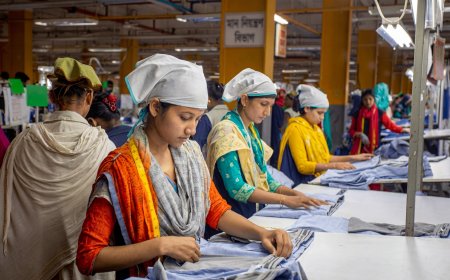
First, given the governance/power asymmetries between the foreign buying brands and local suppliers in the RMG industry, researchers have characterized that customer-supplier relationship as quasi-internalization by the customer. This could be even more insidious as the foreign buyer can control social and environmental conditions among suppliers to earn monopoly profits without acquiring ownership.
Furthermore, even if foreign MNCs are not engaged in arbitrage in Bangladesh to the same extent, we can apply the same economic analysis to large local corporations. In a country with immature and fragile regulatory, taxation, and legal administrative infrastructure, an analogous level of exploitation/arbitrage activity can be attributed to the local giants. Is there any doubt that these corporations are generating monopoly profits?
Everywhere you look you see the same corporate logos (Jamuna, Beximco, Meghna, Bashundhara, Walton, Akij, etc.) They are rapidly acquiring land, building huge private fiefdoms -- i.e. maximal corporate capitalism, Bangladeshi flavor.
I spent my pre-teen years in the early 1970s in post-Liberation Bangladesh, and the intellectual and political positions regarding corporations was decidedly different. It was a country that believed in the evils of agglomeration of wealth, large property-holdings, and the risks entailed in unfettered private-sector corporations. Bangladesh of 2026 is awash with great agglomeration of wealth, large property-holdings, and massive corporate groups. Is there any reason to think this is going to go well?
Bangladesh also suffers from an electoral politics that is incomplete, if not broken, and the rise of religious fundamentalism that further weakens the administrative state. The same forces that are creating societal stress points around the world -- rising inequality, social alienation, a general sense of precarity -- are alive and very much present here.
And, if as it seems, that the upcoming election will likely see in power a party that has been generally known to be the party of the business sector, is not ideal given the trends nationally and globally. The logic of corporate power and state servitude applies equally to us. We are not immune.
There are indications that this uni-polar moment that allowed for corporate gigantism may be nearing the end. Even in the US, both in the left and (surprisingly) in the (MAGA) right, there are dissenting voices against so much corporate power. The super-charged version of corporate growth that came about following deregulation and dismantling of antitrust rules has been exposed for the harms done.
There are other established models of governing corporations from Germany and the Japan that can provide an alternative path. And in China -- the lead candidate for a new bi-polar world -- an entirely different compact exists between the state and the corporation. Lest some say it might hamper innovation and growth, one notes that there are 11 Chinese corporations in the top 100 global firms.
We can ask that the next government take seriously the issue of corporate gigantism and extraction of monopoly rents. At the minimum, the Bangladesh Competition Commission (BCC) needs to be given top priority, provided the funds necessary to hire appropriately trained personnel, as well as an independent selection committee for its leadership.
To further strengthen its independence from politics, its administrative home should be moved from the Ministry of Commerce to an independent entity such as the Supreme Court or the Bangladesh Bank.
But the issue is not limited to antitrust and competition, rather how corporations are to be governed. Though that is a topic for another day, I note that there are several models to evaluate, not just the Anglo-American one.
Society needs a new compact to rein in the empire of corporate giants. This is as true for Bangladesh as it is for the rest of the world. Else we will all descend into the servitude of a new feudal system headed by giant corporations and the handful of their beneficiaries.
Manzur Rahman is Professor Emeritus of Finance at the University of San Diego.