


































































Bangladesh Has Woken Up to a New Reality
Tarique Rahman can do what Sheikh Hasina would not: trust the Parliament he leads. Let it examine the Yunus era, line by line. Keep what works. Amend what can be saved. In that sequence, through that process, a course will emerge.

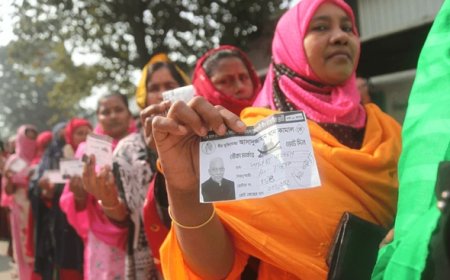
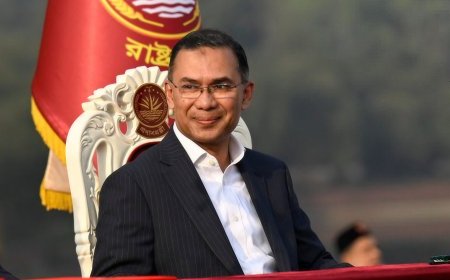
Bangladesh on Friday really did wake up to a new reality. Tarique Rahman now leads the nation.
At 212 seats, BNP has won its own mandate. Not borrowed. Not provisional.
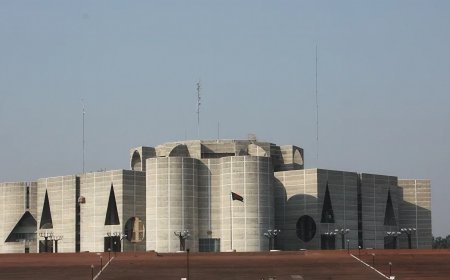
The voters have handed Tarique Rahman what Sheikh Hasina once held and then squandered: The chance to lead individually and collectively -- in other words -- to make Parliament democracy matter.
That is where the real test begins.
This government does not need to hide behind Dr. Yunus, the Interim Government, or the Charter Referendum. Those belong to a turbulent passage, necessary perhaps, but transitional.
Tarique Rahman is not bound to their every clause. Yet he would be unwise to treat them lightly. The country struggled to wrench open a space for reform; it will not accept closing it again.
The way forward is neither rupture nor obedience. It is review.
That review cannot be done from a leader’s office alone. It must run through the instruments that were allowed to atrophy:
- A caucus that actually deliberates.
- All‑party committees that summon witnesses, sift evidence, and write the first drafts of change.
- A real question period, where ministers stand and answer, not recite.
- Special commissions on the hardest files -- electoral law, policing, the courts -- created by Parliament and reporting back to it.
- Research and debate that treat policy as something to be understood, not imposed.
Sheikh Hasina’s failure was not simply authoritarian instinct; it was her refusal to trust a team, a caucus, a House. She tried to rule through a narrow circle and a swollen bureaucracy, and in the end even her own party could not carry the weight.
Tarique Rahman faces the same temptation. Resisting it is key to survival.
If he leans on his top lieutenants, empowers his caucus, and lets committees do their grinding, indispensable work, he will start to turn a raw majority into a governing project.
If he invites the Opposition into the process -- gives them chairs, access to information, room to dissent and still cooperate -- he will discover something rarer still in Bangladesh: Consent.
He and his deputy leader should make a point to have tea every six months with Amir Sharif and his deputy.
Advice and consent from the Opposition is not weakness. It is insurance. A law shaped today through debate with an adversary will be harder to use against you if tables turn.
Laws and policies refined in full view of the House stands on firmer ground than any decree or deal struck in the shadows.
Tarique Rahman can do what Sheikh Hasina would not: Trust the Parliament he leads. Let it examine the Yunus era, line by line. Keep what works. Amend what can be saved. Repeal only what cannot be reconciled with democratic life. In that sequence, through that process, a course will emerge.
Specific contents of the Charter are not off-limits, still the process remains useful.
The mandate is strong. It is not permanent. Whether it endures depends on whether he allows the House -- government and Opposition together -- to become the place where Bangladeshis see power exercised for good not gain.
A final note -- the Achilles Heel is corruption. Deal it with early and firmly.
Owen Lippert (PhD Notre Dame) has worked in Bangladesh on and off since 2003, as a Chief of Party for NDI and Democracy International, a consultant for DFID and UNDP, and the private sector. In his native Canada, he advised Stephen Harper when in Opposition and as Prime Minister on democracy promotion. He currently heads an NGO, Opposition International.