















































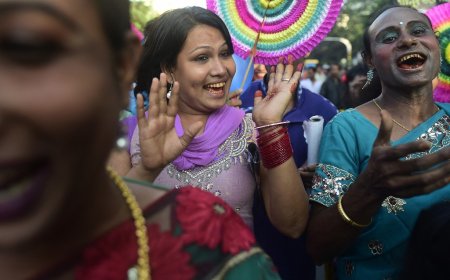
A person’s sexual orientation is an innate characteristic of that person and must not be a basis for discrimination.
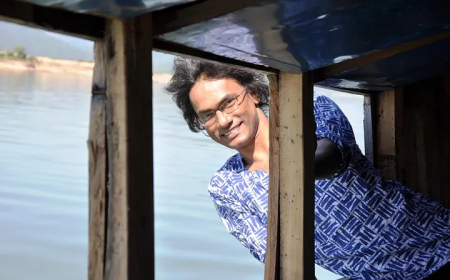
Left out of consciousness was a group of people who possibly constitute up to 5-10% of the country’s population. This group is none other than the LGBTQIA+ people who have always been part of the society, but lived clandestine lives of lies until only a decade or so ago.
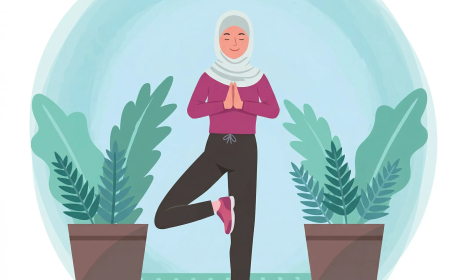
Divine gratitude can flow into our everyday lives in such ways, humbling our hearts to appreciate our privileges, the people and experiences that shape us, and the community and world we belong to, all the while realizing that much of life is a gift rather than an entitlement.
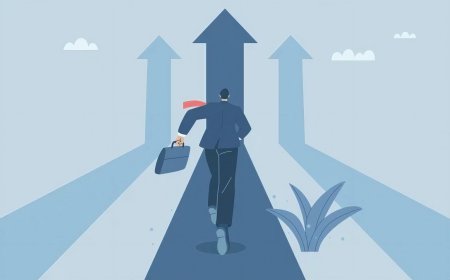
You have to heal those it hurt, reassure those who hurt on its behalf, and do all of this under the watchful eye of a public that has very little forgiveness left in the tank. You are blamed for problems you inherited and applauded cautiously for small, unsexy fixes that don’t photograph well.

What appears as playful nonsense often functions as mnemonic residue, compressed narratives of invasion, hunger, gendered sorrow, ecological uncertainty, and communal endurance.
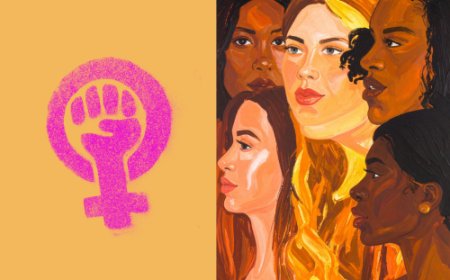
Feminism has become a new F-word. But let's at least debate the issues that women are really talking about and demanding rather than a patriarchal projection of what men think women want and demanding.
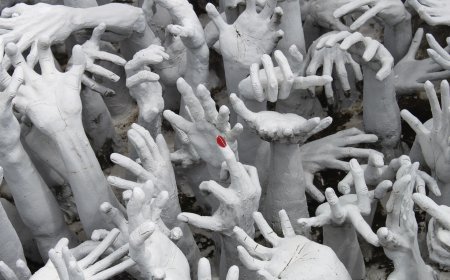
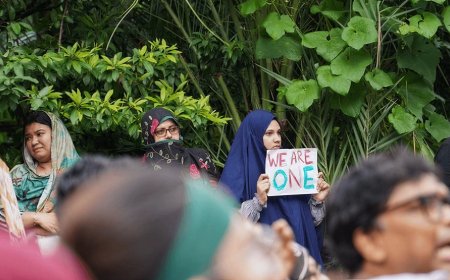
We’re tired of being told to wait. We’re tired of being told to be reasonable. We’re tired of being told to consider the reputations of men, the stability of institutions, the sensitivities of cultures. We’re tired of the same headlines feeling like déjà vu.
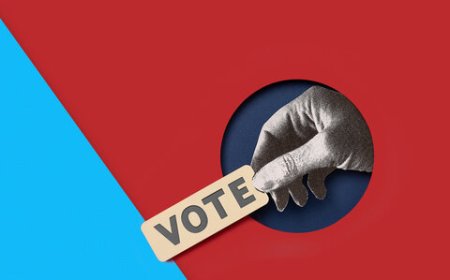
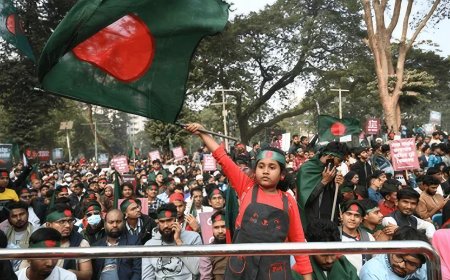
Voters opted for political change at a moment of acute economic strain and fraying public security. They desperately want stability and tangible economic recovery. That's what they voted for. That's what they now expect to receive in return.
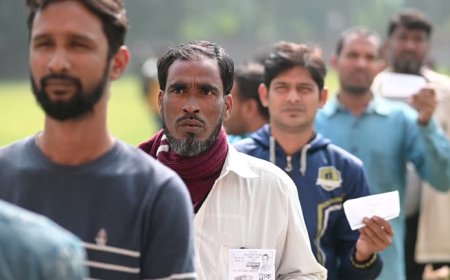
The polls close. One by one, the live streams flicker and die. The official pages go dormant, saving their energy for victory declarations or accusations of theft. The meme pages are quiet. The deepfake bazaar has shut its stalls. Your thumb, trained for twelve hours on a refresh-loop, finally has nothing to pull.

When a society burns its own newspapers, attacks its artists, and restricts freedom of thought, that fire does not stop there. It spreads to courts, classrooms, and homes. When a city burns, its temples do not survive. Our temples, culture and freedom of expression, are no longer matters of personal preference. They are matters of collective survival.
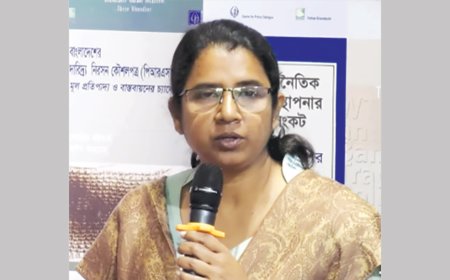
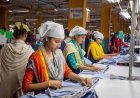
Lima’s commitment to centering worker’s voices and futures, and the combination of pragmatism and integrity that drives her have been on full display in the past two decades, long before the most recent elections were announced. Equally at ease organizing in the industrial belts as in negotiating policy reform in Dhaka or Geneva, she is exactly the kind of candidate the country needs right now.
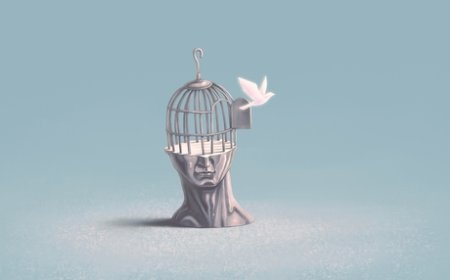
Whether it is a party that markets itself as the sole heir of 1971, or a hardline movement that once mocked that struggle and now sanitizes its record, the exploitation is the same. Both seek to convert freedom into political capital. Both demand that citizens forget what they saw and felt. Both ask us to trade memory for myth.

The question for a republic is whether it can learn to look away from the dazzling, authoritarian image long enough to see -- and rebuild -- the dull, demanding, and essential foundations of a reality-based politics.
The decision for Bangladesh is simply this: Either we recognize what is happening to our degree of liberty now, or we will soon read about it in the pages of history books as if it is a novel about something that was simply unavoidable.

The crown cat becomes a single blood cell in the circulatory system of the algorithmic beast. Nusrat doesn’t remember the cat meme today. Not consciously.

The country is no longer simply divided by class and by geography. It is now divided into four different kinds of society defined by education, language, migration, and access to power: expatriates, English-medium graduates, Bangla-medium graduates, and Madrasa-educated students.