

































![A Ledger of the Soul: Navigating the Allah-Bhagavant Nexus in a 19th-Century Puruṣākāra Jñāna Caupara [Gyan Chauper]](https://counterpointbd.com/uploads/images/202608/image_430x256_6a93baa3b09a7.jpg)
















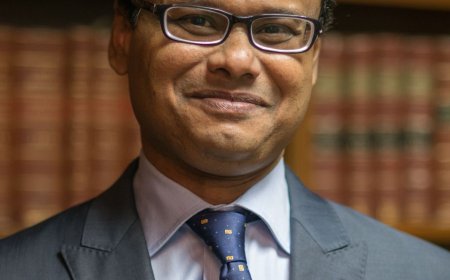


Peter Magyar, Another Young Rebel Prince who Won
New media and direct communication have created openings for ambitious challengers who can bypass old gatekeepers and speak straight to voters. The victories of Shah and Magyar may therefore represent more than isolated upsets. They may be early signs of a broader political era in which aspiring outsiders can more successfully challenge the entrenched elite establishments.

Nearly two weeks after the election that ended Victor Orban’s 16 years of rule in Hungary, there was a news that Orban will not be taking up his seat in the Parliament as opposition leader. There is also unsupported news that Orban will be taking up a position in some right wing think tank in US to escape prosecution/accountability from the new government.
News also came out that the incoming Magyar government is alleging that Orban’s associates and cronies are now busily taking away their billions of dollars of ill-gotten wealth to foreign safe havens.
Orban’s massive defeat at the hands of his former right wing protégé in an electoral field that was systematically tilted in favor of his party and the news of his future refuge in hospitable foreign shores, represents a new chapter in ongoing politics of populism and its reactions worldwide.
Interestingly, in Nepal’s national election that happened just one month before Hungary’s, another young but experienced politician, Balendra Shah, overwhelmingly won nationwide and completely dethroned old political establishment. Two points do not make a trendline, even if they are prominent points.
However, we can see some common dynamics in political change in both these very different lands.
Why Was the Eection in Hungary So Important?
The recent Hungarian parliamentary election drew intense global attention, especially in Western countries. A key reason is that Viktor Orbán, who has led Hungary since 2010, became a central figure for right-wing populism that has reshaped politics in many places around the world.
The US Vice-President JD Vance went to Hungary for a multiple-days direct campaigning for Orban, raising eyebrows everywhere. Vladimir Putin offered his backing in various ways.
Even the Israeli Prime Minister Netanyahu signaled support, taking some break from the numerous ongoing wars he himself has started.
Orbán’s Hungary has wielded outsized influence within the international right-wing populist movement, despite the country’s modest size and economy.
He helped turn his country into a blueprint for similar governments, articulating a governing model that others have sought to emulate. Using the resources of the Hungarian government, Orbán promoted and funded many Western right-wing intellectuals via think tanks, initiatives, and networks headquartered in Budapest.
In political science there is a term called Authoritarian Learning, a process by which authoritarian governments learn from each other on suppressing the opposition and prolonging the regime. Orban’s Hungary became a leading teaching place and laboratory of such authoritarian learning.
Democratic backsliding under Orbán’s leadership became a focal point for observers worldwide who hoped for a countervailing force or “brake” against the global drift toward illiberal rule. The election thus mattered not only for Hungary’s future but for democracy in the world.
Rise of Victor Orban
In the 1980s, Viktor Orbán emerged as a young activist advocating democracy in Hungary, then still a communist country within the Soviet Bloc. Ironically, After the fall of the Berlin Wall, the future model leader of right-wing authoritarianism took a research fellowship at Oxford, funded by the Soros Foundation, which had been employing him part-time since 1988.
By September 1992, Orbán had risen to the role of vice-chairman of the Liberal International Party within the European Parliament. However, in November 2000, his party, Fidesz, parted ways with the Liberal International and aligned with the European People’s Party, a conservative, right-leaning bloc.
Orbán’s first term as prime minister (1998-2002) was characterized by decline of democratic institutions and signs of authoritarianism.
The government moved quickly to replace senior officials in key institutions, including the central bank, with individuals loyal to the party. Orbán did not participate in parliamentary Q&A sessions for extended stretches, even declaring at one point that “the parliament works without opposition too.”
The 2010 elections were a turning point: Fidesz captured about 52.7% of the vote but secured roughly 68 percent of seats due to the electoral system.
The landslide reflected deep public dissatisfaction with the ruling Hungarian Socialist Party, which had governed since 2002 and was blamed for the financial crisis of 2008.
Orbán framed his victory as a stand against a perceived detachment and arrogance among EU officials and corrupt national politicians who prioritized European Union interests over Hungarian sovereignty.
The Proud Illiberal Democracy of Victor Orban
In 2012, Viktor Orbán openly described himself as an adherent of “illiberal democracy” -- embracing a term for degenerating democracies without liberal checks and balances.
Illiberal democracies keep the trappings of democratic institutions and rely less on overt repression, but they use the state power to nakedly tilt the political playing field: Consolidating media ownership, barring opposition figures from politics on trumped up charges, rewriting campaign finance and other election rules, redrawing electoral districts, restricting all government jobs and positions to only supporters of the regime, etc.
Opposition figures were effectively shut out of major television platforms, security services surveilled political rivals, pro-government persons or entities controlled 80 to 90 percent of media outlets and smear tactics -- including sensational accusations against opposition staff -- were used to justify raids and data seizures.
Public-sector employment was weaponized, with government critics informally blacklisted from jobs across the state, extending even to schools and universities. Fidesz transformed a minority of the overall vote in a recent contest -- about 49% -- into a supermajority of seats, roughly 68 percent, through districting that favored the ruling party.
Rise And Fall of Orbanomics
Economic policy of Orban was characterized by a deliberate partitioning of Hungary’s economy. It kept a narrow band of high value-adding sectors open to foreign capital while reserving much of the domestic services under political control. Manufacturing -- especially automotive, was open to foreign investment and ownership. Under Viktor Orbán, Hungary embedded itself in German industry’s supply chains, becoming a key assembly base.
As the German car sector faltered under the pressure of electric-vehicle disruption and Chinese competition, Hungary pivoted: over the past five years it actively courted EV and Chinese manufacturers, and in 2023 and 2024 it drew more Chinese direct investment than any other EU country.
Beyond this export core, however, competition was restricted and politically controlled. Banks, media, utilities, construction, and other services were effectively walled off from open bidding and repurposed as patronage assets.
Orban allies received taxpayer-backed loans to buy newspapers, utility companies, banks. The central bank’s independence eroded as leadership positions across finance were filled by loyalists.
Most critical was energy. Sitting astride major Russian gas routes into Europe, Hungary secured discounted supplies by cultivating ties with Moscow. Control over cheap gas became a potent lever of clientelism and political reward.
For much of the 2010s, the formula seemed to work. Growth was underwritten by low energy costs, steady EU development disbursements, and foreign-led manufacturing. The arrangement was sold as a successful populist nationalist model: protect domestic levers of power while harvesting the gains of targeted globalization.
But competitive authoritarian systems have a characteristic failure mode. Corruption and administrative decay eventually outpace their ability to monopolize narratives. After 2020, the tightening of EU funds exposed structural weaknesses that the boom years had masked.
Hungary’s economy remained stuck in low value-added niches -- chiefly car assembly -- without a concerted move up the value chain. Productivity growth was chronically weak.
Investment in education and research and development lagged well behind EU norms, sapping the prospects for higher-wage, innovation-led growth. An oligarchic marketplace dulled competitive pressures.
Macroeconomic strains mounted. Since Covid, Hungary experienced the EU’s highest cumulative inflation. As the government steadily reduced the central bank’s independence, inflationary pressures persisted in the run-up to the pandemic and Russia’s full-scale invasion of Ukraine, peaking above 25%.
Demographics compounded the squeeze: Low fertility and a hard line on immigration produced a shrinking population -- about 500,000 fewer people since 2011, a 4.5% decline. Labor shortages spread across critical sectors, including health care, where thousands of doctors left for better pay, and education, which faced mounting staff shortfalls.
Public sentiment shifted decisively as these trends converged in the last few years. The most corrosive force was not only hardship but the perception of rampant cronyism. Orbán’s circle grew conspicuously wealthy, their lifestyles and assets -- symbolized by the prime minister’s expansive country estate -- standing in stark contrast to the narrowing horizons many citizens felt.
Increasingly, Hungarians concluded they had little future under Fidesz’s stewardship.
Orbanomics failed when times became tough. The economic model has left Hungary poorer and less productive.
Magyar, The Disciple Who Usurped the Master
Viktor Orbán and Péter Magyar’s political beginnings are mirror images across generations: each began as an ambitious insider railing against a corrupt establishment; each framed his ascent as a revolt on behalf of “the people.”
Orbán’s trajectory ran from liberal dissident to right‑wing populist state‑builder.
Magyar’s path moved in the opposite direction, from rising Fidesz insider to liberal‑democratic challenger.
Interestingly Magyar is the Hungarian word for Hungarian, so his name really is Péter the Hungarian.
Regarded as a powerful young insider in Orban’s party, Peter Magyar served in the Ministry of Foreign Affairs after Fidesz’s 2010 victory, moved to the Prime Minister’s Office in 2015, led the EU Legal Directorate at a state-owned bank in 2018, and from 2019 to 2022 was CEO of the Student Loan Center.
His national profile changed abruptly in February 2024, when he resigned from all government‑related roles during an infamous presidential pardon scandal.
In a widely shared Facebook post, he argued that the vaunted project of a “national, sovereign, bourgeois Hungary” had become a political product obscuring systemic corruption and the transfer of wealth to the well‑connected. In his first recorded interview afterward -- viewed by millions in social media -- he declared that “a few families own half the country.”
Magyar did not present himself as a conventional liberal. He challenged Orbán as a nationalist populist in his own right, sometimes tacking to the government’s right on immigration while casting Orbán’s closeness to Moscow as a betrayal of Hungarian patriotism.
The contest unfolded under relentless pressure from government. Magyar alleged that his phone was surveilled with spyware; a romantic partner proved to be a Fidesz agent; Russian‑linked actors helped seed smear campaigns; and state security services targeted his movement’s IT systems, enabling data leaks.
According to these accounts, supporters were harassed, AI‑generated disinformation saturated social feeds, and the country was blanketed with hostile billboards. Major television access was largely blocked for him.
Magyar’s answer was ground‑level organizing and digital outreach. Over two years he visited 327 towns on 517 occasions, often hitting six to nine towns in a single day.
He worked crowds, shook hands, took selfies, and repeated a simple message: Do not be afraid.
With broadcast platforms constrained, social media became his primary channel.
Set side by side, Orbán and Magyar illuminate two phases of Hungary’s populist turn.
Orban started his long stint in power railing against European Union and EU-linked elites.
Magyar defeated the Orban machine by focusing on the corrupt Orbanite elite.
The most popular slogan in Magyar’s campaign was "Ruszkik, haza!" ("Russians, go home!"), a historic slogan from the 1956 Hungarian Revolution against Soviet occupation, the first popular uprising against the Soviet bloc in Eastern Europe after WW2.
Balen and Magyar, Victors in Parallel
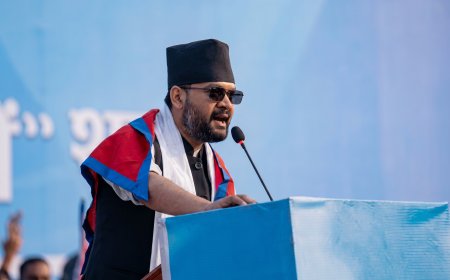
Balendra Shah, at age 35, emerged from Nepal’s parliamentary election as the world’s youngest elected national leader, following a landslide victory that transformed him from a high-profile municipal figure into a national force.
Shah had served as the 15th Mayor of Kathmandu from 2022 to 2026, winning office as an independent and building a reputation as an energetic outsider willing to challenge established interests.
Only a few months before the election, Shah joined the struggling Rastriya Swatantra Party, or RSP, and resigned as mayor in January in order to contest the March national vote.
There is a notable parallel between the rise of Balendra Shah in Nepal and Péter Magyar in Hungary. Both are charismatic younger leaders who attached themselves to relatively new or weakened political vehicles. Both had already gained executive and leadership experience before launching their national campaigns.
Both of them alleged that the ruling elites are more beholden to foreign interests than the peoples. Most importantly, both centered their message on opposition to corrupt, entrenched elites who had come to symbolize stagnation, privilege, and betrayal of public trust.
Their success points to a wider political moment. Almost every country in the world is now marked by deep inequality, elite impunity and excess, rising anti-establishment anger, and the erosion of traditional party loyalties.
In this environment, new media and direct communication have created openings for ambitious challengers who can bypass old gatekeepers and speak straight to voters. The victories of Shah and Magyar may therefore represent more than isolated upsets.
They may be early signs of a broader political era in which aspiring outsiders can more successfully challenge the entrenched elite establishments.
Shafiqur Rahman is a Political Economist and Executive Director of Bangladesh Research Analysis & Information Network (BRAIN).