





































![A Ledger of the Soul: Navigating the Allah-Bhagavant Nexus in a 19th-Century Puruṣākāra Jñāna Caupara [Gyan Chauper]](https://counterpointbd.com/uploads/images/202608/image_430x256_6a93baa3b09a7.jpg)




















The Shattering of Iran-UAE Ties and Its Future
Iran and the UAE are bound by historic trade and migration networks and, more recently, by Dubai's role as a key hub for Iran to the global economy. Iranian missiles have shattered those ties.
A little more than a decade ago, I found myself at an event hosted by the Dubai Chamber of Commerce, in their steel and glass skyscraper overlooking the Creek in the historic trading heart of the city. From above, you could look down on the still waters that sparkled with the reflection of a bright, orange sun above. Wooden dhows with light blue railings groaned with consumer goods as they streamed to informal docking stations.
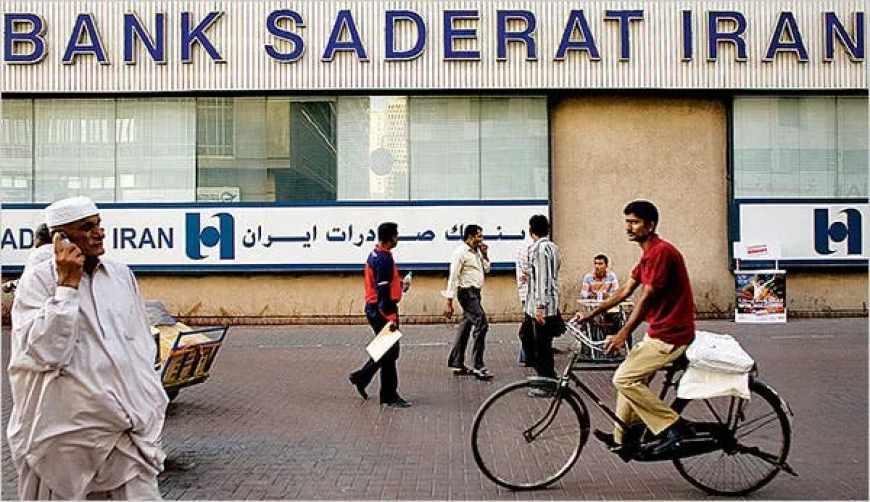
On several earlier visits dating back to the mid to late 1990s, I had made it a habit to walk along the Creek and chat with Iranian sailors who had been plying this trade route from southern Iran across the Persian Gulf to Dubai for decades. One sailor-trader with sun-browned, leathery skin told me that he knows this route better than he knows his own children. “It’s in my blood,” he shrugged, with a touch of lament. I had also met and chatted with sailors from Gujarat, Karachi, Basra, Oman and Somalia, among others.
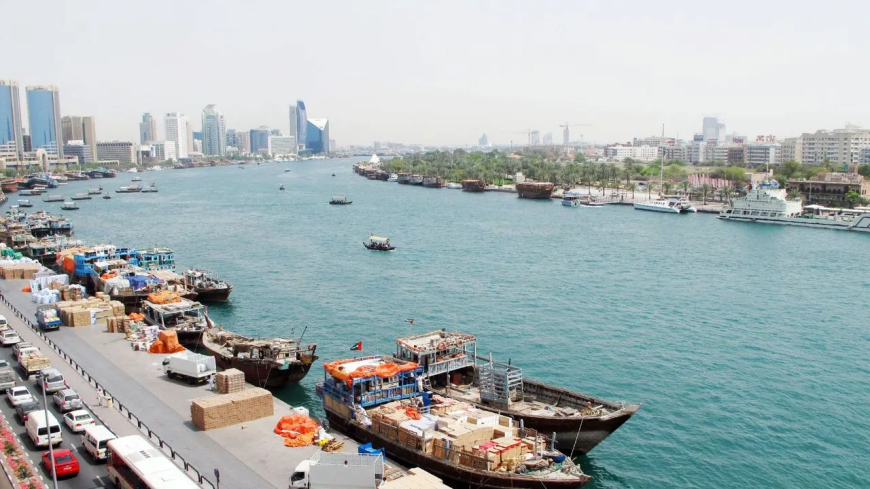
One Iranian sailor walked with me one day, chatting with fellow tradesmen and effortlessly pivoting between Urdu, Gujarati, Hindi, Arabic, and Persian -- as I looked on enviously. In many ways, he was a living embodiment of the Arabian Sea-Indian Ocean historic cosmopolitanism -- a trade-fueled cosmopolitanism once led by Iran and centered on the island of Hormuz, and now taken up by Dubai as its central node. When you see it and experience it along the Dubai Creek, you feel almost as if you stumbled on a vintage record and CD store outside a massive shopping mall.
I recalled those conversations as the Dubai Chamber of Commerce official briefed us and I looked out the window and saw the familiar sight of the sailors and the dhows once again -- this time from an air-conditioned office high above them. What was going on below us contrasted sharply with the highly mechanized, globally connected container port of Jebel Ali, several miles away, that has became a major cog of globalization.
(Jebel Ali and the new map of global trade was the subject of a recent post from your humble correspondent. See below)
Shanghai, Mumbai, Dubai or Goodbye
Afshin Molavi, December 26, 2024
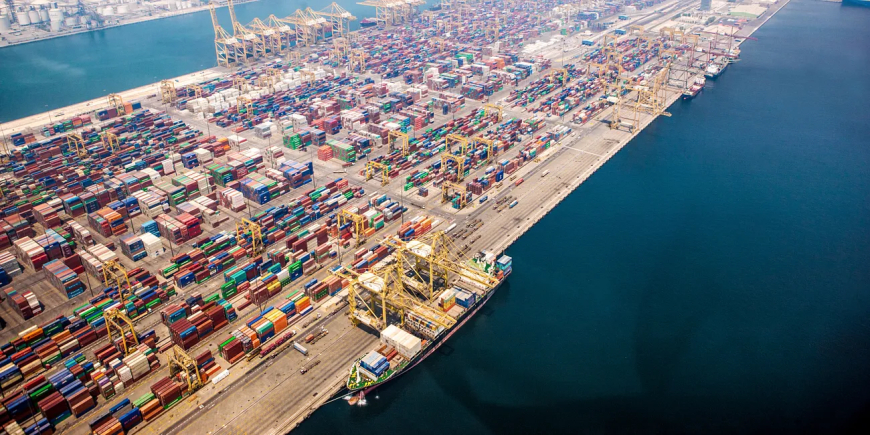
The Geo-Economics of the United Arab Emirates
…Ok, back to the the Dubai Chamber official speaking to us on that day in 2015. He laid out the impressive number of new businesses, especially from India and China that were registering in the emirate at the time, explored growth targets across southeast Asia, and talked with excitement of rising trade with Africa.
All of this was not hyperbole. It tracked with what I was seeing at the time. You could literally see it and sense it: Dubai was bubbling and emerging as the hub of the new emerging world. It was, as I called it at the time, not just the Singapore of the Middle East, but also the Hong Kong of South Asia and the Miami of Africa.
At one point, someone asked the Chamber official about “next frontier” investments and growth opportunities, and his response was swift:
“Everyone,” he said, “is talking about Iran.”
The Dubai Chamber session took place shortly after the Iran nuclear deal -- formally known as the Joint Comprehensive Plan of Action -- was signed in July 2015. The JCPOA briefly held out the promise that Iran might re-integrate into the regional and global economy.
In one striking sign of that potential re-entry, Iran Air announced plans to purchase up to 100 aircraft from Boeing, a deal valued at roughly $25 billion at list prices. It would have been, as the Associated Press noted, “the biggest business deal between the Islamic Republic and the United States since the 1979 U.S. Embassy takeover in Tehran.”
In December 2016, a senior Boeing delegation traveled to Tehran to formalize the agreement under U.S. government authorization. I stumbled upon this remarkable photo of that moment. It was less than ten years ago, but it feels a world away.
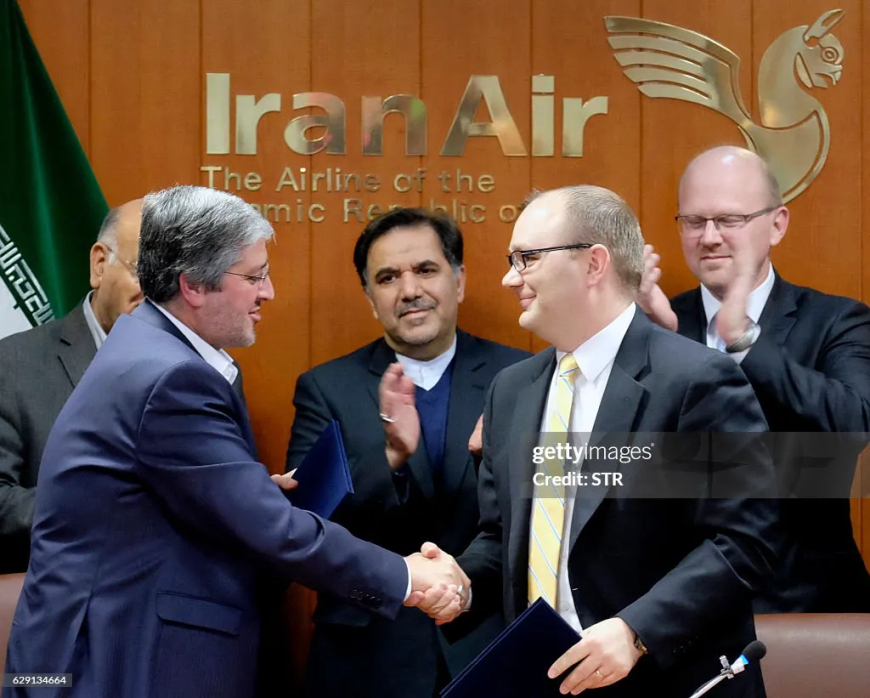
(Farhad Parvaresh (L), Chairman and Managing Director of Iran Air, shakes the hand of Fletcher Barkdull (R), Boeing regional director, after signing an agreement in the presence of Abbas Ahmad Akhoundi (C), Minister of Roads and Urban Development, in the capital Tehran on December 11, 2016. Iran Air finalised a contract to buy 80 planes from US firm Boeing, the official IRNA news agency, in the first deal of its kind since the 1979 Islamic revolution. (Photo by AFP via Getty Images))
Needless to say, the deal was never consummated.
At the time of this photo, Donald Trump was President-elect following his shock victory over Hillary Clinton, and many companies were already slow-walking Iran plans amid his vocal opposition to the JCPOA.
By 2018, when President Trump withdrew from the deal, the much-touted Boeing–Iran Air agreement had failed and few Western companies were willing to take the risk of operating in Iran. Firms in the United Arab Emirates also held back -- partly due to the threat of renewed U.S. sanctions and partly due to deteriorating regional ties after Iranian protestors stormed the Saudi embassy in Tehran in early 2016 following the execution of Shi’a cleric Nimr al-Nimr. In solidarity with Riyadh, Abu Dhabi downgraded its diplomatic relations with Iran.
A revival of sorts in UAE–Iran ties took shape from around 2022, even as underlying geopolitical tensions persisted.
What’s more, the United Arab Emirates -- along with several other Gulf Arab states -- had been urging Washington to pursue de-escalation and avoid a wider war, while maintaining diplomatic channels with Iran. Senior-level contacts between Emirati and Iranian officials in the weeks leading up to the February 28 strikes were widely seen as part of these efforts.
Perhaps most remarkable is that the UAE and Dubai, in particular, have served as a key Iran gateway -- and sometimes a backdoor -- to the global economy through its logistics and banking networks. While the climate for Iranian business in the UAE had certainly tightened over the past several years, the UAE remained an important node in Iran’s geo-economic outreach to the world. As such, strikes on the UAE had a self-defeating quality, but as I have come to learn over the years: The Islamic Republic’s regime interests often do not correspond with the national interest.
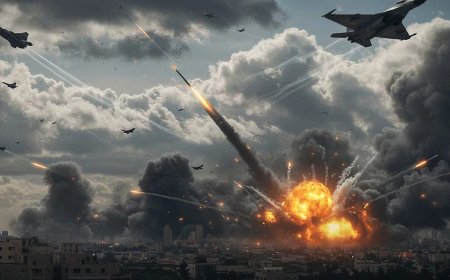
According to UAE officials, Iran fired more than 2,800 missiles and drones at the Emirates over roughly forty days of war -- making it the most heavily targeted country in the conflict, particularly in terms of drone attacks. UAE Minister of State for International Cooperation Reem Al-Hashimy told reporters that more than 90% of the targets were civilian infrastructure.
Whatever fragile détente existed is now effectively on its deathbed.
If one were to write an alternative history of the past decade or so, one in which Iran leaned away from supporting regional proxies and enriching uranium and repressing its population and leaned in toward regional commercial ties and integration and empowering its people, we would not be facing the war that has rocked the world now.
But that alternative history was never written. There were fleeting openings such as the nuclear deal, tentative commercial re-engagement, and quiet diplomacy between Iran and regional players such as the United Arab Emirates. But the forces pulling toward confrontation proved stronger than those pushing toward integration.
What might have been a gradual reintegration into the regional economy instead unraveled.
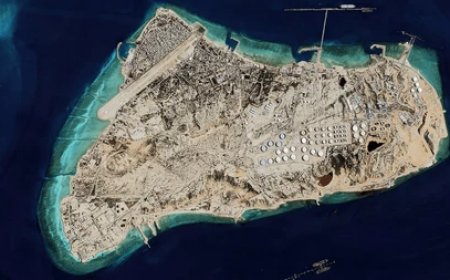
And that world of UAE-Iran ties -- stitched together by historic trade and migration patterns and Indian Ocean trade networks -- as well as more realpolitik contemporary accommodations -- has been shattered. And the Strait of Hormuz -- that vital cog of the global economy and vital to the historic trading networks of these two peoples -- remains shuttered.
The Strait of Hormuz shutdown will have cascading effects on the global economy and with each passing day, the pain will be distributed more widely, particularly in Asia, the Middle East, Africa and the broader Global South -- though no part of the world will remain immune.
The monsoon winds that once guided Indian Ocean trade with the certainty of nature’s rhythms have now been overtaken by a gathering hurricane. The events of the next few weeks are not predictable. They will be volatile, and the storm’s force will not remain contained. It will ripple outward, touching shores even far beyond its path.
Webinar of Note: Iran-UAE Ties: Mending the Rift?
For more on all of this, I took part in part in a Middle East Institute webinar on Iran-UAE ties on April 22 alongside some great colleagues: Nadim Koteich, former general manager of Sky News Arabia in Abu Dhabi and an important thinker and strategist on the UAE role in the world, as well as Alex Vatanka, an incisive analyst and author on Iran and its role in the world. The session was deftly moderated by the always insightful Ken Pollack, Vice-President for Policy at MEI, whose many books on the region I often recommend to students. (Worth noting also that the team at MEI has been doing some excellent conversations over the past couple of months on the momentous events shaping the region. Check them out over at Youtube)
For the full conversation, you can click just below
In my contributions to the discussion (my first one comes in at about the 20 minute mark, but I encourage you to listen to all of the discussion), I reflect on the Persian Gulf/Arabian Sea/Indian Ocean cosmopolitanism that links the UAE and Iran in historic trading networks and also remark on the brief 2015 opening when UAE and Dubai-based companies were eager to invest in Iran shorty after the nuclear deal was signed and just before the Trump 1.0 presidency. I concluded by saying some of what I wrote above: That this is more than a rift, and that we have entered death territory in the relationship unless a dramatic change takes place.
I also reminded listeners that Iran has not only moved up the escalatory ladder regionally, but it has also moved up the escalatory ladder at home -- turning off the lights in January and massacring tens of thousands of its own people. Amid all of the talk of geopolitics and cease-fires, we should never forget that.