

























![A Ledger of the Soul: Navigating the Allah-Bhagavant Nexus in a 19th-Century Puruṣākāra Jñāna Caupara [Gyan Chauper]](https://counterpointbd.com/uploads/images/202608/image_430x256_6a93baa3b09a7.jpg)


















Enigmatic Iran
When a nation stands strong to protect its land from aggression, facing the threat of annihilation solely to preserve the dignity of its geography and people, its model of governance can’t align with any universal model for the sake of others.

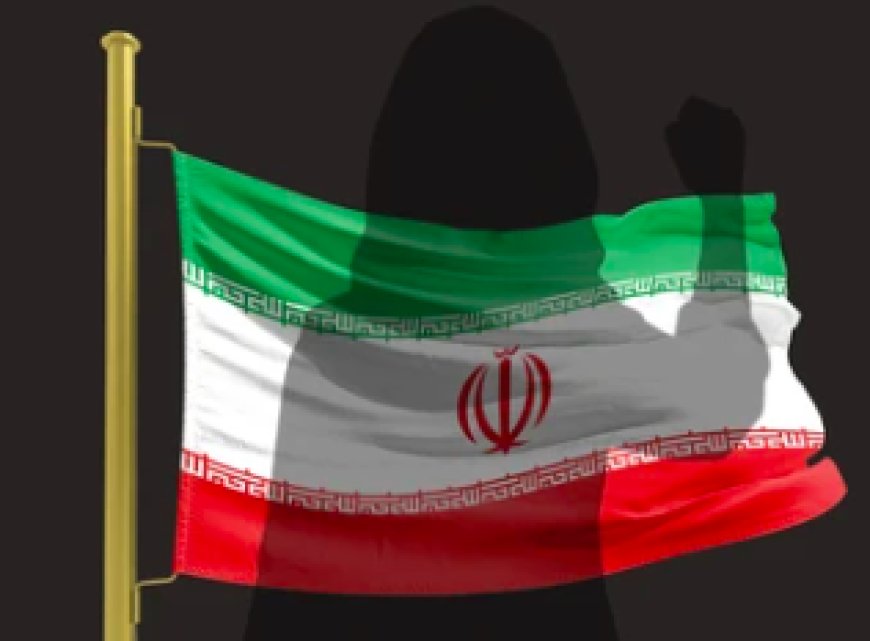
The Iranian system of governance remains an enigma, as to why, despite sporadic dissent, the country has endured for decades, and its people endorse and sustain the rule, termed oppressive by the West.
After the Islamic Revolution in Iran in 1979, while drafting a new constitution to replace the 1906 one, there was an uneven struggle between Khomeini and his disciples, determined to institute the concept of Velayet-e-Faqeh, while Mehedi Bazargan, the official Prime Minister, and his liberal supporters were eager to draw up a constitution modeled on the French Fifth Republic.
The very first fight was to establish a republic that would be Islamic in name but democratic in content.
Khomeini wanted to overthrow the Shah's regime, not dismantle the entire state structure established by the 1906 constitution. The idea of transforming the country into a radical Islamic model was never conceived; a conservative approach was adopted to address the reality of divided ideas among different segments of the country.
Though by name Iran was turned into an Islamic Republic, avoiding the term "democratic," the final outcome was a hybrid of the spirit of Velayet-e-Faqeh and the French Republic.
Therefore, the spirit of liberalism, amid Mossadeq's most nationalistic fervor, remained in Iranian society by default. The Western idea of the Islamic regime as being too oppressive on its own population on a radical Islamic model is half true, while the truth is that liberal ideas in many sectors exist sharply as democracy suggests.
The Western quarter's campaigns on the radicalism existing in Iranian society are based on the idea of the absence of a democratic system in the model of the West, the liberty of women, and freedom of expression, mostly.
Let's crucify if Iran is democratic, liberal, or otherwise. The first attribute of a democracy is a constitution; Iran has one, modeled in an Islamic spirit, with regular elections.
The people of Iran are inspired by democracy, as demonstrated by the Green Revolution. The political structure of the Islamic Republic ensures sufficient accountability across its bodies, including the separation of powers among the state's three main organs.
While finalizing the constitution, Khomeini himself suggested keeping the Supreme Leader answerable to the law, like all other citizens, despite having vested enormous power in him.
The global view thrust upon by the Western media suggests that women are oppressed and their liberty is greatly curtailed, largely based on the compulsory use of the veil.
Iran is a predominantly urban and literate society. Education in Iran has significantly expanded women's opportunities to secure important positions in the workplace and the economy.
Women are particularly prominent in skilled roles in the public sector; one-third of doctors, 60% of civil servants, and 80% of schoolteachers are women. Women also work in a wide variety of jobs, including taxi drivers. Women in such literate, advanced positions have made a profound impact on Iranian society, paralleling other countries moving toward more liberal yet nationalist positions.
Women were prominent not only in the reform movement of the Islamic Revolution but also in the Green Revolution in 2009, despite alleged regime violence. In Iran’s most urbanized society, women play a much more assertive role and have a strong educational background.
The imposition of the veil on women is often overemphasized by the West to justify the absence of women’s liberty, in contrast to the norms of the region practiced by women for thousands of years.
The Western media strongly alleges about citizens' freedom of expression. But the smart citizens of Iran, educated by their rich, civilized culture, have practiced it in subtle forms through the arts and culture, which the state government has barely been able to repress.
While literature in Iran since the Islamic revolution has been a mix of openness and conservatism, except for restrictions on openly criticizing religion, the cinema has flourished.
The restrictive censorship of writers has been stifling, strangling independent-minded writers from opening up and writing, but the filmmakers have resorted to making films in a more subtle and refined manner, delivering artistic, often social and political messages more effectively.
Famous Iranian film directors like Abbas Kiarostami, Jafar Panahi, Mohsen Makhmalbaf, Samira Makhmalbaf, Majid Majidi, Daud Mir-Bagheri, Tahmineh Milani, Kamal Tabrizi, Marziyeh Meshkini, Bahman Gobhadi, and Asghar Farhadi have produced films of unique poetic artistry and universal appeal, demonstrating the full scope and potential of the medium afresh.
Very many famous films dealt with subjects like the mistreatment of women, the vulnerability of children, the effects of war, the destruction of Iranian politics and society, and other critical themes of the Islamic regime.
Jafar Panahi portrayed the plights of women imprisoned for prostitution, bringing direct social criticism in his famous film ‘The Circle’. Mir Bagheri produced a film, like ‘Adam Barfi’, which projected a subversive message about an Iranian man marooned in Turkey, who dresses as a woman to get a visa for the USA. Kamal Tabriji’s ‘Marmoudak’ portrayed a criminal who impersonated a mullah to escape prison and continued to pretend to be a mullah to eventually gain freedom.
Jafar Panahi, in his other film, namely ‘Crimson Gold’, portrayed a war veteran’s life, showing how he struggled to make a living as a pizza deliveryman and to begin marital life.
His inability to make it through that work pushed him to criminality by the indifference and inequality he experienced in Tehran, sharply divided between the idle rich and the hopeless poor.
The subtle portrayal of the social image in films attests that the government, termed "radical" by the West, absorbs this image and takes measures accordingly.
Iran discourages the West's liberal model from flourishing, fearing that excessive freedom could undermine traditional moral values, break family bonds, and inhibit the international culture of consumerism.
Liberalism, in the context of Iran as a civilizational state, does exist amid its conservative yet democratic system of governance. The return of Jafor Panahi from exile to Iran during the war was welcomed not only by crowds of citizens but also by the regime itself.
Panahi’s ignoring the threat to his own life in favour of the Iranian people and paying attention to the concerns of the regime’s struggle to fight the war show how people, rebels, and the regime could fuse into one another under a national spirit.
When a nation stands strong to protect its land from aggression, facing the threat of annihilation solely to preserve the dignity of its geography and people, its model of governance can’t align with any universal model for the sake of others.
Liberalism must revisit its own idea that it is not about gender or individual freedom of expression, but about the freedom of a nation, within its own geography and people as a whole, to live with its own tradition, beyond the irrationality of aggression.
Brigadier General AF Jaglul Ahmed (Retd) is a regular contributor to national dailies. He can be reached at [email protected].