


































































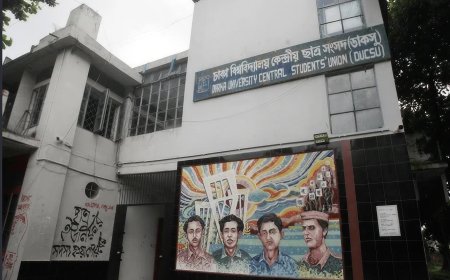
The controversy over DUCSU’s refurbished museum is not really about whether Jinnah belongs on the wall. It is about something more consequential: Who gets to decide which parts of Bangladesh’s political past remain visible.
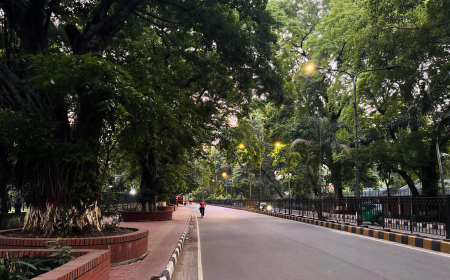
They Packed Their Bags in 1947. But Their Names Are Still Embedded in Dhaka's Oldest Roads.

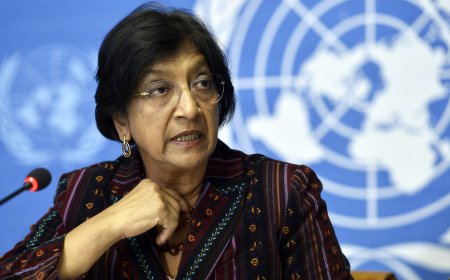
The image of Aall remains striking precisely because he was an outlier. He did not speak the language of diplomatic balance. He spoke about calories, mortality and responsibility. He insisted that humanitarian action was not morally neutral when people were dying.

New media and direct communication have created openings for ambitious challengers who can bypass old gatekeepers and speak straight to voters. The victories of Shah and Magyar may therefore represent more than isolated upsets. They may be early signs of a broader political era in which aspiring outsiders can more successfully challenge the entrenched elite establishments.
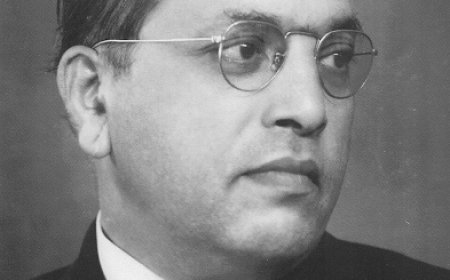
Ambedkar is not simply a historical figure. He is a living political question. The Republic of India today is built on his constitutional architecture -- and is increasingly governed in ways that undermine it.
The decision for Bangladesh is simply this: Either we recognize what is happening to our degree of liberty now, or we will soon read about it in the pages of history books as if it is a novel about something that was simply unavoidable.

In the past decade, a number of books have appeared on Bangladesh’s Liberation War. This essay covers three volumes focusing on the war from within the lens of conflict studies and great game manuevering -- by Gary J Bass, Srinath Raghavan, and Salil Tripathi.

If 1971 is to remain meaningful, it cannot be owned. It must be debated, carried with care, and opened to complexity. Otherwise, the Liberation War risks becoming either a party banner or a demolition tool. In both cases, the injury is the same: a past turned into a weapon rather than a shared ground on which a plural future might be negotiated.

Too much of Bangladesh’s politics still focuses on history while its citizens repeatedly indicate that they are more interested in what will happen to the country in the coming years

What happens when history is turned into an instrument not of understanding, but of coercion, sanctification, and political legitimacy? Across continents and ideologies, regimes and ruling parties have wielded history not just to remember, but to silence, not to teach, but to control.