















































![A Ledger of the Soul: Navigating the Allah-Bhagavant Nexus in a 19th-Century Puruṣākāra Jñāna Caupara [Gyan Chauper]](https://counterpointbd.com/uploads/images/202608/image_430x256_6a93baa3b09a7.jpg)


















The Curious Case of ‘Gupta’ Controversy
When power is built in ways that are not openly contested, when structures are created without clear political labelling yet function as extensions of a particular ideology, the line between organizational growth and concealed control begins to blur.


In Bangladesh’s endlessly inventive political theatre, it takes a certain audacity to turn a simple word into a national controversy. “Gupta” has now been elevated from a harmless adjective into a charged political indictment.
Yet beneath the noise, the issue is not linguistic at all. It is about a very particular kind of politics that thrives best when it is not fully seen, not fully declared, and never fully accountable.
The current campus tensions, framed as a dispute between Jatiyatabadi Chhatra Dal and Islami Chhatra Shibir, have been conveniently reduced to an argument over whether one side is engaging in “hidden” politics.
To dismiss this as mere rhetoric would be naïve. The accusation resonates because it reflects a deeper and more uncomfortable reality about the methods through which influence has been consolidated on campuses in recent times.
What is being described as “Gupta” politics is not simply secrecy in the abstract. It is a structured approach to power where visibility is carefully managed, identities are selectively revealed, and organizational expansion takes place through layers that are not immediately transparent.
In the case of Shibir, this has become particularly significant in the aftermath of the political transition that reshaped Bangladesh’s landscape.
Following the collapse of the previous order, a vacuum emerged within campus politics. Into that vacuum stepped a force that had long operated with caution, often remaining organizationally restrained in public spaces while maintaining networks beneath the surface.
When the opportunity presented itself, that restraint transformed into rapid expansion.
The method was neither loud nor chaotic. It was methodical.
Control over residential halls, for instance, did not always come through overt confrontation. It was often established through systems that appeared administrative or representative on the surface but gradually translated into political dominance.
The so-called batch representative structures became more than coordination mechanisms. They evolved into instruments of influence, shaping access, loyalty, and ultimately electoral outcomes.
This is where the criticism of “Gupta” politics finds its footing. When power is built in ways that are not openly contested, when structures are created without clear political labelling yet function as extensions of a particular ideology, the line between organizational growth and concealed control begins to blur.
Defenders of Shibir might argue that such strategies are simply pragmatic responses to a historically hostile environment. They may point out that survival often requires subtlety, that operating in the open has not always been an option. There is some truth in that argument.
Political contexts do shape political behaviour.
The question is not how these methods originated. The question is whether they can be justified when the conditions that necessitated them have changed.
If a political force gains legitimacy and space within the mainstream, continuing to rely on concealed structures raises legitimate concerns. It suggests a preference for control without scrutiny, influence without accountability. It creates an environment where power is exercised, but not always acknowledged.
This becomes particularly problematic within universities, where transparency and debate are supposed to be foundational values. When students cannot clearly identify who holds influence, how decisions are being shaped, or which networks are operating behind the scenes, the academic space becomes politically opaque.
The allegation that individuals with past affiliations have seamlessly integrated into new identities only intensifies this opacity. Whether exaggerated or not, such perceptions erode trust. They feed a narrative that what appears to be a new political order may, in part, be a rearrangement of older loyalties under different banners.
Shibir’s current position on campuses is not accidental. It is the result of disciplined organization, strategic patience, and the ability to adapt. But with that position comes responsibility. The same methods that once provided resilience can, if left unexamined, undermine credibility.
Criticism of “Gupta” politics, therefore, is not merely an attack from a rival organization. It is a broader question about the kind of political culture that is being cultivated. Is the goal to build a transparent, participatory environment, or to establish dominance through structures that remain partially hidden?
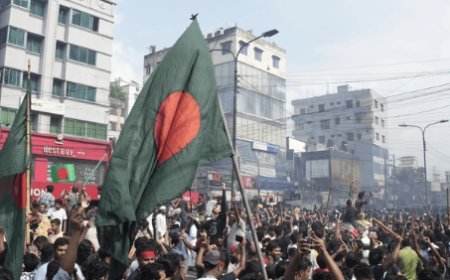
The recent clashes, from Dhaka to Rangpur, demonstrate how quickly these tensions can escalate. What begins as a debate over legitimacy turns into confrontation over control. Social media controversies, hall seat allocations, and symbolic provocations all become flashpoints in a larger struggle.
It would be convenient to frame this entirely as the fault of competing groups, each equally responsible for the instability. But such symmetry risks obscuring the specific dynamics at play. When one side is perceived to be consolidating power through mechanisms that are not fully visible, the reaction, however flawed, is often shaped by that perception.
This does not absolve others of their own political opportunism. It simply acknowledges that different strategies produce different kinds of tensions.
The involvement of national political narratives further complicates the situation. Campus dynamics are never isolated from the broader political environment.
As different forces attempt to assert themselves at the national level, universities become testing grounds for influence. In this context, methods of organization matter as much as outcomes.
If hidden networks become the primary means of expansion, they risk normalizing a form of politics where accountability is always one step behind authority. That is a dangerous precedent, not just for campuses but for the political system as a whole.
There is also a deeper irony in the current discourse. A group that once operated under constraints, often emphasizing discipline and ideological clarity, now faces criticism for practices that appear indistinguishable from the very political culture it once positioned itself against.
The shift from marginal caution to strategic concealment may be understandable, but it is not beyond critique.
Universities should not have to decode political allegiances like puzzles. Students should not need to navigate layers of informal authority to understand how decisions are made. When politics becomes too opaque, it ceases to be participatory and begins to resemble management.
The responsibility, therefore, lies not only in winning elections or securing positions but in defining the nature of that power.
Visibility is not a weakness. Transparency is not a liability. In the long run, they are the only safeguards against the kind of distrust that is now unfolding across campuses.
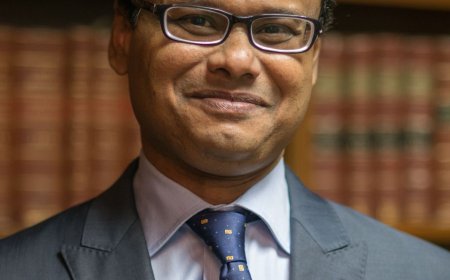
H. M. Nazmul Alam is an academic, journalist, and political analyst based in Dhaka, Bangladesh. Currently he is teaching at IUBAT. He can be reached at [email protected].