


























































When is a Coat More than a Coat?
The question is whether Bangladesh has the courage to apply the same scrutiny to every class of collaborators past and present, left and right, secular and religious and to build a republic where proximity to power is no longer the country's most valuable currency.

Let me begin with something we all know but rarely say plainly: Bangladesh was never governed by one person or one party alone. It was also governed by a class.
A class that positioned itself close enough to power to absorb its warmth, its protection, and its impunity -- and then turned around and sold that warmth back to the rest of us as wisdom, culture, journalism, and national conscience.
That class, more than any single policy or political figure, is what made authoritarianism in this country feel normal, even inevitable, for so long.
This class is not a metaphor. It has a sociology. It is recruited through a specific logic: You are brought in when you have something power needs.
A platform, a credential, a microphone. Power has something you want: Security, visibility, protection from the state's other face. The transaction is rarely explicit. It happens through invitations to the right events, through sources who return your calls, through the advertising revenue that flows to compliant media houses and drains from inconvenient ones.
Under the Hasina government, the Media Reform Commission later confirmed, television licences were issued to AL party members, their family members, or business groups closely allied with the ruling party.
Between 2009 and 2014 alone, 27 television stations received licences; most within conditions that required broadcasting content aligned with government narratives, and several applicants explicitly pledging in their licence applications to "support the activities of the Awami League government."
Salman F Rahman and Nazmul Hasan Papon, among others, were granted Independent TV on precisely these terms.
Under Sheikh Hasina, that class reached its highest refinement. But the architecture was not her invention.
Unless we reckon with that honestly across parties, across professions, across the entire food chain we will simply rebuild the same structure under a different flag.
There were always two Bangladeshes operating simultaneously.
There was the formal one: The parliament, the constitution, the courts, the civil service, the ceremonies of democracy. And then there was the other one.
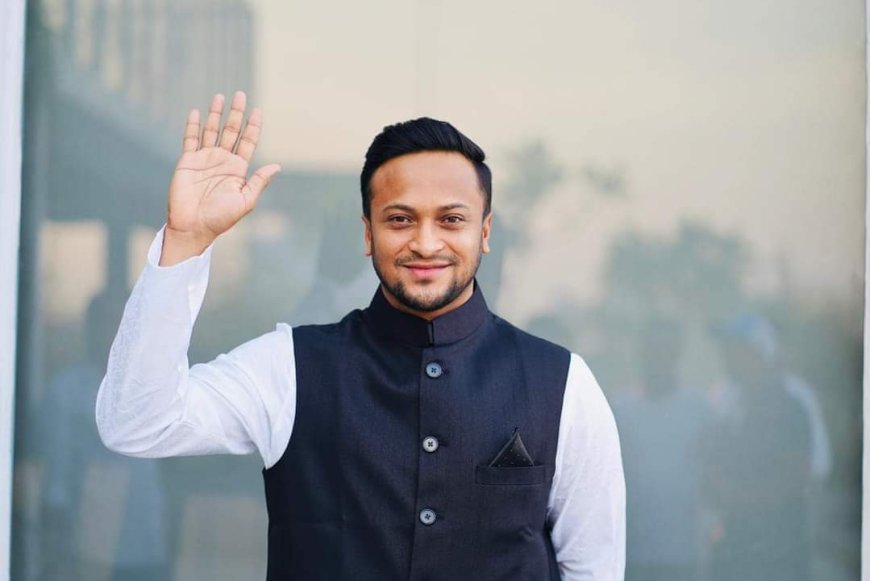
The informal republic of access. A republic of phone calls that made cases disappear, of party symbols that softened police behaviour, of advisory board memberships that turned proximity to power into social capital. Before August 5, 2024, the Mujib coat was not mere clothing.
It was a passport. It carried embedded information: This person belongs, this person is covered, handle accordingly.
If you wore that passport and spoke its language, the state bent around you. Files moved. Appointments materialized. Invitations arrived. Television studios welcomed you as an "independent expert."
Universities shortlisted you for posts that had already been decided. Public advertising flowed to your media house. If you did not belong, the same state became a wall. Suspicious, slow, punitive, and entirely unmoved by your rights.
This is not metaphor. This is what hundreds of journalists, academics, activists, and ordinary citizens experienced for 15 years. The system did not only fire bullets in July 2024.
For years before that, it fired something more insidious: the slow daily signal that unless you performed the right allegiance, you were not fully a citizen.
Consider what this looked like from the newsroom. Field reporters covering the July 2024 protests have described editors altering death tolls. When a reporter wrote that thirty people had been killed on a Saturday, the news editor changed the number to three.
Figures for the injured and missing were similarly revised upward or downward depending on which version made the government look better.
Journalists who refused to comply faced quiet demotion or, worse, found that their stories simply never ran. The suppression was not experienced as a diktat from a minister.
It was experienced as a culture of what the reporter at the bottom of the hierarchy learned not to write.
The cultural sphere and I use that term broadly, to include academia, entertainment, broadcast media, and the influential commentariat did not merely observe this arrangement. Much of it volunteered to maintain it.
There was a time in this country when an artist was expected to keep a dignified distance from power. When a director, a singer, an actor, or an academic was understood to owe their authority to the public, not to the patronage of a political family.
That norm collapsed slowly and almost without notice. What replaced it was court culture: The art of proximity, the performance of devotion, and the strategic deployment of one's platform in service of whichever ruling project was currently writing the cheques.
Prestigious honours like the Ekushey Padak, state-sponsored cultural events, government research grants became instruments of selective reward, channelled toward those who performed the right loyalties.
The academics who received institutional recognition were often the academics who theorized that loyalty as reason, producing what passes in Bangladesh for intellectual legitimacy for the ruling project.
The language that emerged from this court culture now reads like liturgy. We heard, repeatedly, that only one leader could save this nation. That there was no alternative.
The "Saviour of Bangladesh," the irreplaceable guardian without whom the country would plunge into darkness and ruin.
I want to be precise about why this matters. This was not merely flattery, not merely the embarrassing obsequiousness of ambitious people in pursuit of favour. It was something structurally more dangerous.
When artists, academics, and public intellectuals describe one leader as beyond replacement, they are not just praising a politician. They are telling citizens that rights, belonging, and national identity now flow through devotion to that person.
They are making the claim -- implicitly but powerfully -- that those who do not share the devotion are less legitimate, less safe, less deserving of the republic's protection.
That is a political act with real consequences. And those who performed it over and over again, on prime-time television, in op-ed pages, at award ceremonies, and at party-adjacent cultural events, bear real responsibility for normalizing a climate in which the July 2024 crackdown became possible.
Abu Sayed was 23 years old, a student of English at Begum Rokeya University in Rangpur and a coordinator of the anti-discrimination student movement on his campus. On July 16, 2024, he stood in the street in front of his university with his arms spread wide -- a gesture, witnesses said, of deliberate non-violence. Police fired at close range.
He was declared dead at Rangpur Medical College Hospital at 3:05 in the afternoon. A video of his killing, widely circulated, shows him still standing with his arms open when the shots hit him. The police FIR filed the same day claimed he had died as a result of fire from "miscreants" in the protesting crowd.
The official record, in other words, lied about the manner of a young man's death while his body was not yet cold.
Abu Sayed was not an anomaly. He was the first named martyr of an uprising in which the crackdown was made possible in part by the cultural climate that court culture had helped construct.
When television anchors described the protesters as agents of foreign destabilization, when editors shrank death tolls, when analysts dismissed the quota movement as politically motivated agitation, they were not merely commenting on events.
They were making it easier for a government to fire at students without expecting public outrage to reach a tipping point. The question of responsibility does not begin and end with the officer who pulled the trigger.
Here is where the discomfort deepens. This grammar of illegitimate power did not originate with the Awami League, and it will not dissolve simply because the Awami League is out of power.
BNP practised its own version. During its years in government, it built the same clientelist machinery: Partisan editors celebrated as objective voices, intellectual surrogates positioned as independent analysts. It cultivated a parallel nationalism that equated the party with the country and the leader with the cause. Jamaat-e-Islami operated differently but followed the same structural logic.
Its project has always been total: Using the mosque, the madrasa, the student body, and the charitable network as parallel state institutions through which to exercise influence that formal politics alone cannot deliver.
The common thread across all three is this: Each party, when close to power, converted cultural authority, professional platforms, and social institutions into instruments of partisan enforcement.
Each defined "the real Bangladeshi" in its own image and treated everyone outside that image with suspicion. Each found its class of eager collaborators. Academics who theorized loyalty as reason, journalists who packaged propaganda as analysis, artists who offered their credibility in exchange for access -- and each ensured that those collaborators were rewarded with visibility, security, and the comfort of belonging.
What differed under Hasina was the scale and duration. 15 years is long enough to reshape institutions, exhaust opponents, and make the inner republic feel like reality itself.
The lesson is not that all collaborators must go to prison. The lesson is that societies which refuse to examine them do not transition.
They just redecorate. Some of the journalists and media figures now in prolonged pre-trial detention are accused not of journalism but of murder in cases arising from the July 2024 violence, including specific killings in Dhaka linked to the period of the uprising and its crackdown.
Due process concerns are real and must be stated without equivocation
But none of that negates the central question: Were some of these individuals, editors, broadcast journalists, media owners, genuinely part of an ecosystem that helped produce, facilitate, and legitimize the conditions under which lethal violence became possible?
Were they figures with real influence, real proximity to security structures, real ability to shape public perception in ways that made crackdowns easier? If the answer to any of that is yes, they cannot expect that their professional title acts as a barrier to accountability.
What they deserve is what every accused person deserves: A fair and speedy trial, transparent evidence, the ability to challenge charges in court. What they do not deserve is immunity.
The assumption that journalists, academics, and artists who operated at the apex of a captured public sphere are inherently less accountable than the party officials and security officers who sat beside them in the same rooms.
Bangladesh does not need more moral theatre. It needs structural change in three areas.
First, institutional firewalls. Media houses, universities, cultural bodies, and public institutions must be redesigned to resist partisan capture.
This is not abstract. It means reforming the broadcast licensing process so that political affiliation cannot be a qualifying criterion or a pledge required of applicants.
It means restructuring the Press Council and the University Grants Commission as genuinely independent bodies, not bodies that rotate between AL, BNP and Jaamat loyalists depending on the electoral cycle.
It means requiring full disclosure of political and business interests by media owners, and banning active politicians from sitting on media boards. These are not luxury reforms.
They are the basic preconditions for a public sphere that can function as counter-power rather than as an extension of whoever is currently in government.
The July uprising was, among other things, a generation's refusal of the inner republic, the refusal of the idea that rights must be earned through visible loyalty to a ruling project.
Abu Sayed stood in the street with his arms open. That gesture did not ask for permission. It did not calculate which language would be acceptable to which patron.
It was, simply, a refusal. What comes next depends on whether the institutions, the professions, and the cultural sphere can find the honesty to examine their own roles in making that refusal necessary -- and whether they can hold that honesty when it implicates not just the previous government but the present one, not just the other party but their own, not just the collaborators who wore the wrong coat but those who have already begun adjusting the cut of the new one.
The question is not whether Hasina's class of collaborators should face consequences.
The question is whether Bangladesh has the courage to apply the same scrutiny to every class of collaborators past and present, left and right, secular and religious and to build a republic where proximity to power is no longer the country's most valuable currency.
Until it does, the Mujib coat will come back. In a different fabric. Under a different name. But with the same function.
Apurba Jahangir is a writer, political analyst, and former deputy press secretary to the Chief Adviser of the Interim Government of Bangladesh.