


































































The State Had a Full Year. The Students Never Do.
Governments have changed. Elections have come and gone. Political narratives have shifted -- sometimes dramatically. Yet NCTB has remained reliably unable to perform its most basic function.
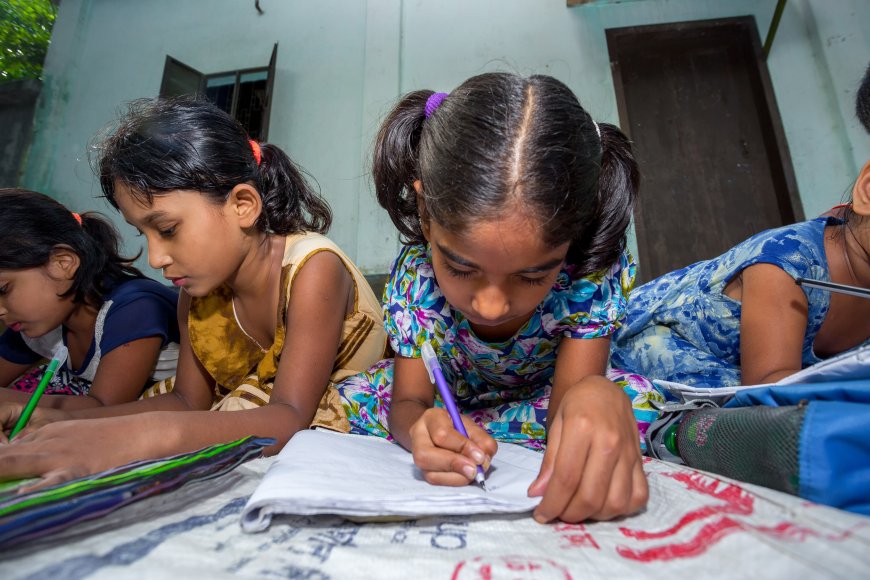
Until recently, Bangladesh did something quietly remarkable. For more than a decade, children received their full set of textbooks on January 1. The annualbook festival was not merely ceremonial; it marked a system that could meet a fixed, non-negotiable deadline.
That record began to unravel in 2023.
The first lapses were understandable. A new curriculum was being rolled out. Textbooks were rewritten, redesigned, and restructured.
Delays, though damaging, could plausibly be defended as the cost of transition. The same logic applied in 2024, when curriculum reform was still settling and implementation problems were surfacing in real time.
But 2025 and 2026 are different. The curriculum is no longer new. Formats are known. Printing requirements are predictable. The academic calendar has not changed.
And yet, more than one crore secondary-level students are again beginning the academic year without a complete set of textbooks. Roughly 40 to 50 percent of secondary textbooks were not ready for distribution by January 1, and officials now concede that the entire month of January may pass before all books are delivered.
This is no longer transition. It is regression.
What makes this failure especially troubling is not only its scale, but its selectivity. Primary-level textbooks have largely been delivered on time.
The breakdown is concentrated almost entirely in secondary education -- where procurement is more complex, oversight more discretionary, and consequences more easily deferred.
Bangladesh has demonstrated that it can deliver books on schedule. The failure, therefore, is not about capacity. It is about governance. The numbers are stark.
According to official data reported by The Daily Star, only 40 percent of Class 8 textbooks and 56 percent of Class 7 textbooks had been completed by late December -- the worst performance across all grades. Class 6 reached 80 percent, while Classes 9 and 10 stood at 82 percent, still leaving millions without full sets of books .
These gaps are not random. They fall most heavily on students at precisely the age when dropout risk rises and learning trajectories harden.
They also fall unevenly across geography and class. Students in urban centers and elite schools -- especially those with administrative visibility -- consistently received books earlier than their counterparts in rural schools.
In many districts, head teachers report waiting weeks after urban distributions were completed, reinforcing a familiar hierarchy: The closer a school is to power, the sooner it is served. Delays, in other words, did not just reduce access; they reallocated it, privileging those who already had advantages.
Last year, the institutional breakdown became impossible to ignore.
In 2025, while students -- particularly in rural schools -- waited weeks for books to reach their classrooms, copies of the same textbooks were already being sold openly by black-market vendors in Nilkhet, Dhaka’s best-known book hub.
Whatever combination of leakage, diversion, or failure of custody made this possible, the signal was unmistakable: The system had lost control of its priorities. Books reached markets, and elite neighborhoods, before they reached children.
This was not merely delay. It was a failure of stewardship.
At this point, institutional failure must be linked to named responsibility. Professor Muhammad Yunus, as the country’s most visible moral authority in public life, cannot remain silent when a core public good collapses repeatedly. Silence in the face of predictable harm is not neutrality; it is acquiescence.
When education fails at scale -- and fails the poorest first -- moral leadership demands intervention, not distance.
Chowdhury Rafiqul Abrar, serving as Education Adviser, has acknowledged delays and framed them as manageable. But by 2025, manageability is no longer the issue. Oversight is.
Advising a ministry means owning outcomes, not narrating them. January cannot be written off as a logistical footnote when it determines whether rural students start the year learning -- or waiting.
Mohammad Mahbubul Haque Patwary, as the official responsible for the National Curriculum and Textbook Board, sits at the operational center of this failure. Tenders cancelled late.
Re-tendering pushed into September. Printing presses without adequate machinery. Weak monitoring. Lost custody. Unequal distribution. These are not abstractions. They are decisions -- or failures to decide -- made under his watch.
Investigative reporting across Bangladeshi media converges on the same structural causes: Late or cancelled tenders, repeated re-tendering deep into the calendar year, contracts awarded to presses without sufficient capacity, compromised inspection mechanisms, and poor coordination between NCTB and printers.
NCTB officials themselves acknowledge that August tender cancellations forced September re-tendering, pushing the entire production timeline backward.
None of this can be blamed on sudden crisis. NCTB’s own records show that such delays have occurred for several consecutive years, with textbooks in some districts arriving as late as April.
Each time, teachers and students were advised to rely on downloadable PDFs as a stopgap -- a workaround that systematically disadvantages rural households with limited connectivity.
Governments have changed. Elections have come and gone. Political narratives have shifted -- sometimes dramatically. Yet one institution has remained reliably unable to perform its most basic function.
This is not a partisan indictment. It is an accountability deficit.
Officials now emphasize mitigation. Digital versions of textbooks are being released online. Distribution, they say, will be completed “within January.” The education adviser has publicly acknowledged that January itself may be required to finish delivery, framing the delay as unfortunate but manageable .
But this framing avoids the central question: What does it mean to tell millions of children -- especially in rural schools -- that January does not matter, while books circulate elsewhere?
January is not an administrative buffer. It is when classrooms establish rhythm, when teachers sequence lessons, when weaker students either catch up or quietly fall behind.
Exams do not pause because books are late. Learning loss compounds, especially for first-generation learners who lack private coaching, stable internet access, or educated parents to fill the gaps.
The digital fallback only sharpens inequality. PDFs presume electricity, devices, connectivity, and adult supervision. For urban middle-class households, this is an inconvenience. For rural and low-income students, it is exclusion.
A system that substitutes screens for books without universal access is not modernizing; it is sorting. What makes this indefensible is how predictable it all was.
Textbooks are not a policy experiment. They are among the oldest obligations of the modern state. Enrollment numbers are known. Calendars are fixed. Quantities are calculated months in advance.
When an institution fails at this task repeatedly -- after reform has settled and excuses have expired -- the issue is no longer misfortune. It is failure without consequence.
The state had a full year.
So did NCTB.
So did those entrusted to oversee it.
The students -- especially those farthest from power -- never do.
And until responsibility is enforced not just in press briefings but in outcomes -- until books reach rural classrooms before markets and before elites -- January will continue to be written off, quietly and predictably, at the expense of those who have no alternative.
Omar Shehab is a theoretical quantum computer scientist at the IBM T. J. Watson Research Center, New York. He is also an alumnus of the Shahjalal University of Science and Technology.