






































![A Ledger of the Soul: Navigating the Allah-Bhagavant Nexus in a 19th-Century Puruṣākāra Jñāna Caupara [Gyan Chauper]](https://counterpointbd.com/uploads/images/202608/image_430x256_6a93baa3b09a7.jpg)




















Why Nepal’s Youth Won and Bangladesh’s Faltered
Bangladesh’s political terrain is considerably more rigid. Dynastic narratives continue to exert powerful influence over voter perceptions. The Awami League remains closely associated with the legacy of Sheikh Mujib, while the BNP continues to revolve around the Zia family. In such an environment, new political movements must not only compete with established organizations but also confront deeply embedded historical loyalties.

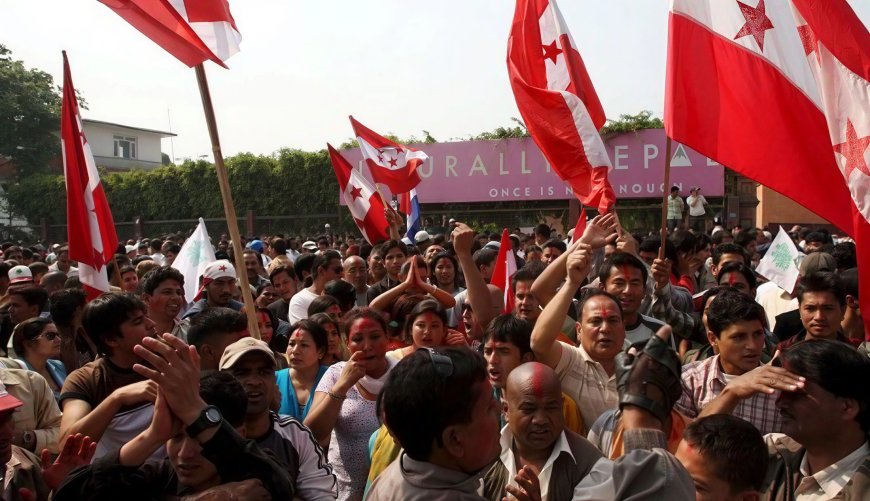
In South Asia, political change rarely arrives quietly. It tends to come through upheaval, through moments when public frustration erupts into a demand for a new order. Yet the aftermath of such moments often reveals a paradox. The generation that ignites the flame of change does not always succeed in building the political architecture that follows.
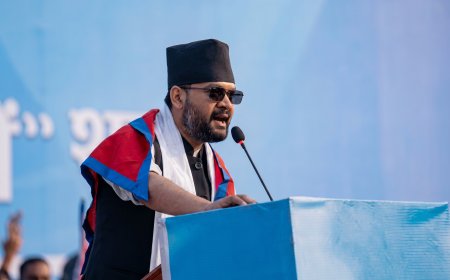
Nepal today appears to be witnessing one of those rare moments when generational anger has translated into political authority. The meteoric rise of Balendra Shah, better known as Balen, signals something deeper than the success of an unconventional politician. It reflects a broader generational shift in which the political imagination of young voters has begun to reshape the country’s leadership structure.
Across the border in Bangladesh, however, the story has unfolded very differently. The same generation that led the protests that toppled a long standing government now finds itself struggling to convert revolutionary energy into political transformation. The contrast between Nepal’s emerging Gen Z moment and Bangladesh’s faltering attempt at youth driven politics offers an instructive lesson about the difficult journey from protest to power.
Balendra Shah’s rise did not begin in the corridors of power. It began in the cultural sphere, through rap music that criticized Nepal’s entrenched political elite. His lyrics resonated with a generation disillusioned by corruption, inefficiency and the perceived stagnation of traditional parties. In a country where political leadership had long been monopolized by a handful of established figures and parties, this cultural rebellion gradually evolved into a political one.
When Shah ran for mayor of Kathmandu in 2022 as an independent candidate, many observers initially dismissed his campaign as symbolic. Yet his victory signaled something significant. It showed that young voters were willing to place their trust in a leader who represented generational frustration rather than political pedigree. His tenure as mayor, marked by visible interventions in urban governance and public service delivery, helped consolidate that trust.
Now, as his political movement prepares to enter national power, Nepal appears to be experiencing a rare generational transition. The anger of young citizens has not only challenged the political establishment but also produced a leadership figure capable of channeling that anger into electoral success.
The situation in Bangladesh could have followed a similar trajectory. The anti discrimination student movement and the broader uprising that led to the collapse of the previous government generated an extraordinary moment of political possibility. For a brief period, it seemed as if a new generation was ready to redefine the country’s political future.
The emergence of the National Citizens Party appeared to embody that possibility. Born from the energy of student activism and the aspiration for systemic reform, the party promised to challenge the entrenched dominance of dynastic politics. It spoke of a second republic, a new constitutional order and a break from the patronage networks that have shaped Bangladesh’s political culture for decades.
Yet the transition from revolutionary symbolism to political substance proved far more difficult than many of its supporters had imagined.
One of the central problems was timing. Revolutions generate momentum, but that momentum is fragile. As political scientist Samuel Huntington once observed, revolutionary movements must consolidate power quickly before the emotional energy that sustains them dissipates. The National Citizens Party was formally launched months after the peak of the uprising that created its political space.
By the time the party entered the arena, the national conversation had already shifted. Public attention had moved from protest to pressing concerns about law and order, economic stability and governance. The revolutionary atmosphere that might have propelled a new political force into prominence had begun to fade.
Equally significant was the absence of a charismatic leader capable of embodying the aspirations of the movement. In Bangladesh, politics has historically been shaped by personalities as much as by institutions. Sheikh Mujibur Rahman, Ziaur Rahman and Hussain Muhammad Ershad did not merely lead political parties. They became symbols around which political identities were formed.
The National Citizens Party, by contrast, adopted a collective leadership model. While intellectually appealing, such structures rarely capture the public imagination in societies where politics remains deeply personalized. Without a single figure capable of galvanizing the masses, the movement struggled to translate its ideals into a compelling political narrative.
Nepal’s experience illustrates the opposite dynamic. Balendra Shah functions not only as a political leader but also as a cultural symbol. His background as a rapper, his unconventional communication style and his direct engagement with millions of followers on social media have allowed him to build a personal connection with younger voters.
That connection matters in a region where political legitimacy is often tied to emotional identification rather than purely ideological alignment.
Another factor that distinguishes the two cases is organizational structure. In Bangladesh, established political parties possess extensive grassroots networks that penetrate deep into rural society. These networks mobilize voters, distribute patronage and maintain political loyalty across generations.
New parties without such infrastructure face enormous challenges. The National Citizens Party emerged primarily from urban student circles. While it succeeded in generating enthusiasm within campuses and among segments of the urban middle class, it struggled to establish a presence in the villages and small towns where electoral battles are ultimately decided.
Nepal’s political environment, though far from perfect, has historically been somewhat more fluid. The fragmentation of party structures and the dissatisfaction with traditional elites created space for unconventional political actors to gain traction. Shah’s rise was facilitated by this relative openness in the political landscape.
Bangladesh’s political terrain is considerably more rigid. Dynastic narratives continue to exert powerful influence over voter perceptions. The Awami League remains closely associated with the legacy of Sheikh Mujib, while the BNP continues to revolve around the Zia family. In such an environment, new political movements must not only compete with established organizations but also confront deeply embedded historical loyalties.
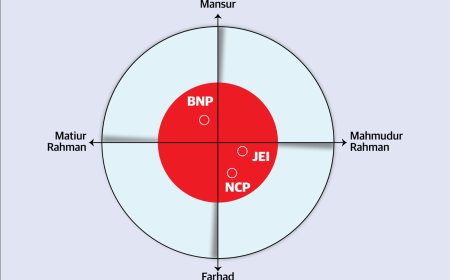
The decision by the National Citizens Party to enter an alliance with Jamaat e Islami further complicated its identity. From a purely strategic perspective, coalition building is not unusual in democratic politics. Yet for a party that initially presented itself as a clean break from the past, the alliance created an impression of ideological compromise.
For many young supporters who had hoped for a genuinely new political force, the move felt less like pragmatic strategy and more like a retreat into the familiar patterns of traditional politics.
This is where the deeper lesson of Nepal’s Gen Z moment becomes relevant. Generational change in politics does not occur simply because young people participate in protests. It requires leadership figures who can translate cultural legitimacy into political authority. It requires organizational structures capable of mobilizing voters beyond urban centers. And perhaps most importantly, it requires the ability to maintain narrative coherence.
Balendra Shah’s rise suggests that when these elements converge, generational frustration can indeed reshape political power. Bangladesh’s experience, however, demonstrates how easily that possibility can dissipate when the transition from movement to institution falters.
None of this means that Bangladesh’s Gen Z moment is permanently lost. What is missing is the political architecture capable of harnessing that energy.
Nepal’s unfolding experiment with generational leadership may ultimately succeed or fail. Governing a nation is far more difficult than winning an election. The enthusiasm that propels a young leader to power can quickly erode if institutional reform proves elusive.
Yet even the possibility of such an experiment carries symbolic weight. It suggests that generational change in South Asian politics is not merely a theoretical aspiration.
Writer: H. M. Nazmul Alam is an Academic, Journalist, and Political Analyst based in Dhaka, Bangladesh. Currently he teaches at IUBAT. He can be reached at [email protected]