





































































Are Women Voters behind Jamaat’s Electoral Success?
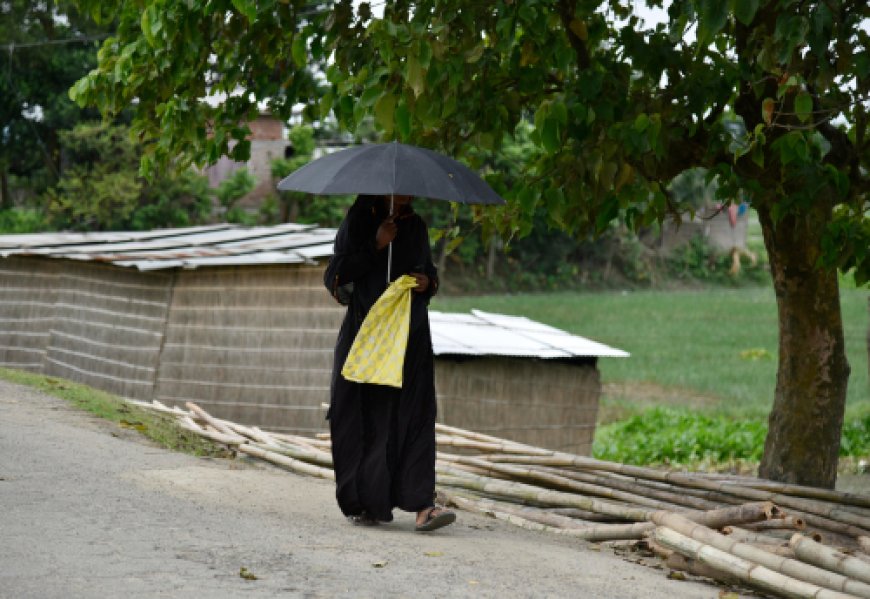
Jamaat’s political ecosystem has long been associated, at least in public discourse, with moral policing and deeply conservative positions on women’s roles. It would represent a significant social shift if large numbers of women, especially younger ones who have faced online and offline harassment from JIB affiliated groups, were now turning toward the party.

A few days after the recent election, Netra News published a report attempting to make sense of the results.
One particular portion from that piece has since taken on a life of its own. Jamaat-e-Islami Bangladesh (JIB)'s supporters and online sympathizers have seized upon it to advance a sweeping claim: that women voters were decisive in the party’s electoral success.
A few people may raise an eyebrow when I term Jamaat’s result -- bagging only 68 seats in the 300-member parliament -- as electoral success. But we need to remember their previous best was only 18 seats after alliance with BNP in 2001 elections. JIB’s alliance in the 2026 election secured 77 seats which is a massive success relative to their previous best.
But compared to the pre-election hype of probable Jamat win and the feverish pitch of their propaganda machine, some may also term it as a massive disappointment.
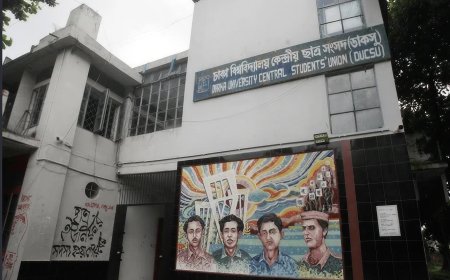
We have to remember the background. The reason supporters and sympathetic commentators predicted a breakthrough this time was not totally unfounded. Student body elections in several public universities, where Chhattra Shibir, JIB’s student wing performed unexpectedly well, almost clean sweeping major student leadership positions.
These successes were read as signs of expanding grassroots appeal of JIB. For some observers, these results of these student body elections hinted at a generational shift.
Scientific surveys, however, told a different story. Independent polling, especially the one by Innovision consulting, pointed toward a BNP victory by a measurable margin. Not surprisingly, this poll result was brushed aside by euphoric JIB supporters, but eventually that is broadly what materialized.
Crestfallen JIB supporters came up with several narratives and reasons for not winning the elections.
First came allegations of fraud and vote rigging, despite the whole election day passing largely peacefully without any major mishaps. When it was evident that the BNP received over 200 seats and Jamaat was a distant second, the vote rigging claim started to subside.
Then surfaced claims of a razor-thin contest where the total vote percentage difference is very low, only around 2% while the actual gap was 18%. And there were also claims that most seats were hotly contested even though only 22 out of 300 seats were won by a margin of less than 5,000 votes.
After all these narratives were debunked, the undeterred Jamaat propaganda machine’s attention has turned to women voters.
Their claim now is that women voters are actually behind Jamaat’s unprecedented electoral success.
As mentioned above, the Netra News article is the main source of this claim and let me directly quote from the article:
“The assumption that women voters would automatically reject Jamaat because of its rhetoric, or its failure to nominate female candidates, did not quite hold. A Netra News analysis of more than 1,600 single-sex polling stations outside Dhaka found that, in the centres Jamaat carried, female-only stations outnumbered male-only ones. The BNP’s ratio skewed more male, at roughly 6:4. A new cohort of socially conservative women -- often visibly religious -- appears to be finding a sense of belonging and community in Jamaat’s message."
That is a striking claim. But the path from observation to conclusion is quite flimsy if not naive.
To begin with, any conclusion about voter behaviour must rest on statistically representative evidence. This requires a clear sampling framework. Why 1,600 centres? How were they selected? Were they randomly drawn from the universe of all polling stations? Without such justification, the numbers tell us little about the electorate as a whole.
Even if we assume, for argument’s sake, that the selection was methodologically sound, the inference itself remains weak. The presence of more female-only centres in Jamaat-winning areas does not mean those victories were driven by female voters. Electoral outcomes depend on vote shares, not the institutional composition of polling stations.
Let’s consider a hypothetical scenario. Suppose a constituency has only three polling centres with a total of 100 voters. Two of these are female-only centres and one is a male-only centre.
At Centre 1 (female-only), there are 30 women voters, none of whom vote for Jamaat while all 30 vote for BNP. At Centre 2 (female-only), there are again 30 women voters, but this time all 30 vote for Jamaat and none for BNP. So across both female-only centres combined, Jamaat receives 30 votes and BNP receives 30 votes from women. At Centre 3 (male-only), there are 40 male voters. Here, Jamaat receives 30 votes and BNP receives 10.
In total, Jamaat won the seat with 60 votes to BNP’s 40. Yet Jamaat secures only 50% of the women’s vote while receiving 75% of the men’s vote. Notably, two-thirds of the polling centres in this constituency are female-only.
This simple example shows that having more female-only centres, or even more female voters, does not necessarily mean that a candidate wins because of women’s votes.
Moreover, do candidates ever win based solely on votes from single-sex polling centres? As far as we know, most polling stations are unisex. What happens there matters far more.
Therefore, from the Netra News data, it is not possible to draw any causal conclusion -- or even a meaningful association -- that Jamaat’s victories were driven by women’s votes. This is assuming, of course, that there is no sampling bias. If sampling bias exists, then the discussion becomes irrelevant altogether.
Yet the narrative has gained traction, partly because it fits into a broader post-election search for explanations or consolation for the JIB supporters.
This narrative also carries an added layer of improbability. Jamaat’s political eco-system has long been associated, at least in public discourse, with moral policing and deeply conservative positions on women’s roles.
It would represent a significant social shift if large numbers of women, especially younger ones who have faced online and offline harassment from JIB affiliated groups, were now turning toward the party.
That shift is not impossible. But extraordinary claims require robust evidence.
At present, we do not have it. A suggestive correlation drawn from an unclear sample is not enough to conclude that women powered Jamaat’s gains. Until more systematic data emerges, the claim remains closer to political storytelling than to empirical analysis.
If credible, transparent evidence does surface, it deserves serious engagement. Until then, caution is warranted.
Rushad Faridi is Assistant Professor, Department of Economics, University of Dhaka.