







































![A Ledger of the Soul: Navigating the Allah-Bhagavant Nexus in a 19th-Century Puruṣākāra Jñāna Caupara [Gyan Chauper]](https://counterpointbd.com/uploads/images/202608/image_430x256_6a93baa3b09a7.jpg)


















The Jamaat Factor
Jamaat has emerged as one of the two main parties in the current dispensation. Its student wing has won student council elections in five universities. Its online activists dominate the cyberspace. It has consistently polled sufficiently well to emerge as the main opposition in the next parliament if not outright win the election.

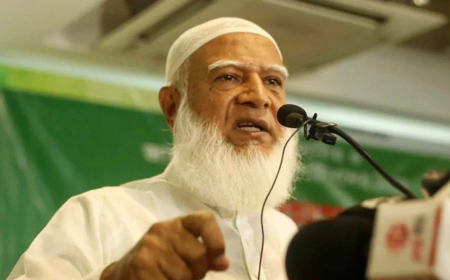
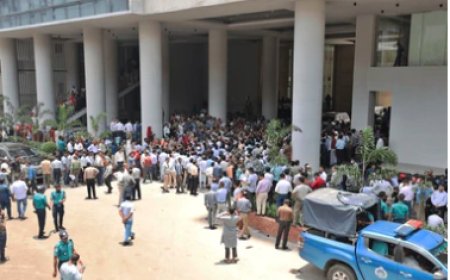
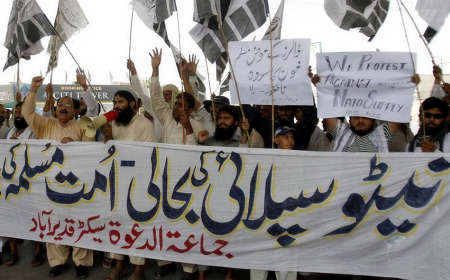
Delwar Hossain Sayedee, an Islamic preacher and a senior leader of Bangladesh Jamaat-e-Islami, was sentenced to death on February 28, 2013 for war crimes committed during the 1971 Liberation War. Within hours, Jamaat cadres and activists clashed violently with police and law enforcement agencies. Scores were killed in some of the worst political violence independent Bangladesh had experienced until then.
In the event, Sayedee’s death sentence was reduced to life imprisonment. Several other Jamaat leaders, however, were hanged after years of political activism against the party for its role in aiding and abetting war crimes in 1971.
Activists kept calling to ban the party. And in a last ditch attempt to save her government, Sheikh Hasina did ban it in August 2024. Then she fled to India while General Waker-uz-Zaman informed the nation that he had assumed responsibility and was parleying with politicians.
The first name he mentioned on the afternoon of August 5, 2024 was the Amir of Jamaat.
In the months since, Jamaat has emerged as one of the two largest parties in the country. Its student wing has won student council elections in five universities across the country. Its online activists dominate the cyberspace. It has consistently polled sufficiently well to emerge as the main opposition in the next parliament if not outright win the election.
It is difficult to think of such a turnaround story in modern politics anywhere in the world.
And yet, the party remains relatively less understood by our chattering classes. Other than its role in 1971, what has the party stood for in the past? And what are the choices and pitfalls before it post-election?
A History of Violence
Maulana Abul Ala Maududi, an Islamic scholar from Hyderabad, founded the Jamaat-e-Islami Hind in 1941. The Islamic revivalist organization opposed the Partition of India as it would leave Indian Muslims divided.
Further, Maududi considered MA Jinnah and other Muslim League leaders to be insufficiently Islamic in their personal lives. Nonetheless, when Pakistan came into existence, Maududi moved his party to Lahore to help create an Islamic state, where the party would be the sole arbiter of what counts as Islamic.
Eschewing mass politics, and rejecting western-style electoral, representative democracy as anything more than a means to an end, Jamaat’s strategy -- in both Pakistan and Bangladesh -- could be seen as one of, for want of a better word, infiltration: Putting party faithfuls in key positions in state institutions, gain a foothold in key non-state sectors, and then use the "infiltrated" to attain state power through a successful putsch when the time was right.
Like many other revolutionary parties of both left and right, Jamaat has not been shy about deploying violence to upset existing political order and advance its agenda. For example, Maududi instigated anti-Ahmadiyya violence in 1953, which led to the imposition of martial law in Lahore. Martial law authorities sentenced him to death, but the sentence was commuted because of public pressure.
Decades before the tumultuous Long July of 2025, Jamaat’s student wing, Islami Jamiat-e-Talaba (IJT) / Islami Chhatra Sangha (ICS) played an active role in the popular uprisings that toppled Ayub Khan‘s regime in 1969. Pakistan held its first democratic election 1970. Jamaat emerged as the second largest party in East Pakistan, winning 4-6% of votes, and one seat in the 300-member provincial assembly (against the Awami League’s sweeping 70 percent plus vote tally and 288 seats).
After the bloodbath of March-April 1971, Jamaat’s expectation was that the army would militarily defeat the Mukti Bahini resistance quite comfortably, but would find it hard to fill the political vacuum created by the elimination of the Awami League. It expected to fill that vacuum.
Ghulam Azam, its East Pakistan chief, emerged as a key pro-Pakistan politician during the war. Members of IJT/ICS formed the nucleus of pro-Pakistan militias set up by the army. Matiur Rahman Nizami, head of the East Pakistan IJT/ICS, allegedly led a particularly fierce group called the Al Badr whose death squads are accused of killing scores of prominent progressive intellectuals and activists during the war.
Of course, Pakistan lost the war.
Jamaat faced considerable difficulty in the new country. Even before the war was over, the provisional government of Bangladesh banned religion-based political parties. The prohibition was retained in the constitution that came into effect in December 1972.
After the liberation of Dhaka, some of its leaders, including Azam, escaped to Pakistan, the Gulf and the United Kingdom. Others went into hiding. Azam tried to lead a movement to “recover East Pakistan,” which fizzled out when Pakistani prime minister Zulfikar Ali Bhutto received Sheikh Mujibur Rahman in Lahore for the 1974 Organization of Islamic Countries summit.
At the local level, party members abstained from direct political activities, concentrating on social work instead. These efforts were co-ordinated by Maolana Abdur Rahim, a senior leader of the provincial party before 1971, who returned to Dhaka in 1974.
Jamaat Reloaded
Bangladesh politics was jolted in 1975 with the demise of the Awami regime and the emergence of Ziaur Rahman, who gradually reintroduced electoral politics, and lifted bans on all parties, including the religion-based ones. However, Jamaat remained prohibited because the Election Commission was not convinced of the party’s commitment to Bangladesh’s sovereignty.
Nonetheless, six of its members were elected under the banner of the Islamic Democratic League in 1979. Azam returned to Bangladesh on a Pakistan passport around this time (his citizenship was revoked by the Bangladesh government in 1973). The IJT/ICS was also re-launched under the name of Islami Chhatra Shibir. Jamaat formally started operating under its own name in 1982.
From then on, Jamaat has sought to regain the legitimacy it lost because of its violent opposition to the country’s creation.
After several rounds of internal debates, the party entered electoral politics in the 1980s. It had made tactical alliance with each major political actor in the country in the decades since. It participated in the parliamentary election of 1986, held under martial law regime of HM Ershad, with the Awami League, even though all opposition parties had previously promised to boycott it.
In 1990, Jamaat joined the AL, BNP and the leftists in an urban uprising that toppled the Ershad regime.
In 1991, BNP formed a government with the Jamaat’s support. By the mid-1990s, Jamaat had once again allied with the AL in street protests against the BNP government.
It reconciled with BNP ahead of the parliamentary election of 2001. The electoral alliance formed then would remain intact for the following two decades.
Parliamentary activities notwithstanding, the party appeared to retain its Leninist infiltration strategy. This was pursued most vigorously between 2001 and 2006. When the BNP-led alliance (of which Jamaat was a key partner) won the 2001 election, the party demanded two things.
First, they wanted a suitable official post for Nizami, who had been the party’s parliamentary head in the early 1990s, and had replaced Azam as the party chief by the end of the decade. Jamaat is the only major party in Bangladesh where leaders retire for fresh faces.
Second, the party’s number two, Ali Ahsan Mujahid (who was not an MP), had to be made the minister of social welfare. The social welfare ministry was chosen because it was responsible for the country’s massive NGO sector and socio-cultural organizations throughout the country.
Over the decades, Jamaat appears to have made considerable inroads in several non-state sectors as well. Islami Bank, whose management has been affiliated with the Jamaat, had become the third largest bank in the country (until it was taken over by the Hasina regime’s cronies in the 2010s, setting the stage for a crony capitalism of bank plunder and launder).
Jamaat-supported hospitals and coaching centres have been providing affordable health care and education to urban, working and the lower middle classes.
The party made particularly strong financial ties with countries in the Gulf, which helps with these enterprises. Funding and ideological support also comes from the radical Islamic discourse among the diaspora Bangladeshi community in the west.
Meanwhile, contrary to the notion that it had not learnt from its role in 1971, the party had adjusted its strategies over the years. In its assessment of the war, Indian intervention that year is seen as an effort to stop Jamaat from coming to power. Thus, over several elections, the party had focussed on building up its strength in 50 or so border area seats.
According to party literature, the logic behind its geographic concentration was that in the event of another Indian intervention to thwart a Jamaat-led government, these areas would become centers of resistance. Consistent with that strategy, the Islami Chhatra Shibir gained control of two large universities in Chittagong and Rajshahi in the 1990s.
Calculus of Consent
By the beginning of the 1990s, Jamaat appeared to have been successful in its quest for legitimacy. When President Ershad was forced to resign in December 1990 after several weeks of protests by university students, the then party chief Abbas Ali Khan appeared on national TV with the leaders of AL, BNP and a leftist alliance to appeal for public calm and national unity. In the election held two months later, the Jamaat achieved its best showing ever: 18 seats and 12 percent of total votes.
How did other political players react to re-emergence of Jamaat?
For Ershad, the answer was his own legitimacy, or lack thereof. Sheikh Mujib was heralded as the country’s founding father. Zia derived his legitimacy from being a war hero. In contrast, Ershad was seen as an ambitious general who usurped power illegally. Jamaat helped him by participating in the election that gave his coup a constitutional cover.
Neither of the two larger parties faced a legitimacy problem. Their deficit was elsewhere: They have never trusted each other (the reasons for which are a subject of another essay). Coming out of the 1991 election, where both parties got less than a third of votes (but because of the vagaries of first-past-the-post electoral system, BNP got 140 seats against AL’s 92), Jamaat emerged as a potential kingmaker.
In a groundbreaking 2000 analysis of previous election results, the political strategist Nazim Kamran Choudhury showed that if BNP, Jamaat and other right-wing parties were to enter into an electoral alliance, AL would suffer a massive defeat. That analysis was the basis of the BNP-Jamaat alliance, which won 45% of votes and 217 seats against AL’s 40% vote and 62 seats in the 2001 election.
There was, however, more than just electoral calculations to Jamaat’s appeal. In fact, voting arithmetic by itself might have hampered a BNP-Jamaat alliance. In 12 of the 18 seats won by the party in 1991, BNP came in second. Meanwhile, in the urban seats around Dhaka that usually swings in every election, Jamaat’s support was virtually non-existent.
What it lacked in terms of voting power, however, the party more than made up for through street prowess. By the late 1990s, Jamaat boasted of the largest and most ideologically motivated cadre base of any party in Bangladesh. Election campaigns in Bangladesh, as elsewhere in South Asia, are feisty affairs, and the utility of its cadre force was self-evident.
By the mid-2000s, Jamaat appeared to outshine its larger alliance partner. While BNP was mired in corruption scandals, Jamaat was seen as relatively clean, and consistent with its mantra: Allah’s law and honest men’s rule. After the quasi-coup of January 2007, BNP seemed to be in disarray, and many expected Jamaat to emerge as the main alternative to the AL. But, its role in 1971 continued to shackle the party.
While Azam played down 1971 -- evading answers or shifting the discussion whenever the war and the party’s role in it was raised -- the newer leaders made a series of confrontational statements that tried to rewrite the history of 1971, erasing any allegation of war crimes, or even denying the very fact of the war or any atrocity.
This provoked a backlash, and the demand for trials of its leaders on war crimes charges gathered momentum. The Hasina regime, of course, politicized the trial process, hanged several Jamaat leaders in what can only be called a miscarriage of justice, and brutally suppressed the party along with BNP and other dissenting voices.
Back From the Dead
Much of that recent history is well known and understood, needing no further elaboration than the basics: That Jamaat experienced severe restrictions on its ability to function as a political party under the Hasina regime. Its top tier leaders were in jail for alleged war crimes, and the second tier were in jail for opposing the war crimes trial process. Much of the third and fourth tier had gone underground to avoid arrest.
Meanwhile, independent of the demand for trying alleged war criminals, Jamaat had been affected by developments in Islamist politics both locally and globally.
Maududi was not the only Islamic scholar calling for an Islamic renaissance in post-British India, nor was Jamaat the only Islamic revivalist movement. In the Bangladeshi context, Jamaat has been the largest and most organized political movement inspired by Islam.
But the Deoband-inspired Tabligh Jamaat, a socio-religious and strictly apolitical organization, has far more adherents. Then there are the qaumi madrassahs and various local pirs who consider Maududi’s interpretation of Islam as heresy.
Jamaat has always faced competition from other Islamist parties and movements. Whereas it has successfully fended off such competition in the past, its ability to continue to do so is not assured.
Making things more complicated for Jamaat were global developments. Unlike Islamist organizations in the Middle East, Jamaat has had no resistance myth to rely on. There had been no foreign military presence in Bangladesh, and Jamaat has neither the need nor the inclination (recall, it has sought to regain legitimacy through the parliamentary path) for anti-western politics.
This had, however, meant that more radical elements of the diaspora (and globalized Islamists at home) have found organizations like Hizbut Tahrir more attractive.
Faced with war crimes charges on the one hand and stiffer competition from newer Islamists on the other, Jamaat held significant internal debates during the Hasina years.
One faction, led by what is understood as the business wing of the party (with significant financial connections in the Gulf), wanted to reboot the party along the lines of the Turkish AKP. Mir Quasim Ali, a business tycoon hanged by the fallen regime, and Barrister Abdur Razzaq were often touted as potential leaders of such a revamped party. Crucially, Razzaq faced no war crimes allegation.
Against them stood the hardliners led by former Chhatra Shibir men who saw the triumph of violence in university campuses in Chittagong and Rajshahi. They were inspired by various Arab uprisings, and dreamt of emulating them in Bangladesh.
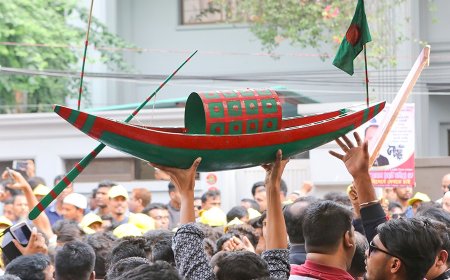
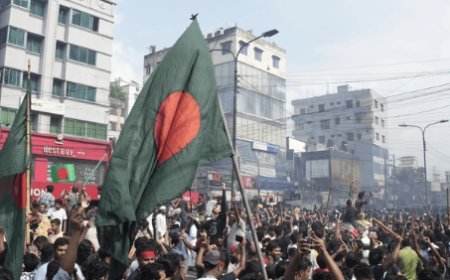
The Monsoon Revolution has catapulted Jamaat at the centre of politics, and has strengthened both factions. Under Dr. Shafiqur Rahman, the party has formally abandoned Shariah as its goal, and is presenting itself as a welfarist party guided by Islam. It has nominated non-Muslim candidates in different elections. And it has formally sounded reconciliatory about 1971.
Against that, however, many of its younger members, particularly online, have taken often extremely pungent and pugilistic stance against political opponents. Meanwhile, the party leaders are acutely aware of the fact that electoral wins by Islamist parties elsewhere are often followed by political crisis involving clashes with the civil society (including gender rights groups), external meddling, and military interventions.
Thus, Jamaat finds itself on the precipice of a historic election.
With the Awami League prohibited from running, the party is now one of the two largest. It can claim to be the vanguard of the Monsoon Revolution. It can aim to be a strong opposition, finessing its policy chops over the coming years. By 2031, it can build sufficient bridges with the civil society to prevent any post-election backlash.
That would be the party’s best-case scenario.
Another scenario would be that the party fails to break out of its traditional geographic strong holds. This would mean the party’s parliamentary strength would be much smaller than what the polls currently suggest. In this scenario, will the modernizing leaders come under attack from the hardliners?
Of course, it is not beyond the realms of possibility that Jamaat could in fact win the election on February 12.
The question is: Are they ready for that scenario? Are we?
Jyoti Rahman is Executive Editor of the weekly Counterpoint.