

















































![A Ledger of the Soul: Navigating the Allah-Bhagavant Nexus in a 19th-Century Puruṣākāra Jñāna Caupara [Gyan Chauper]](https://counterpointbd.com/uploads/images/202608/image_430x256_6a93baa3b09a7.jpg)




















When Welfare Becomes Withdrawal
In the hands of Jamaat-e-Islami, a five-hour workday is not welfare. It is soft patriarchy, cloaked in empathy. Bangladesh should not repeat the mistakes of others when better models are already visible.

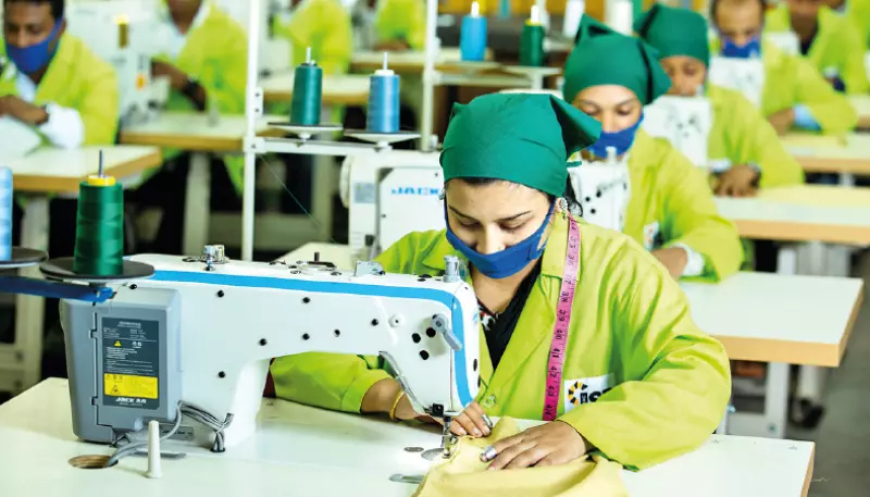
Naqibur Rahman’s claim in Counterpoint -- that a proposed five-hour workday for mothers is a welfare policy rather than a patriarchal plot -- rests on a familiar sleight of hand: Isolating a policy from the ideological project that animates it.
In abstraction, reduced working hours may sound humane. In the political context -- especially when advanced by Bangladesh’s Jamaat-e-Islami -- it risks becoming a managed withdrawal of women from public life, repackaged as compassion.
Other societies have already tested this logic. The results should give Bangladesh pause.
Lessons from Islamic Societies
In post-1979 Iran, the state did not initially ban women from work. Instead, it promoted “mother-friendly” labor policies: Shorter hours, early retirement, incentives for staying home. Framed as respect for women’s natural roles, these policies systematically reduced women’s labor-force participation and stalled professional advancement. Once motherhood became a governing category, women’s citizenship quietly shrank.
Turkey under the AKP offers a softer but no less instructive case. The Erdoğan government promoted part-time work for mothers and publicly valorized large families, presenting flexibility as empowerment. In practice, women were pushed into low-paid, insecure jobs with limited upward mobility. Men’s work patterns remained untouched; care remained feminized. The result was not balance but entrenched inequality.
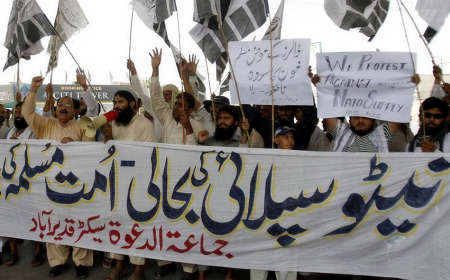
In Pakistan, decades of “protective” moral legislation -- from Zia-ul-Haq onward -- cast women as bearers of family honor. Employment restrictions, mobility norms, and weak workplace protections combined to discourage women’s participation, despite rising education levels. When the state signals that women belong primarily at home, markets and institutions follow suit.
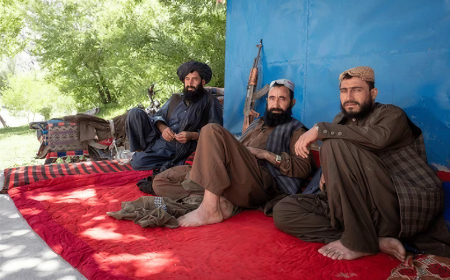
And in Afghanistan, this same logic reached its brutal endpoint: Women reduced almost entirely to domestic roles. Bangladesh is nowhere near that extremity -- but trajectories matter. Regressions rarely arrive overnight. They arrive incrementally, under the language of care.
New York Comparison
This is where Rahman’s argument collapses under comparison.
In New York, which I now call home, Mayor Zohran Mamdani’s call for universal childcare represents the opposite policy philosophy. Instead of shortening women’s workdays, it removes childcare from the private burden of mothers and makes it a public good. Instead of adapting women to inequality, it adapts institutions to women’s full participation.
Universal childcare does three things that Jamaat’s proposal pointedly avoids:
- It treats caregiving as a social responsibility, not a female destiny
- It allows women to remain in full-time, career-track employment without penalty
- It implicitly demands that men, employers, and the state all change -- rather than asking mothers to scale back.
That difference is not cosmetic; it is ideological.
If Rahman’s concern were genuinely welfare-oriented, his argument would naturally gravitate toward policies like universal childcare, paid parental leave for both parents, and flexible work for all caregivers. Instead, it singles out mothers for reduced participation -- leaving male employment norms, employer expectations, and state responsibilities largely intact.
That is not support. That is gendered accommodation.
Why Context Matters in Bangladesh
Rahman asks readers to judge the five-hour workday proposal on its own merits. But policies are never neutral instruments; they are expressions of political intent. Jamaat-e-Islami has a long, well-documented record of opposing gender-equal family laws, women’s leadership, and secular civic space. In that context, a mother-only reduced workday is not a benign concession -- it is a signal.
Signals matter. What begins as “choice” becomes expectation. Expectation becomes pressure. Pressure becomes penalty.
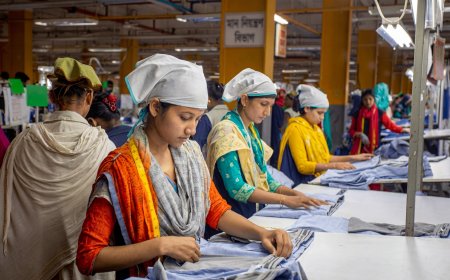
Bangladesh’s most significant advances for women -- education, garments-sector employment, microfinance, political visibility -- came not from shrinking women’s public roles but from expanding them, often against conservative resistance. Those gains were achieved by bringing women into the economy, not by gently steering them out.
The False Compassion Trap
The rhetorical power of Rahman’s essay lies in its moral framing: oppose the proposal, and you appear hostile to mothers. This is a false binary. Feminist policy does not ask women to choose between care and citizenship. It asks the state to make that choice unnecessary.
Universal childcare, as proposed in New York, shows what that looks like in practice. It is expensive, politically difficult, and structurally transformative -- which is precisely why it works. By contrast, shortening mothers’ workdays is cheap, symbolically soothing, and socially regressive.
Learn from Better Models
Across Iran, Turkey, Pakistan -- and now in contrast, New York -- one lesson is clear: Policies that redefine women around motherhood constrain equality; policies that socialize care expand it.
In the hands of Jamaat-e-Islami, a five-hour workday is not welfare. It is soft patriarchy, cloaked in empathy. Bangladesh should not repeat the mistakes of others when better models are already visible.
Equality does not shrink to fit tradition. Tradition must evolve to fit equality. Universal childcare moves societies forward. Gendered withdrawal moves them back.
Hasan Ferdous is a journalist and author based in New York.