





































![A Ledger of the Soul: Navigating the Allah-Bhagavant Nexus in a 19th-Century Puruṣākāra Jñāna Caupara [Gyan Chauper]](https://counterpointbd.com/uploads/images/202608/image_430x256_6a93baa3b09a7.jpg)


















How Religion-Based Politics Harms Women
Rejecting religion-based politics does not mean denying religion; rather, it means taking a stand for equality, human rights, and justice. Without women's liberation, no society, no state, and no politics can be truly just.
Bangladesh is a multi-faceted society where religion, culture, and politics are deeply intertwined. This state, born through the Liberation War, had secularism, equality, and civic rights as its fundamental pillars.
However, the rise of religion-based politics over the past few decades has called those foundations into question. Its impact is not limited to the state's structure -- it has most profoundly affected women's position in society.
One thing must be clarified: Religion-based politics is not merely an expression of religious faith; it is a strategy for power. By using religion as a political weapon, this politics seeks to establish control over the country and society. And the easiest and most effective target for that control becomes women -- their bodies, their decisions, their freedom.
Not Faith, but a Strategy for Power
Religion-based politics aims to remove religion from the realm of personal belief and place it at the center of state power. As a result, religion ceases to be a source of morality and transforms into the language of political authority.
In this type of politics, the space for questioning gradually shrinks, because dissent can easily be labeled as "anti-religious" or "moral deviation."
This is its greatest danger. Democracy stands on questions, differences of opinion, and civic consent, but religion-based politics seeks to establish an unquestionable truth. Consequently, the state slowly ceases to be governed by its citizens and falls under a specific ideology.
Control in the Name of Ideals
In religion-based politics, women's roles are often confined to narrow and predetermined ideals. Women are presented not as full citizens, but as wives, mothers, or "bearers of morality." This notion legitimizes patriarchal social structures through religious language and restricts women's freedom in the name of social order.
Women's clothing, movement, behavior, or personal decisions -- all become subjects of surveillance. Yet this so-called morality is not applied equally to men. This one-sidedness proves that the issue is not about morality; it is the politics of power and control.
Ideological Barriers Against Progress
Religion-based politics creates invisible but strong walls in women's education and careers as well. Its rhetoric often claims that women's higher education or employment is a threat to "family structure" or "social decency." The idea that women's "real responsibility" is home and family is repeatedly reproduced in political language.
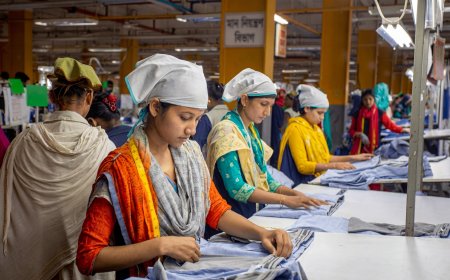
But the real Bangladesh proves this notion wrong every day. Women's participation in the garment industry, health, education, administration, and entrepreneurship is one of the main driving forces behind the country's economic and social progress. Religion-based politics stands against this reality, creating an ideological barrier.
Law, Rights, and the Politics of Religious Interpretation
One of the most dangerous aspects of religion-based politics is the tendency to shrink women's rights through law. Attempts to place religious interpretations in the realm of state law in areas like marriage, divorce, inheritance, or guardianship perpetuate structural discrimination against women.
When laws are governed not by civic equality but by religious interpretation, women can never enjoy equal rights. Their rights become conditional -- dependent on the mercy and permission of family, society, and the state.
Violence and Moral Hypocrisy
Religion-based politics creates a social environment where violence against women is often ignored or silently legitimized. In cases of rape or sexual violence, the tendency to blame the woman's clothing, behavior, or presence becomes even stronger in this politics.
As a result, the responsibility for the crime shifts from the perpetrator to the victim. Instead of justice, women are punished with shame, silence, and social isolation.
Social Division and the Future of Women's Power
Religion-based politics divides society into "moral" and "immoral," creating deep divisions. This division also weakens unity among women, even though unity is the greatest strength for achieving women's rights.
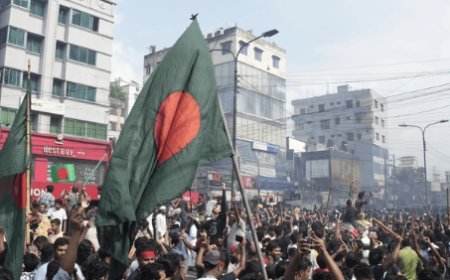
Bangladesh's history shows that women have led change even in adverse circumstances. From the Liberation War to recent economic progress and the mass uprising in July-August 2024, women's active participation is proof of that.
Why Not to Vote for Religion-Based Political Parties
In light of this reality, voting for religion-based political parties -- especially ones like Jamaat -- is not just a political choice; it is a crucial decision about which path Bangladesh as a state will take.
As I explained earlier, the fundamental problem with the politics of religion-based parties like Jamaat is that it seeks to place a specific religious interpretation at the center of state governance instead of the people's sovereignty. Where democracy stands on questions, dissent, and civic consent, parties like Jamaat claim a singular truth and seek to make it unquestionable.
In this type of politics, if it comes to power, civic rights no longer remain natural rights; they become conditional. For women, minorities, and dissenters, these conditions become even stricter. Current global experiences provide real examples of this risk.
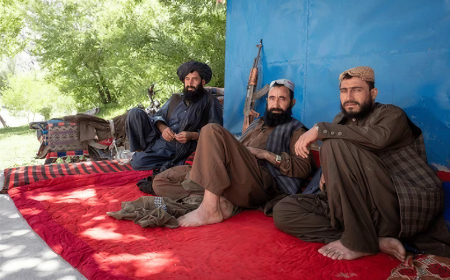
In Afghanistan, under religion-based rule, girls' education, employment, and participation in public life are virtually banned. In Iran, the state's religious framework strictly controls women's clothing and personal freedoms.
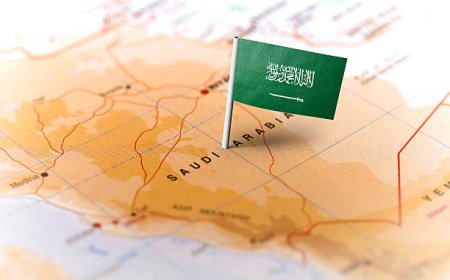
In Saudi Arabia, Sharia-based laws have long restricted women's civic freedoms. Though contexts differ, one commonality is clear -- when religious interpretation supersedes state law, civic rights shrink.
For this reason, not voting for religion-based parties like Jamaat is not a stance against religion. Rather, it is a conscious political decision to keep religion in its dignified place as personal belief while steering the state toward civic rights, legal equality, and democratic accountability.
Religion-based politics deprives women of personal freedom, makes civic rights conditional, and gradually turns the state undemocratic. Religion is dignified when it remains a space for personal belief and moral improvement. But when it is turned into a tool for political power, it gives birth to discrimination and oppression.
Rejecting religion-based politics does not mean denying religion; rather, it means taking a stand for equality, human rights, and justice. Without women's liberation, no society, no state, and no politics can be truly just.
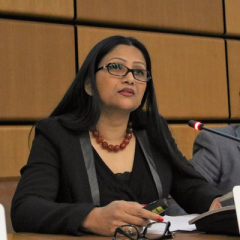
Dr Monica Beg, MD, MPH is Former Chief and Global Coordinator, HIV/AIDS Section, United Nations Headquarters, Vienna, Austria.