





























































Where the Anti-India Current Runs Strong
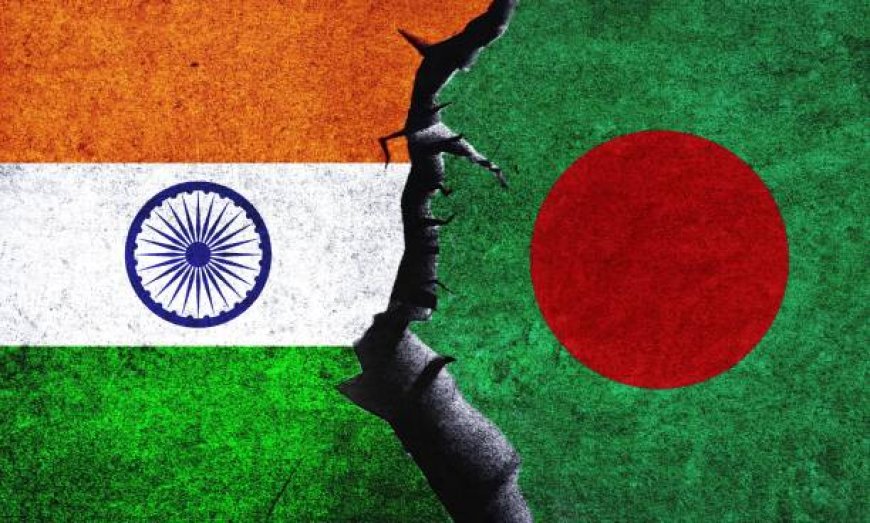
The fact that Jamaat has won so many seats for the first time ever -- most of them along Indian borders -- should be a cause for concern for India. While Bangladeshis may not have embraced Islamic fundamentalism this time, anti-Indian sentiment is clearly gaining ground.

Mayukh Ranjan Ghosh, the ever-energetic journalist from West Bengal-based Republic Bangla, seemed to have made it his full-time occupation over the last 18 months to bash Bangladesh’s interim government under Dr Muhammad Yunus in every way imaginable.
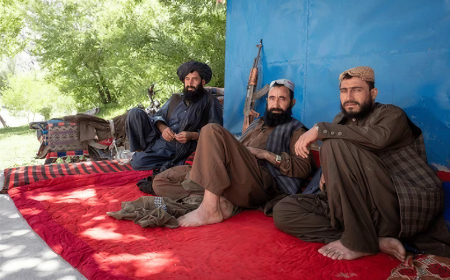
He repeatedly sounded the alarm that Bangladesh was hurtling toward becoming ‘another Afghanistan,’ with Islamist fundamentalists supposedly poised to take power, and cast doubt on whether the Yunus administration could manage a free, fair, and neutral election.
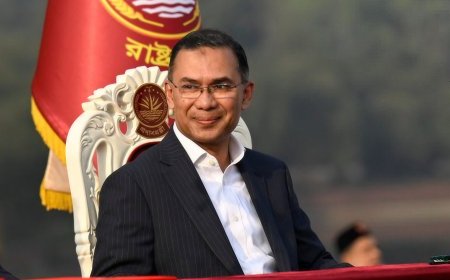
However, following the February 12 national election -- which confirmed that the Bangladesh Nationalist Party (BNP), a centrist party upholding the spirit of the 1971 Liberation War and embracing many liberal ideas, had secured more than a two-thirds majority -- his tone has shifted noticeably.
In a Facebook post the day after the election, he described the result as the start of a ‘new era’ on the banks of the Padma.
He wrote: “Let Bangladesh remain in the hands of those who have repeatedly won through the people’s votes and emotions. Their legacy cannot be erased, even if one tries. We, the 140 crore people [of India], stand by you in difficult times and in moments of joy. Greetings, Tarique Rahman. Greetings, the Sheaf of Paddy.”
Similarly, the coverage of the Bangladesh election in other mainstream Indian media, much of which had been openly hostile just a few weeks ago, has also undergone a marked transformation.
It is evident that many political observers in India now share a more approving perspective of Bangladesh ever since the election results. After all, their greatest nightmare -- that Jamaat-e-Islami might come to power in Bangladesh and threaten regional stability -- has not come true.
However, the reality is perhaps more twisted than it appears. While many in India may breathe a sigh of relief for now, a closer look at the election results offers insight into how anti-India sentiment is shaping public opinion in Bangladesh.
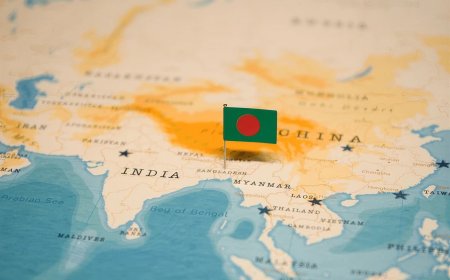
Though the BNP secured an overwhelming majority nationwide, the story is different in constituencies bordering West Bengal -- home to a large Bengali-speaking population in India, including individuals like Mayukh.
Of the 297 constituencies where results were announced, Jamaat and its allied parties captured 21 of the 37 seats along the West Bengal border. While this may seem modest at first glance, it is significant nevertheless, considering that Jamaat and its allies won only 77 seats across the entire country.
Most of Jamaat’s victories were concentrated in districts along the West Bengal border, including Satkhira, Jashore, Jhenaidah, Meherpur, Chuadanga, Kushtia, Rajshahi, Naogaon, Joypurhat, Chapainawabganj, Nilphamari and Kurigram, which also border Assam.
Beyond these, the party also won seats in districts bordering other Indian states like Meghalaya and Tripura, such as Sherpur, Netrakona, Mymensingh, Comilla and Sylhet (also has borders with Assam).
Only 17 of Jamaat’s victories came from constituencies away from the borders or their immediate clusters. Of these, seven were in constituencies of the capital, Dhaka, which is home to migrated people from all over Bangladesh.
So, what explains Jamaat’s strong showing in the border regions?
Of course, generalizing without proper research-based evidence would be premature. Still, the issue demands serious scrutiny and some immediate explanation.
From my own experience traveling to many border districts recently, as well as visiting India several times over the past 18 months, one thing is clear: hostility between Bangladesh and India is far more pronounced in these regions than in the interior areas of either country.
What drives this hostility?
First and foremost, the heavy-handed approach of Indian authorities in these bordering areas plays a significant role.
Border killings top the list. Every year, dozens of Bangladeshis lose their lives in incidents involving Indian Border Security Forces (BSF), often under the pretext of preventing illegal crossings or smuggling.
In reality, as local communities have witnessed and reported, most of these deaths are avoidable, and accountability is almost nonexistent. Such incidents leave deep scars, fueling a sense of collective grievance among Bangladeshis toward India as a whole.
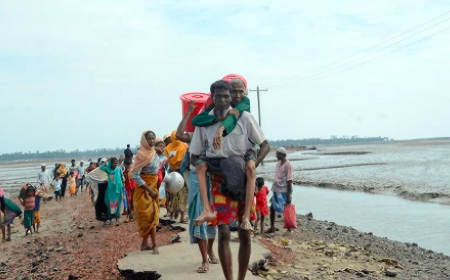
Then there are the repeated “push-ins” by Indian authorities, particularly over the past year, where many Indian nationals -- despite having proper identification -- were forcibly sent across the Bangladeshi border, often solely because of their religion or because they spoke Bengali in non-Bengali states.
River water-sharing disputes, particularly over the Ganges and Teesta, also have a direct and often devastating impact on the daily lives of farmers and fishermen in these border districts.
Bangladeshis frequently do not receive sufficient water when it is needed for irrigation, leaving crops to wither and threatening livelihoods. Conversely, when upstream dams or sluice gates in India are opened, sudden floods inundate fields, destroy fishing boats, and wash away homes.
Each failed harvest, every damaged boat, and every instance of low or excessive water levels reinforces the perception that India acts as an overpowering neighbor, indifferent to the needs and rights of communities living along the border.
Communal tensions add another layer to the picture. Historical conflicts, coupled with incidents of discrimination against minority groups, have created a persistent undercurrent of mistrust.
The suspension of visas and other people-to-people exchanges over the past few years has only deepened the divide. Without cultural or social bridges to connect the two sides, old prejudices have festered.
While it is partly true that violence against minority communities in Bangladesh has increased since Sheikh Hasina fled in August 2024, the flow of misinformation and disinformation in Indian media has only added fuel to the fire.
Stories exaggerating threats from Bangladesh, or portraying Bangladeshis in a negative light, are widely consumed along the border and spread rapidly via social media.
These narratives reinforce fear, resentment, and suspicion -- particularly among populations that already feel marginalized or vulnerable. As a result, anti-India sentiment among Bangladeshi communities living in bordering areas has intensified manifold.
Taken together -- border violence, trafficking, forced push-backs, water disputes, communal friction, breakdown of social ties, and biased media -- these factors have created fertile ground for anti-India sentiment to grow in the border areas.
On the road to the election, while the BNP mostly refrained from engaging with these sensitive border issues -- with the Teesta water-sharing dispute being a notable exception -- Jamaat and its allies actively sought to capitalize on anti-India sentiment wherever possible.
As a party with a religious identity, Jamaat and some of its allies were already inclined to play the religion card, and the growing anti-India sentiment provided them an opportunity to gain quick popularity among people ready to express hostility toward India -- a Hindu majority nation -- openly and unapologetically.
For instance, Hasnat Abdullah, a key leader of Jamaat’s ally, the National Citizen Party (NCP), openly threatened to “cut off” India’s Seven Sisters. Far from hurting his prospects, such statements only enhanced his popularity.
Notably, he secured a massive victory from a seat in Comilla, a district that shares a border with Tripura, one of India’s Northeastern states.
So yes, the BNP may have achieved a landslide victory in the election, and without Jamaat as a coalition ally -- as was the case in 2001-06 -- they are likely to conduct better diplomatic ties with India this time around.
But that does not mean India can simply celebrate BNP’s win. It is important to recognize that the BNP was expected to win anyway.
Jamaat, after all, is a party that opposed Bangladesh’s very birth in 1971 and collaborated with the Pakistan Army during the genocide. It has never been a frontrunner to form a government in Bangladesh.
Its anti-liberal, highly conservative stance, coupled with regressive views on women, has kept it far from being the most popular party. So, it is only natural that they would be rejected by the majority of Bangladeshis.
Yet the fact that Jamaat has won so many seats for the first time ever -- most of them along Indian borders -- should be a cause for concern for India. While Bangladeshis may not have embraced Islamic fundamentalism this time, anti-Indian sentiment is clearly gaining ground. India cannot afford to remain indifferent.
Addressing these bilateral tensions requires concrete action: Ending border killings and illegal push-ins, ensuring fair water-sharing agreements, promoting equitable trade, correcting misrepresentations of Bangladesh in Indian media, discouraging provocative statements by Bangladesh Awami League members from Indian soil, and rebuilding people-to-people ties through tourism and visa initiatives.
Taken together, such steps could not only curb anti-India sentiment in Bangladesh but also lay the foundation for a more stable and constructive long-term relationship between the two countries.
Now the ball is in India’s court. Let’s see if they can make something really positive out of Bangladesh’s election outcomes.
Jannatul Naym Pieal is a Dhaka-based writer, researcher, and journalist with over a decade of experience in professional journalism.