






















![A Ledger of the Soul: Navigating the Allah-Bhagavant Nexus in a 19th-Century Puruṣākāra Jñāna Caupara [Gyan Chauper]](https://counterpointbd.com/uploads/images/202608/image_430x256_6a93baa3b09a7.jpg)




















Is Honesty Alone What We Want in a Leader?
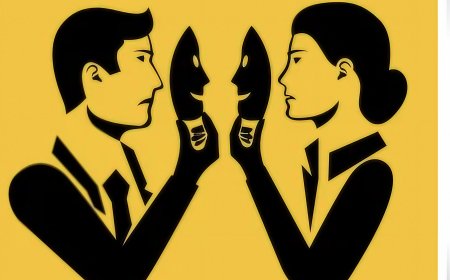
To understand whether an individual is honest, we need to know whether that person is committed to alternation of power, whether he understands the value of inclusivity and dissent, whether he knows that people with different ideas live within the same society, and whether he is willing to let them survive, grow, and challenge him.
As the election campaign is unfolding, a few issues have emerged that I find extremely concerning.
The first of them is the idea that we just need an honest person or a group of honest people to solve our key problems -- be it related to governance or economic concerns. This group of honest men will fight against the system, deal with corruption, and solve all our problems.
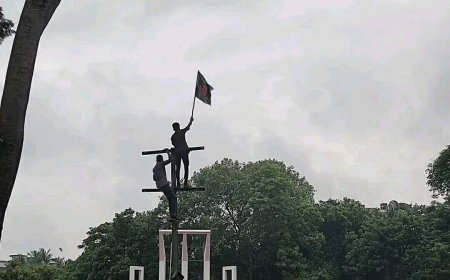
I am sorry, but this statement is quite problematic and, for me, it goes against the aspiration of the July Uprising, which aimed at altering the fundamental structure of our political system in order to prevent the rise of future authoritarian rule.
If you think about it, in the past we were sold the idea that if you have a strong leader who cares for the country or development, you don’t need anything else. We have all seen how that turned out.
We are now being offered the same deal -- only the patriot, development-oriented leader has been replaced with the idea of the honest leader.
This whole idea stands in strong contrast to our entire reform journey and the signed July Charter. The July Charter, with all its limitations, focused on checks and balances and stood against power concentration and consolidation.
The idea was Madisonian: men cannot be angels, and since that is not possible, we need checks and balances.
We accepted the Popperian argument: The question is not ‘Who should rule?’ but ‘How can we so organize political institutions that bad or incompetent rulers can be prevented from doing too much damage?'
This is the key question. You don’t necessarily need honest groups, because you can never ensure that you will get them, and you can never know how a so-called ‘honest leader’ will behave once he or she gets into power. Moreover, political ethics does not always rely on general moral understanding or undertone, and an honest person can be extremely incompetent.
Popper is right: you need to design the system, organize political institutions in a way so that even a dishonest person can’t get his way, even a dishonest person is forced to follow basic democratic norms.
This is exactly what we planned to achieve through the July Charter. Therefore, it scares me when a party builds its entire argument or claim to power based on the premise that honesty can solve the problem. It makes us forget several important points -- an honest person can be extremely incompetent, may not have any idea about the political process, and may consider democratic norms and practices as expendable.
If that happens, we are doomed. In politics, even ‘honesty’ can be part of performative art, and the ‘politics of lying’ can establish a ‘liar’ as an honest alternative. There is no way to measure the level of honesty of an individual or a group, and trust can often backfire in politics. Therefore, those who campaign on the idea of honesty are actually hurting the reform process.
We have also seen that once an ‘honest’ person takes power, pretty soon he starts complaining about the ‘shackles’ -- checks and balances -- and tries to point out again and again that due to these procedural limitations, he is failing to perform.
This is followed by a demand to get rid of these checks, to create a pathway for an ‘honest’ powerful superman whose integrity will work as an inner check. These ideas can often be sold easily -- and the price we pay is too high.
At the same time, we also need to revisit the idea of ‘honesty’ within the domain of politics. “I don’t lie, I won’t take bribes, I won’t allow corruption” are not enough. It is more important to broaden the concept of ‘political honesty’ and include a person’s commitment to democratic practices.
To understand whether an individual is ‘honest,’ we need to know whether that person is committed to alternation of power, whether he understands the value of inclusivity and dissent, whether he knows that people with different ideas live within the same society, and whether he is willing to let them survive, grow, and challenge him.
We need to know whether an individual has just one version of ‘truth’ and whether he considers an ‘uncompromising stance’ a virtue. If he does, he violates a key principle of democracy, which is making compromise when it is necessary.
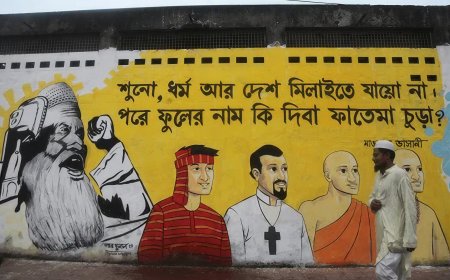
‘Political honesty’ also requires standing against the tyranny of the majority and ensuring that minorities enjoy full rights -- offering protection alone is not enough and is actually an insult to their right to live as equal citizens.
The thing is, politicians often need to get their hands dirty. It is important to understand that a sense of ‘religious’ or ‘personal morality’ is not enough to pursue the moral ends of politics. And here lies the dilemma -- a so-called honest politician can either ignore the moral ends of politics citing honesty, or use ‘honesty’ to move beyond acceptable and legitimate political ends.
Hence, do not buy the ‘honest leader’ argument by simply taking into consideration promises to fight corruption or extortion. Those are important, but not everything.
Consider their commitment to democracy. Observe their actions -- whether they are committed to inclusivity, whether they understand that all citizens must enjoy basic rights, whether they propose a ‘one true morality’ or understand what co-existence means, and whether they instrumentalize beliefs to attain their goals.
If they do, it is important to be extremely careful about them.
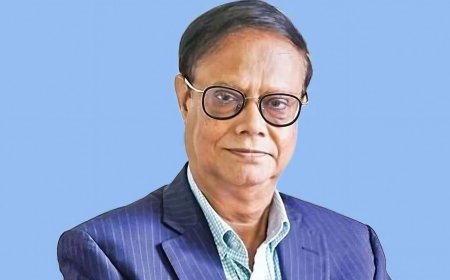
Asif M Shahan is a PhD Associate Professor in the Department of Development Studies at University of Dhaka.