



































































The Long Road to the Prime Minister’s Office
A two-thirds parliamentary majority means nothing if the streets of Dhaka turn against you, as Sheikh Hasina learned. If Tarique governs with the same composure and restraint he has shown since his return, there is reason for hope. If he does not, the verdict of the streets will be swift.

When Tarique Rahman was forced into exile in 2008, it seemed like the world had arrayed itself against him. The country's military and civilian bureaucracies had turned on him. Civil society had abandoned him.
India and the United States had turned a blind eye to his torture while in custody. His journey from that dark hour to today, as Prime Minister of Bangladesh, the office previously graced by his mother Khaleda Zia, is a tale of sacrifice and perseverance.
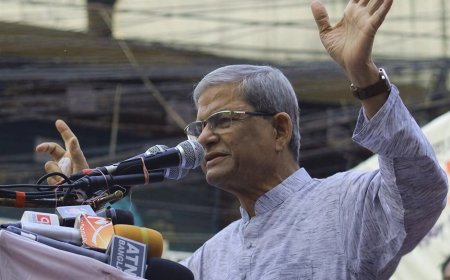
Since his return to Bangladesh six weeks ago, Tarique Rahman has conducted himself with a combination of discipline and grace that has surprised even his skeptics. His tone has been conciliatory rather than combative, restrained rather than triumphalist.
So striking has been this composure that a common refrain has emerged across the political spectrum: Why did Tarique Rahman not return sooner, right after the fall of Sheikh Hasina in August 2024? His decision to wait, whatever the reasons behind it, may have cost the country over a year of political drift under the Interim Government.
But his measured reentry has also allowed him to set the terms of his own narrative, arriving not as a man reclaiming his fiefdom but as a leader answering a call. And yet, no matter what Tarique Rahman endured during those 17 years in London, no matter the personal losses and political indignities, his most difficult challenges lie ahead of him.
Administering a country of 170 million people requires the character to make difficult decisions, to disappoint one's most fervent supporters, and to administer justice and equity to one's most ardent opponents. It is one thing to win an election with a two-thirds majority. It is quite another to govern with the wisdom and restraint that such a mandate demands.
The people of Bangladesh did not vote merely for a change of party; they voted for a change of political culture. Tarique Rahman must now deliver on that implicit promise. He should remember that it was just one by-election in Magura in 1994 that marred the entire 1991-96 tenure of his mother.
The allegation of vote rigging in that single constituency handed the opposition a grievance around which it built a movement that ultimately cut short the government. No such allegations of election engineering should be allowed to tar the new Tarique Rahman government. The BNP now holds the kind of supermajority that makes institutional manipulation unnecessary.
It would be a tragic irony if a government born from the ashes of one-party authoritarianism were to sow even the faintest seeds of electoral malpractice. There are already warning signs that Tarique Rahman would do well to heed. The BNP lost a notable number of seats in Dhaka, winning only 13 of the capital's 20 constituencies, with Jamaat-e-Islami and NCP claiming the rest.
Tarique Rahman himself only squeaked by in Bangladesh’s most elite constituency by just over 4000 votes. Earlier, in September 2025, the party's student wing, Jatiyatabadi Chhatra Dal, was routed in the Dhaka University Central Students' Union election, with the Shibir-backed panel sweeping the top positions by commanding margins.
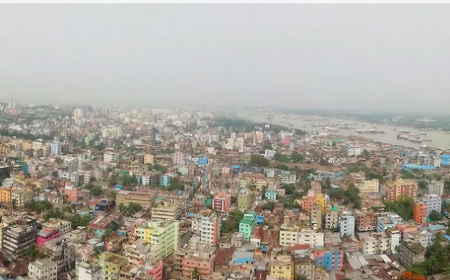
The next DUCSU election is only about six months away. Following that, the long-overdue Dhaka city corporation mayoral elections must also be held. Each of these contests presents a potential flashpoint for the BNP. Dhaka is the beating heart of Bangladeshi politics, and if the party cannot command the confidence of the capital's voters and its university students, the narrative of an invincible mandate will begin to erode.
Tarique Rahman's challenge is not merely to govern well from the center, but to rebuild the BNP's credibility in the very places where it has recently faltered. The BNP is, in fact, sitting on a potential powder keg. Jamaat’s MPs now represent vital nodes of the capital. The dynamic young student leaders who command Dhaka University's campus owe no allegiance to the BNP.
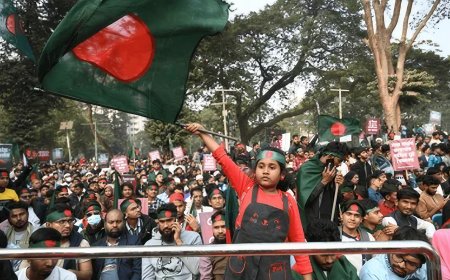
And the icons of the July Uprising, the very movement that made this election possible, are dispersed across opposition benches and civil society, many of them skeptical of the old-guard party politics that the BNP represents. These forces are not inherently hostile, but they are watchful, impatient, and unafraid to take to the streets.
Tarique Rahman needs to be deeply cognizant of this reality and factor it into every dimension of his governance. A two-thirds parliamentary majority means nothing if the streets of Dhaka turn against you, as Sheikh Hasina learned.
The road in front of Tarique Rahman is hard and slippery. The expectations are immense, the opposition is capable, and the people's patience, after years of authoritarian misrule, is thin.
If he governs with the same composure and restraint he has shown since his return, there is reason for hope.
If he does not, the verdict of the streets will be swift.
Bangladesh has re-learned, at great cost, how to remove leaders who forget whom they serve.
Ehteshamul Haque is a lawyer who focuses on technology transactions. He teaches corporate law at American University.