





























































Professor Yunus Leaves on a High Note
Today, 18 months later, as the nation takes stock of the past and looks at the future, it is an opportunity to evaluate the performance and legacy of Muhammad Yunus and his Interim Government. The performance and work of the Interim government, despite some shortcomings, must be commended, perhaps even celebrated.
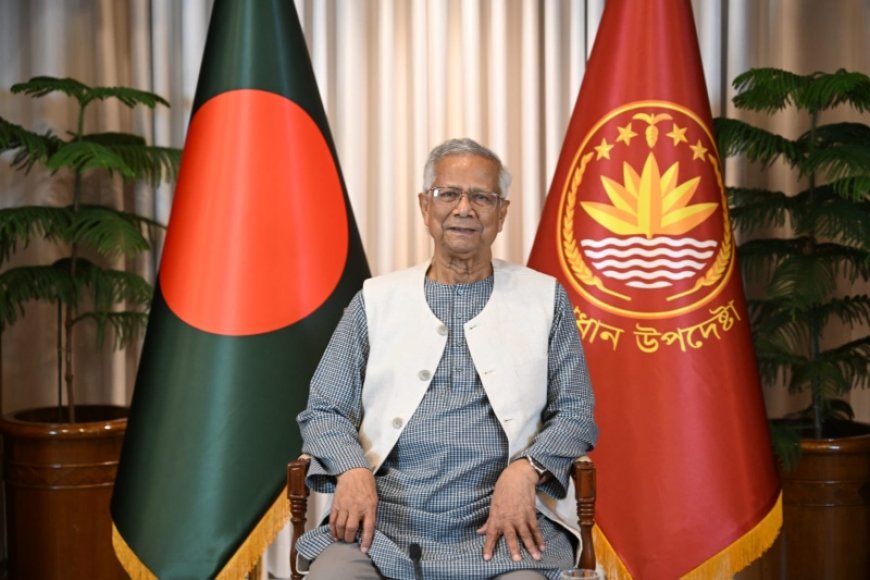
What is the legacy of the Yunus-led Interim government, which led the nation for 18 months, and is leaving power after gifting that nation with its first free and fair elections in a decade and half?
Undoubtedly, the answer will be debated in countless informal gatherings, addas, and conferences, and by scholars for years. In fact, the conversation is already well underway with gusto with some citizens and commentators full of praise, while others barely able to suppress their glee that the IG has finally left.
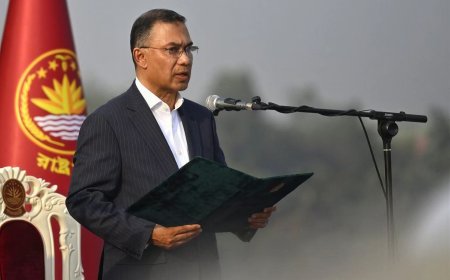
Let us pay some attention to what the leader of the Interim Government has to say about their historic role and achievements, or lack thereof. In his farewell address to the nation delivered on February 16, Prof Yunus was eloquent, highlighting some of the themes he is known for -- a strong trust in the immense potential of Bangladesh, and an optimistic view of the future.
The farewell address was also a call to action along with an expansive vision for the future Bangladesh. Yunus said: “I call on all, regardless of party, religion, gender, or community, to continue the struggle for a just, humane, and democratic Bangladesh.”
In contrast to the boastfulness of many politicians, he was humble in evaluating his own contributions: “My colleagues and I have tried to honour our commitments. Where we succeeded or failed, the judgement rests with you.”
Through modesty, he showed his confidence that the merit of the Interim government’s contributions in providing stability and a much-needed bridge back to democracy, will be favorably judged by the people of Bangladesh, and by history.
The Yunus-led Interim government were sworn in on August 8, 2024, some 18 months earlier.
Today, the crisis of July-August 2024 may seem distant and benign to some, but at the time, it was anything but. On the one hand, the nation was delirious with joy having overthrown a tyrant who seemed invincible, and yet the outlook seemed extremely uncertain and perhaps hazardous. The nation was hoping for a bright democratic future, but also aware of how close it had come to a dangerous abyss.
When the victorious and joyous student leaders placed a call to Prof Yunus in Paris, France, he was initially reluctant to accept their offer. However, they persisted and reminded him of his obligation to the nation in a time of distress and crisis, as a patriotic citizen.
The young adults, representatives of Gen Z, were persistent and persuasive. They had come to put all of their trust in a Bangladeshi, perhaps three times their age. Their persistence paid off as Yunus agreed. At the ripe old age of 85 years, Yunus may be among the few leaders in the world who decided to lead a government during a period of revolutionary upheaval, and the future of the nation looked dark to many.
Perhaps, where others saw peril, he saw prospects and opportunities to lead the nation to a bright future. This was not just a personal decision for him. It was a historic development for the nation. Yunus is the only Bangladeshi ever to win a Nobel Prize, and is easily the most famous Bangladeshi citizen in the world.
Once he agreed to take charge, millions of Bangladeshi citizens and the friends of Bangladesh across the globe heaved a sigh of relief. No better alternative existed. There was no plan B.
The Gen Z university students had achieved something remarkable. They had managed to de-throne an entrenched dictator, one who was blindly supported by India, the neighboring superpower, and who had ruled ruthlessly for 15 years, unleashing great violence on the citizens of Bangladesh.
Had the young students, in the capital and across the nation, decided not to engage putting their lives in harm’s way, who knows where Bangladesh would be today. It is an open question if BNP the largest opposition party, which was in deep disarray, had the strength for the knock-out punch, which the Gen Z students delivered to the dictator Hasina and her vast network of enablers across the nation.
If not for the student leaders (and the supportive role played by the army) it is likely the nation would not have succeeded in ridding itself from fascism and autocracy in July 2024. When Yunus received the students plea, the situation across Bangladesh was tense and surreal.
These were the best of times and the worst. With Sheikh Hasina on the run and her vast apparatus of oppression and suppression collapsing, there was a sense of unbelief and joy, and yet, there was fear of a total breakdown in the law and order, and the real probability of a military takeover. Unless there was the steady hand of a strong and highly respected leader, the situation could have swiftly turned for the worse, leading to a military coup or worse, a civil war.
Prof Yunus captured this succinctly in his address: “People had lost faith in the state, democracy was in ruins, and the future uncertain,” and later, “We did not start from zero, we started from minus.”
The credible and widely accepted elections of February 12 delivered a decisive victory for the BNP, clearing the way for the installation of a new democratically elected government under its leadership. There is little doubt that both the friends and the foes of the Interim government would agree the successful election this was their greatest achievement and gift to the nation.
With the swearing-in of the new cabinet on Tuesday, Yunus has formally concluded his one-and- a-half-year tenure as the leader of the Interim Government. As expected, he ended his leadership role on a positive and hopeful note.
In his farewell address, he urged his fellow Bangladeshi citizens to be vigilant in safeguarding the democratic practices nurtured over the past 18 months: Free speech, accountable governance, civic participation, and transparent elections.
In his words: “I believe the people of Bangladesh, along with all political factions, will uphold and strengthen this momentum with unwavering unity in the days to come,” Yunus said, emphasizing that the country’s democratic and reformist gains must not be lost.
A Role Model For Future Governments
Yunus extended his congratulations to all for successfully conducting a “festive, participatory, and peaceful national election”. He was generous, giving credit to where it was due -- the people of Bangladesh. He said: “Through this election, voters, political parties, candidates, election institutions, and law-enforcers together created a commendable precedent. It will serve as an exemplary model for how future elections in Bangladesh should be conducted.”
To the participants, both the victors and the losers, he had a message. “Those who won this competitive election, I congratulate. Those who lost, I also congratulate. Victory and defeat are the essence of democracy. The new government will assume office in the coming days, marking the conclusion of our 18-month tenure,” he added.
Harking back to the dark and difficult days in July-August, 2024, Yunus recalled the unprecedented uprising, when citizens asserted their freedom, aspirations, and dignity amidst a profound political, economic, institutional, and humanitarian crisis.
He noted that the nation had entrusted him and his team with, “three responsibilities to restore normalcy: Reform, justice, and elections.” He defended the Interim Government’s record, “We spared no effort. We pursued justice for crimes against humanity, corruption, and misconduct above politics and revenge. We reformed fragile institutions administratively, commercially, and financially, ensuring no future government could override the people’s will.”
As expected, he concluded that the crown jewel of their work was the just concluded elections, attended and certified by more than 500 international observers as free and fair. “Most importantly, we held a celebratory, free, fair, impartial, peaceful, and credible national election, restoring citizens’ voting rights,” Yunus said. Looking at the historic nature of this achievement and its future implications, he described the election not merely as an opportunity to transfer power transfer to the people’s representatives, but also as “the beginning of a new journey for Bangladesh’s democracy -- the birth of a new Bangladesh.”
Importantly, he reminded the nation that the real heroes were the martyrs. Paying tribute to those killed by the police and goons of the Awami League during the July Uprising, he said: “Without their extraordinary sacrifice, this transformation would not have been possible.”
Towards Meaningful Reforms
There has been much talk about the success and failure of Interim Government when it comes to the much-needed reforms, across the nation’s social, political and legal landscape. He reminded the critics and detractors that their record is consequential. The IG oversaw “the creation of nearly 130 new laws and amendments, alongside about 600 executive orders -- 84% of which have been implemented -- strengthening citizens’ rights, the judiciary, and ensuring extrajudicial killings never recur.”
Lest we forget, he harked back to the fragile law-and-order situation when the Interim Government was sworn in. A collapse seemed imminent. He said today: “Police no longer use firearms unlawfully, abduct citizens, or conduct killings under the guise of ‘gunfights’. Fear of law-enforcers no longer dictates life-or-death decisions.”
On strengthening citizen’s legal rights, Prof Yunus emphasized reforms to strengthen judicial independence through a separate secretariat, transparent judge appointments, and civil and criminal law reforms, while noting the establishment of the National Human Rights Commission to prevent Bangladesh from ever becoming a state without human rights.
To protect the women at home and in the workplace, he noted that his government’s amending the Sexual Harassment Prevention Ordinance for the protection of women and children, the Domestic Violence Prevention Ordinance and the Women and Children Repression Prevention Act has “paved the way” for ensuring protection against harassment of women at workplaces and educational institutions.
Regarding the nation’s expectations to implement justice for those killed and injured by the government forces during the historic July 2024 mass uprising, he spoke of the upcoming verdicts in multiple trails around the July killings at the International Crimes Tribunal, and said: “We hope the judicial process will continue to move forward with utmost neutrality and transparency in the coming days.”
There have been a lot of commentary how well the IG has performed in navigating the treacherous waters of international trade and the global economic forces during President Trump's era. The chief advisor reminded the nation of what they had inherited: The country’s economy was in uncertain waters, with the critical banking system in near-collapse.
He reminded us that the IG moved quickly to introduce “structural reforms in revenue management, tax policy, currency management, and the financial sector.”
The Yunus-led government had faced strong criticism over its decision to hand over port management to foreign operators. Was the criticism justified or ill-informed? He defended this move: “We have made significant progress in signing agreements with the world’s best international port management companies to bring our ports to international standards.
"If we fail to enhance efficiency, we will fall behind in our economic gains.”
On foreign policy, one of his strengths, and one in which the previous governments near-subservience to India was a source of great angst for the citizens of Bangladesh, Yunus said that today Bangladesh has firmly restored the “three key pillars in its foreign policy: sovereignty, national interest, and national dignity.” He thundered: “A submissive foreign policy or a Bangladesh dependent on the directives and advice of other countries no longer exists. Today’s Bangladesh is confident, active, and responsible in safeguarding its own interests.”
Finally, came the metaphoric punch line, one which has predictably garnered the most headlines in media of neighboring India. Speaking of the importance of regional trade and commerce, Yunus said, "Our open seas are not just borders -- they are gateways to the global economy. And, With Nepal, Bhutan, and the Seven Sisters, this region offers immense economic potential."
Through economic zones, trade agreements, and duty-free market access, we can establish Bangladesh as a global manufacturing hub. The reference to the significance of trade with Seven Sisters, without mentioning India gave a lot of heart ache in the Indian media.
Perhaps Prof Yunus intended this to be the case, given the frosty treatment his administration received from the government of PM Modi.
On the uplifting role of women and the youth, in an earlier address to the nation delivered on August 5, 2025, on the occasion of marking the July 2024 Mass Uprising, he spoke of the critical role of women and youth during the movement and in the society. “To the political parties, I urge you: in your election manifestos, in your promises and plans, make sure the youth are not left out.
Make sure women are not left out. Remember, the young men and women who have transformed Bangladesh have the power to transform the world. Give them the opportunity to do so through your party.”
In his farewell speech, Yunus described the July Charter as his government’s “greatest achievement”. In his opinion, the people of Bangladesh supported the implementation of The July Charter in the referendum with an “overwhelming majority.” He added, “If the July Charter is implemented, the pathways for ‘fascism’ to return will be permanently closed. We hope it will be implemented within the stipulated timeframe.”
And finally, “even if people forget the interim government’s successes and failures, the nation would never forget the July Charter.”
On Bangladesh’s Future Economic Potential
Yunus said, “Bangladesh is no longer just a story of overcoming crises. Today, Bangladesh is a country of immense potential.” Given his training as an economist trained at Vanderbilt University, he noted that if Bangladesh can successfully train and educate its large youth population (some 40 million) into a “skilled, hardworking, and disciplined” workforce, this pool of talented workers could become a major source of skilled manpower in the global arena.
Bringing up the recent trade and tariff agreements with America and Japan, Yunus said: “This agreement is not merely a commercial benefit; it will serve as a strategic foundation to strengthen Bangladesh’s economy, employment, industrialisation and international diplomatic standing in the long term.” He described the recent agreement with Japan as, “historic and strategic advancement” which will contribute to the future economy by making it “sustainable, diversified, and technology-driven.”
On Eliminating Corruption and Its Impact: Education, Training, And Honesty
Towards the end, he addressed the critical issue of replacing corruption with a culture of honesty, “Let me state clearly, there is no alternative to three things for turning potential into reality: education, training, and honesty.” He said, “In the past, limitless corruption, dishonesty,
irregularities and fraud were encouraged in state administration. That culture held us back and damaged our credibility.”
“The new Bangladesh must move away from that path. We must commit to compliance, keeping promises, maintaining standards, freeing every level of the state from corruption, and ensuring transparency and accountability.”
He ended on a high note, giving his heartfelt thanks to the nation: “Let us build a Bangladesh where possibilities are limitless, and dreams have no boundaries.”
Concluding Remarks
In 2024, Bangladesh was fortunate on two counts. First, the successful outcome of a resistance movement led by Gen Z university students, men and women, gathering support from a broad spectrum of the society. Second, the success of student leaders in convincing Bangladesh’s most prominent citizen, one who was also among the most visible victims of the oppression of the tyrannical dictator, Sheikh Hasina, to return to the country to lead an Interim Government.
Today, 18 months later, as the nation takes stock of the past and looks at the future, it is an opportunity to evaluate the performance and legacy of Muhammad Yunus and his Interim Government. Clearly, the students had chosen well, and as a result today Bangladesh is back on track as a democracy and a nation of laws. The performance and work of the Interim government, despite some shortcomings, must be commended, perhaps even celebrated.
These men and women, largely apolitical, showed how deep the bench is when it comes to good and honest citizen-leaders, who can step in to lead during times of crisis.
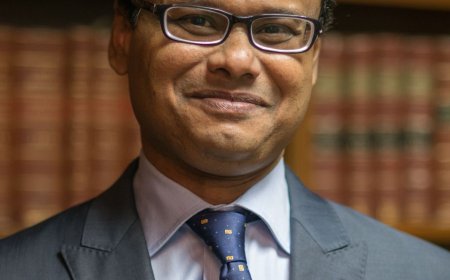
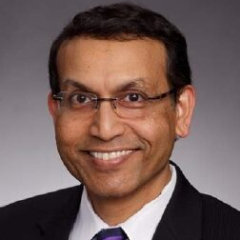
Professor Munir Quddus served as the dean of the college of business at Prairie View A&M University for 23 years, and is currently serving as an endowed professor of economics at PVAMU. He can be reached at [email protected].