

























































Rewriting the Narrative? RAB’s Conduct in a Nation on Edge
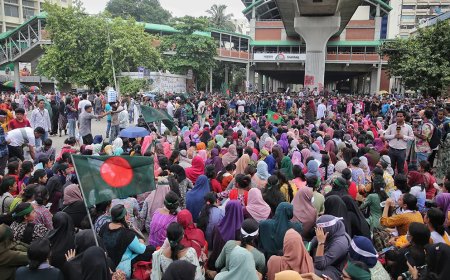
In July 2024, when the entire country erupted in protest, when over 1,400 lives were lost, and when Dhaka became a city under siege, RAB did not revert to familiar patterns. They did not conduct midnight raids. They did not trigger mass disappearances. Instead, they acted as a containment force. That contrast is not just noteworthy, it is historic.
Before recounting what I personally witnessed inside RAB Headquarters during one of Bangladesh’s most consequential moments, I want to be clear about the purpose of this piece.
It is not an attempt to convince anyone of my perspective, but an invitation to consider a question: is it possible that RAB, despite its troubling legacy, acted with greater caution and judgment during the July 2024 student uprising? If that possibility holds weight, then what I observed takes on a different kind of meaning.
If not, I still hope my account contributes to a fuller understanding of what unfolded. Truth is rarely found in absolutes, and we owe it to ourselves and our future to ask these hard questions.
Like many in the Bangladeshi diaspora, I followed the historic student uprising of July 2024 with both awe and anguish. But unlike most, I was in Dhaka when it happened. I did not just follow the uprising, I witnessed it.
I saw it from both sides: the electric energy of protesting students and the weight of duty felt by security personnel tasked with maintaining order in a collapsing state. Through circumstances that allowed me unique access, I was inside RAB Headquarters during those tense days and nights.
The force I encountered, often condemned for its past actions, operated with discipline, calculation, and in many moments, commendable self control. This is not revisionism. It is reality.
What I saw, and what I have since confirmed through deeper investigation, is that among all the law enforcement and security forces deployed in July 2024, the Rapid Action Battalion, RAB, emerged as the most composed, even as others lost control or crossed ethical lines. That does not erase RAB’s history. But if we seek justice and truth honestly, we must give credit where it is due, even if it is inconvenient.
A New RAB or Just a Rare Moment of Judgment?
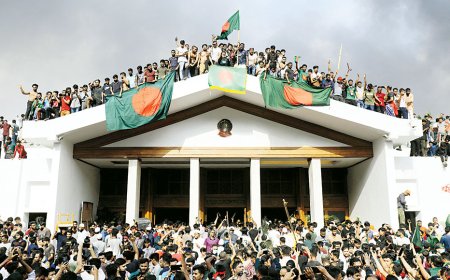
I was inside RAB Headquarters during multiple critical moments, including a tense all-night stand off around August 5, when hundreds of protesters surrounded the compound. Tensions were at their peak. The city braced for a massacre.
Not one bullet was fired from inside that compound.
This was not an isolated instance of control. Throughout July and into early August, while police opened fire and ruling party mobs attacked students, RAB consistently prioritized de-escalation over brute force. In many situations, they functioned more as an emergency response unit than an offensive one. Helicopters were deployed to extract trapped officers, not to inflict harm on demonstrators.
There were allegations, particularly online, that RAB fired from helicopters during crowd control missions. While videos and witness accounts have circulated depicting what appears to be shooting from helicopters, analysis by bodies like the OHCHR indicates these show non-lethal measures such as tear gas canisters and sound grenades, with smoke trails and explosive sounds that could be mistaken for live fire. No irrefutable video evidence has emerged confirming lethal ammunition from the air, though some disputed claims persist. Given how the entire movement unfolded on phones, livestreams, and social media platforms, the absence of definitive proof is meaningful.
The United Nations Office of the High Commissioner for Human Rights (OHCHR) investigated this issue. Their report confirms that RAB denies firing live ammunition from helicopters, asserting that only non-lethal tools like tear gas and sound grenades were deployed. While OHCHR documented disproportionate force used by other units, specific evidence implicating RAB in such aerial attacks remains unverified. That distinction matters.
In the Line of Fire but Still Held the Line
Perhaps the most revealing indicator of RAB’s discipline during this national crisis is this: few senior officers went into hiding after the previous government fell. The rest stayed in place, in uniform, under pressure, but still functioning within command.
Compare this to the disarray across other police, armed forces, and law enforcement agencies. Reports of desertions, defiance of orders, and last-minute disappearances plagued the regular police and intelligence community. In some areas, entire stations were abandoned. In others, officers refused to act unless assured of protection under the next regime. RAB, however, remained operational. Their structure stayed intact. And critically, they avoided excessive violence.
Past Shadows, Present Contrast
To understand how different RAB’s actions were during the 2024 student uprising, we must first remember the legacy they carried.
Since its inception in 2004, RAB has been linked to:
• Hundreds of extra-judicial killings, often labeled as crossfire incidents
• The 2006 Kansat crackdown, where 20 villagers demanding electricity were shot dead
• The 2013 Shapla Chattar operation, where RAB took part in a brutal midnight assault on Hefazat protesters, with scores disappeared and many presumed dead
• A systematic wave of enforced disappearances from 2013 to 2018, targeting dissidents and opposition figures
• Alleged killings of detainees in custody, including deaths during anti-drug operations in 2018
• Accusations of torture inside secret sites, now associated with the network known as Ainaghar
Human Rights Watch, Amnesty International, and Bangladeshi watchdogs like Odhikar have long accused RAB of operating beyond the law. Their reputation was one of unchecked force.
But in July 2024, when the entire country erupted in protest, when over 1,400 lives were lost, and when Dhaka became a city under siege, RAB did not revert to familiar patterns. They did not conduct midnight raids. They did not trigger mass disappearances. Instead, they acted as a containment force. That contrast is not just noteworthy, it is historic.
The Ainaghar Allegation: Justice or Deflection?
In the wake of the uprising, the interim government has revived a list of allegations against RAB, including its supposed leadership role in managing Ainaghar, the secret detention network tied to years of human rights violations.
RAB has also been accused of aiding the release of Barrister Arman, Michael Chakma, Subroto Bain, and others. These claims are serious and should be investigated independently. But the effort to hold RAB solely responsible for all previous atrocities, while ignoring the political machinery that commanded these operations, risks turning justice selective instead of impartial. Accountability must be targeted, not collective.
The Numbers Tell the Story
In December 2021, the United States sanctioned RAB under the Global Magnitsky Act for serious human rights violations. That action had measurable impact:
- Enforced disappearances dropped sharply within a year
- Extra-judicial killings saw a steep decline
- Crossfire operations virtually disappeared from media narratives and police records
These changes were not cosmetic. They marked a real shift in institutional behavior. The events of July 2024 may be the strongest signal yet that RAB’s transformation, while unfinished, has begun.
Memory and Responsibility
Think back. Of all the disturbing images from the 2024 uprising, how many clearly showed RAB acting violently? And how many documented abuses by police, Awami League cadres, or members of other security and armed forces?
The uprising was chaotic and tragic. The violence was real. The death toll was devastating. But if we are honest, and I say this as someone who saw both the chaos and the command, RAB was the most measured force in the streets.
That truth may challenge popular opinion, but accuracy must take priority over emotion.
A Final Note: Justice Must Be Just
Let me state without ambiguity: No RAB personnel, nor any official in uniform, should face punishment for actions they did not commit. Justice must be real, not symbolic. Those who carried out torture, killings, or abductions must be prosecuted. But those who acted within the law and held their position with care and professionalism must be protected.
What I saw during those days inside RAB Headquarters was a group of overworked and often ridiculed individuals acting with rare prudence during a national emergency. It does not erase the past. But it may point to a future worth building. Their journey toward public trust will take time, but it must be allowed to continue.
To every man and woman in black who stood their ground without violence, thank you. Your courage and control did not go unnoticed.
And to all uniformed patriots, from Bangladesh to beyond, who risk your lives in silence and sacrifice, I salute you. Your strength and your families’ burden deserve more than slogans. You deserve truth. Thank you for making the world safer and fairer for all of us.
Readers should focus on evaluating RAB’s claim of adopting a cautious and measured approach during the student uprising, not solely on my observations inside RAB Headquarters.
Mirza Ahmad is an independent writer with a strong interest in politics, religion, and human rights.