




































































Understanding the July Uprising Through Spontaneity


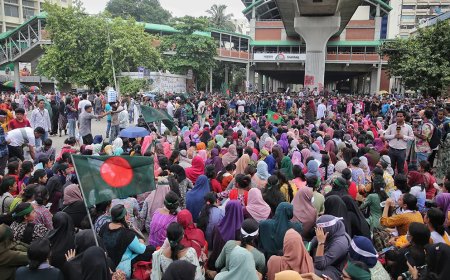
In July 2024, people from all walks of life poured into the streets of Bangladesh, culminating in a mass explosion of public agitation. A confluence of issues -- from the impossibility of a peaceful democratic power transfer and ongoing state violence to economic plunder, rising unemployment, and widespread structural violence (including ‘accidental’ laborer deaths and road accident fatalities) -- had forged a deep, long-simmering reservoir of public resentment that finally erupted.
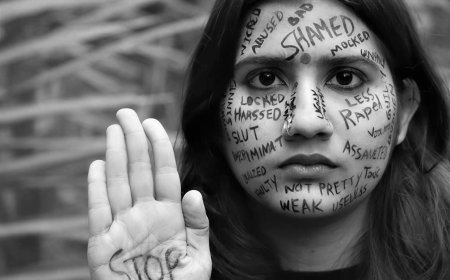
However, the massive scale of state violence, the martyrdom of students, and the persecution of women in mid-July acted as the trigger points, transforming a protest into an Uprising. In the face of such overwhelming violence and oppression, a sense of victimhood-based identity began to form. The shared experience of loss created an us, where grief became an emotional and moral bond, and shared vulnerability became part of the collective. This grief echoes powerfully through countless personal and public narratives from that time.
The simultaneous emergence of pain, mourning, and anger constructed a political and social experience that forged a new sense of collective identity. The intense feeling of brotherhood and sisterhood -- expressed through cries like ‘my brother/sister is dying’ (amar bhai o bonera mara jacche) -- witnessed throughout July and August, was deeply intertwined with that violence, loss, and collective grief. It was precisely this emotional and moral connection that transformed the movement into a mass uprising.
When an uprising of this magnitude unfolds in the streets, mobilization tends to occur spontaneously. Yet we often fail to comprehend the nature of such spontaneity, as our conventional historiography of social and political movements of Bangladesh remains preoccupied with the narratives of leadership, leading to exceedingly rare discussions of spontaneity within intellectual discourse.
Discussions on spontaneity span various schools of thought. Within the Marxist tradition, the debate between Vladimir Lenin and Rosa Luxemburg is particularly notable. Lenin viewed the revolutionary party as the vanguard of the working class -- highly centralized, disciplined, and bureaucratic in form -- who will play their historical role. Rosa Luxemburg, while accepting the need for a party, rejected Lenin’s centralism. She upheld people’s spontaneity, creativity, and democracy as vital forces in political movements.
Anarchist school of thought, meanwhile, regard spontaneity as the very essence of revolution. For them, genuine revolution cannot be imposed from above but must arise from the people’s own direct participation and self-organization. For their vision of a non-hierarchical society, spontaneity is essential, as it ensures coherence between means and ends.
Although mainstream literature has long maintained that large-scale organizations are crucial for social and politicalmovements, the Arab Spring seriously challenged this claim and brought spontaneity back into political discourse with renewed strength. Most scholars agree that the protesters of the Arab Spring were ‘spontaneous, often relying on informal ties among friends and neighbors and sustained by online networks,' rather than by parties or mass organizations. Contemporary political movements and uprisings across the globe compel us to recognize the significance of spontaneity.
In the history of movements in Bangladesh, the question of spontaneity has rarely been taken seriously. Even many leftists involved in partisan politics, influenced by Lenin, tended to view it negatively. While assessing the limitations of the 1969 uprising, they specifically identified spontaneity as one of its shortcomings.
Turning to the July Uprising and contemporary events in Bangladesh, it becomes evident that under the severe repression of the Awami regime, opposition political parties had become almost dysfunctional, pushing “politics” beyond the confines of formal party structures. The Quota Reform Movement and the Road Safety movement confirms that anti-government mobilizations were emerging outside the banners of established political parties.
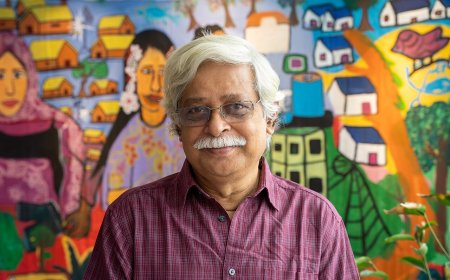
By July 2024, participants in the movement were neither party leaders nor members of any rigid organizational structure. Instead, they engaged in political discussions through verities of medium. When Nahid Islam -- a student representative in the interim government and now leader of the student-led party NCP -- wrote “From Study Circles to Uprising,” he captured this new form of organization.
"Our goal," he said, "was not so much to build an organization, but to create a political space through organizational activity and connect students to it."
Through journals/magazines, reading circles and academic forums, they "were, in fact, fighting."
As observed by the scholars and researchers that, even under authoritarian regimes, informal networks and cultural spaces can provide crucial resources for political engagement -- a phenomenon reflected clearly in Nahid’s account. Although many later identified as members of various political parties, during the July uprising, participants were united not by party affiliation but by a web of diverse social, intellectual, and emotional ties.
Now, when we speak of spontaneity in this context, it does not mean something sudden, accidental, or unprepared. Rather, it refers to a kind of organic, experience-shaped, and collectively nurtured emergence of political action, which can be understood in three interconnected ways.
Firstly, those who joined the July Uprising outside the banners of formal political parties -- whom we term spontaneous participants -- were neither unprepared nor politically naïve. Their engagement stemmed from accumulated experiences in earlier movements. The publication Interview of Fifteen Coordinators, which compiles interviews with private university coordinators, along with FGDs conducted by myself, shows that many students active in July had previously participated in the Quota Reform Movement, the Road Safety Movement, the Anti-Rape Movement, or the No-VAT Movement. For madrasa students, the Shapla Chottor Movement and the Anti-Modi protests served as formative experiences.
Thus, the “spontaneous participation” in July was far from accidental; it reflected continuities in political learning accumulated through successive movements. In its language, structure, and organization, the July uprising bore strong resemblance to the Road Safety Movement.
Secondly, we emphasize spontaneity as a horizontal and decentralized decision-making process. As the movement spread nationwide, it had no central leadership or fixed hierarchy. FGDs in Khulna reveal that local groups independently decided what programs to hold, where to gather, and which institutions to contact. While some announcements came from central channels, decisions were made by small, autonomous groups through local discussion. Networks existed between universities, but there was no centralized command.
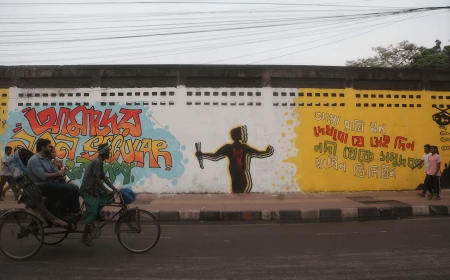
Even when violence escalated, many students on the streets did not know the names of central leaders -- only those who had been martyred, such as Abu Sayed, became symbols of collective grief. No party symbols or portraits appeared; later graffiti commemorated martyrs rather than leaders. The program, not its leadership, was the focus.
This horizontal spirit persisted in the three days following the uprising, when police stations were deserted. Students organized night patrols to protect homes, minorities, and neighborhoods, assigning duties internally without any central coordinator. This collective self-governance, born out of necessity, was a living expression of spontaneity.
Finally, understanding spontaneity requires recognizing not only active protesters but also indirect and inactive participants -- bystanders who, though not on the frontlines, became part of the movement through acts of support. Shopkeepers offered water for free; rickshaw-pullers refused fares; tea stall owners warned of police; residents threw toothpaste from their balconies during tear gas attacks. Social media was filled with videos of ordinary citizens handing water to students from their homes. These small, seemingly apolitical gestures expressed profound collective identification and moral solidarity.
In sum, spontaneity in the July Uprising was not the sudden ignition of unprepared crowds. It was the crystallization of accumulated experiences, horizontal organizational forms, and a diffuse network of solidarity -- blurring the boundary between active protester and ordinary citizen. Social media significantly facilitated this horizontal and spontaneous engagement, serving as an alternative to mainstream media and a vital space for collective expression and coordination.
The discussion of spontaneity might give the impression that the contributions of leaders -- who later emerged as the face of the movement -- are being undermined or denied. This is not the case. Their actions and decisions are undeniably important to the historical record, though that history is yet to be fully written. Many events remain to be unfolded.
My argument is that no uprising or mass movement can ever be fully understood solely through the narration of leaders and their activities. This is a key shortcoming of the dominant historiography of 1971, where history has been reduced to contested versions of leaders’ actions, erasing the stories of popular participation.
Even when ordinary people were interviewed, they were often asked only how leaders’ speeches inspired them -- their testimonies reduced to proof of leadership influence. Diverse forms of participation were eclipsed by a focus on leaders’ words and decisions, treated as the sole markers of historical change.
The intense debates over the “mastermind” or “behind-the-scenes hero” that erupted after the July uprising—and continue today—show that we are still reading this event through the same interpretive lens used for 1971. The very weaknesses that turned that monumental event into a partisan narrative are being re-embraced rather than critiqued. We must instead focus on a more pro-people historiography, one that foregrounds the agency and participation of ordinary people.
Moreover, the spontaneous nature of contemporary movements challenges the traditional notion of revolution as realized through a vanguard party. The spontaneity and horizontality that characterized the July movement reflect a broader global phenomenon. Movements such as Occupy Wall Street, the Arab Spring, the Chilean uprisings, the Sudanese revolution, the Sri Lankan protests, and the Bangladesh July 2024 uprising are structurally and organizationally distinct from twentieth-century revolutions, whether in the 1920s or the 1960s–70s.
In these uprisings, mass participation occurs on an unprecedented scale but outside the familiar frameworks of party-led revolutions. This trend of functioning beyond political parties is labelled by some analysts as 'anti-political,' which is on one hand a rejection of ‘the political’ as the business of party-politics and power struggles, on the other hand, it stands for ‘real democracy.’
Just as the Arab Spring was described as a “revolution without revolutionaries,” these global movements exhibit a similar pattern. Any theoretical understanding of contemporary mass uprisings must therefore take seriously their spontaneity and horizontal character.