

















































The Case for Staying Away
The real question is not why Tarique Rahman has not returned yet. The real question is whether the nation will stay focused on restoring democracy rather than chasing distractions.

Bangladesh stands today at a profound and dangerous crossroads.
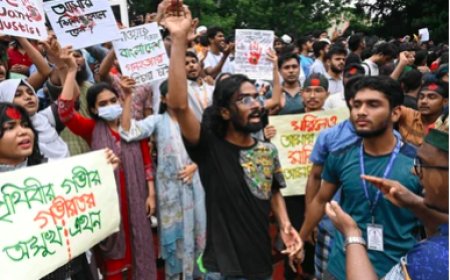
Months after the fall of the Hasina regime, the nation remains suspended between hope and uncertainty. Democracy has not yet returned, the rule of law is still elusive, and citizens continue to live without the safety and stability they were promised.
Amid this uncertainty, one question continues to dominate public discussion: When will Tarique Rahman return -- and why has he not yet come home?
For many, emotions have overtaken reason. Some expected that Rahman would return immediately after August 5.
Others believed he would rush back as his mother, Begum Khaleda Zia faces a life-threatening health crisis. His decision to remain abroad has triggered speculation, criticism, and even personal attacks.
But these reactions often overlook the political reality Bangladesh now faces and the responsible leadership Tarique has demonstrated throughout this historic period.
The truth is far simpler, and far more serious, than the rumors suggest.
His absence is not the result of foreign pressure, personal fear, or calculations of convenience. Instead it may well reflect a strategic, collective decision focused squarely on the future of Bangladesh -- made, as I am given to understand, in full consultation with Khaleda Zia and senior policymakers who understand the gravity of this moment.
Why Timing Matters
Critics accuse Tarique of avoiding risk or abandoning his mother. But those who point fingers will not be the ones harmed by a premature return. Bangladesh is approaching a referendum and elections that will determine whether the democratic transition survives. This is not the moment for emotional decisions -- it is the moment for strategic clarity.
Tarique Rahman’s return is not simply a matter of stepping off a plane. It carries the risk of renewed conspiracies, targeted political retaliation, and destabilization at a critical stage in the national transition. He is not afraid of these threats; he is mindful of their consequences for the wider movement. His patience is not weakness -- it is responsibility.
Some argue that patriotism demands instant return. Yet patriotism is not a performance; it is a commitment to the people’s long-term welfare. The nation should remember a simple truth: A mother is indeed most precious to her child, but to a responsible leader, the future of millions is just as sacred.
Tarique’s delayed return is not a retreat -- it is an act of discipline. It reflects a strategic commitment to ensure that democratic reforms, the July Charter, and the path to free elections proceed without disruption.
Democracy Demands Patience
Bangladesh’s political culture often rushes to judgment. Misinterpretations have flourished -- claims of foreign control, exaggerations about security threats, and wild comparisons to political crises in Pakistan or India. These theories ignore Bangladesh’s current reality and only sow confusion at a sensitive moment.
The real question is not why he has not returned yet. The real question is whether the nation will stay focused on restoring democracy rather than chasing distractions. Elections are coming. Institutions must be rebuilt. The rule of law must take root.
These tasks do not depend on Tarique’s physical presence; they depend on collective discipline and national unity -- principles he has consistently championed. Whether he is in Dhaka or abroad, his leadership continues to guide the movement toward democratic restoration.
Return Is Certain
Tarique Rahman will return. His homecoming is inevitable -- not as a symbolic gesture, but at a moment when it will strengthen, not endanger, the future of Bangladesh. His return will affirm a decades-long commitment to democratic governance, national unity, and the welfare of ordinary citizens.
For now, the nation must rise above rumor and emotion. The priority must be clear: free elections, stable governance, and the rebuilding of democratic institutions. Bangladesh does not need theatrics. It needs responsible leadership.
Tarique Rahman represents precisely that. When the time is right -- and when his return serves the country, not the chaos -- he will come home.
And with that return, a new chapter of democratic hope will begin.
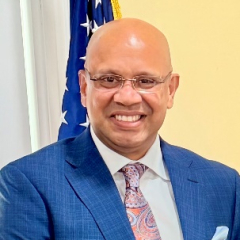
Zahid F. Sarder Saddi is a Bangladeshi politician in exile, humanitarian, and U.S.–Bangladesh relations expert, as well as an advocate for democracy and religious freedom. A former foreign advisor to Prime Minister Khaleda Zia, he has testified before the U.S. Congress and worked with American policymakers and international institutions for over two decades to promote democracy, protect vulnerable communities, and combat extremism.