







































































Societies in Exile: Power, Estrangement, and the End of Universalism
Societies in exile may not yet find their way home. But exile, once recognized, need not end in disappearance. It can become watchfulness, and watchfulness, has often been the difference between mere survival and quiet renewal.


We are living through an age in which societies exist *in exile*-- not displaced geographically, but severed from the structures that claim to represent them.
The paradox is subtle and devastating: the state endures, elections continue, institutions persist, yet society no longer recognizes itself within them.
Power has become abstract, procedural, and increasingly unanswerable, while lived social life has been reduced to noise, data, and partisan alignment.
This is not simply political dissatisfaction. It is a condition of estrangement. Citizens are formally included yet substantively absent.
The social body survives, but its voice does not travel upward; it dissipates into metrics, platforms, and managed outrage. The state governs, but it does not *relate*.
Capital Before Territory: The Older Origin of the Modern State
Long before the contemporary nation-state took its familiar territorial form, a quieter revolution had already occurred. Power had begun to detach itself from land and embed itself in capital.
The British East India Company stands as the clearest early expression of this shift. It did not rule primarily through territorial belonging or social integration, but through finance, trade monopolies, contracts, and coercive extraction. Capital, not community, became the organizing logic of sovereignty.
This was not merely colonial misrule; it was a new political grammar. The Company exercised functions indistinguishable from the state -- taxation, law, military force, without the reciprocal obligations that historically bound rulers to society.
Profit replaced stewardship. Mobility replaced attachment. Abstract calculation displaced moral responsibility. In this sense, corporate sovereignty preceded national sovereignty and quietly shaped its DNA.
The modern nation-state inherited this logic even as it wrapped itself in the language of people, culture, and territory. While sovereignty was rhetorically nationalized, the deeper operating system remained economic.
Capital flows could cross borders more freely than social obligations. States learned to discipline societies in order to remain attractive to capital, rather than disciplining capital in service of society.
This inversion explains much of the estrangement we now experience. The state did not gradually betray society; it was born already divided between its symbolic commitment to the people and its structural dependence on capital.
The East India Company was not an aberration. It was a prototype.
Political Estrangement and the Rise of Partisanship
Multiparty democracy remains essential to the survival of the state. Without pluralism, power calcifies. Yet pluralism, once hardened into permanent partisanship, hollows institutions from within. Loyalty shifts from the institution to the faction; from shared rules to tribal victory.
Partisanship thrives in conditions of estrangement. It offers identity where society no longer offers belonging, and certainty where institutions no longer inspire trust. But in doing so, it dismantles the state–society contract.
Institutions are no longer custodians of a common good; they become prizes to be captured.
Thus the state survives procedurally while dying relationally. Democracy continues, but kinship evaporates. Politics becomes a site of moral war rather than collective maintenance.
The End of Post–World War II Universalism
Mark Carney’s declaration of the end of the post–World War II universal order marks a turning point in how power now understands itself. The system built after 1945 -- anchored in multilateralism, rule-based cooperation, and a belief in shared progress -- was never as universal as it claimed.
Yet it provided a framework within which states could imagine common constraints and shared futures.
That framework has fractured. Economic shocks, climate breakdown, resurgent nationalism, and technological acceleration have exposed its limits.
The institutions of that order were designed to manage recovery and growth--not planetary ecocide, extreme inequality, or algorithmic power. They assumed a world where economic expansion could absorb social conflict and where nature was an infinite backdrop.
Those assumptions no longer hold.
A World Order Unequal to the Age
The prevailing global order is structurally incapable of addressing three defining conditions of our time:
Planetary-scale ecocide:
Environmental destruction is not an externality; it is the operating condition of contemporary growth. Existing institutions lack both the mandate and the enforcement capacity to confront it.
2. Wanton inequality: Inequality is no longer a byproduct of growth but a mechanism of it. Wealth concentrates not despite the system, but because of it.
3. The digital and AI age: Power has migrated to platforms, algorithms, and data infrastructures that operate beyond democratic oversight. These systems shape attention, labour, and truth itself, yet remain politically unaccountable.
The state, caught between global abstractions and local expectations, becomes a manager of decline rather than an architect of futures.
Is This Disenfranchisement New?
Disenfranchisement is not new. For most of history, humans lived under powers they did not author. What is new is the *loss of compensating belonging*. Pre-modern political exclusion coexisted with thick social worlds--village, guild, faith, kinship. Industrial modernity dissolved these, replacing them with mobility, markets, and standardized citizenship.
Alienation thus became functional. A detached individual is easier to govern, easier to move, easier to optimize.
What we face today is the culmination of this process: total abstraction of power, erosion of non-state belonging, and permanent politicization of identity.
Will the Void Collapse?
The question is unavoidable: if the underpinnings of the system are failing, will the void collapse?
Perhaps not in the dramatic sense of rupture. Systems built on abstraction rarely collapse cleanly. They fragment, harden, and persist through inertia. The danger is not sudden failure but prolonged hollowness--a world of functioning mechanisms and exhausted humans.
What may collapse instead is legitimacy. When institutions no longer carry moral weight, they must rely on coercion, spectacle, or exhaustion. History suggests such systems endure for a time, but they do not regenerate.
Bangladesh: Fracture at Close Range
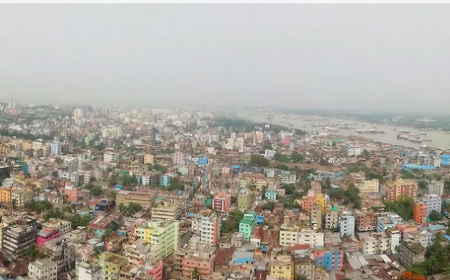
In Bangladesh, the global condition of estrangement reveals itself with particular sharpness. Here, institutional weakness was never fully concealed by abundance or distance.
When Islamist actors publicly denigrate the entire population of working women--naming, shaming, and morally disqualifying them--they are not merely expressing conservatism. They are asserting authority in a vacuum left by the state’s failure to uphold its own principles.
Women’s participation in education, labour, healthcare, and governance has been one of the most stabilizing forces in Bangladesh’s social life.
To delegitimize this participation is to attack the very social tissue that holds the country together. This is not theology reclaiming morality; it is power attempting to discipline society after institutions have lost credibility.
Major political parties bear responsibility for this moment. Their failure is not only one of governance or delivery, but of custodianship. By trampling state principles through corruption, expediency, and partisan capture, they hollowed out the moral authority of institutions.
Once the state ceases to be a trusted arbiter, society does not become neutral--it fragments. Moral absolutism rushes in where institutional legitimacy retreats.
Societies in Exile, Revisited
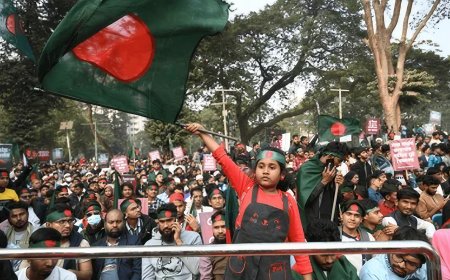
Bangladesh today exemplifies what it means to be a society in exile within its own borders. Citizens remain formally included--counted, polled, mobilized, yet increasingly unrecognized as moral agents.
The state speaks in procedures; society answers in anger, fear, or withdrawal. Between them lies a widening silence.
This condition is not new in history, but it has rarely been so compressed, so intimate, and so difficult to escape. Earlier forms of political disenfranchisement were softened by strong local bonds and shared cultural rhythms. Industrial modernity, and now digital abstraction, have dissolved many of those buffers.
What remains is political loneliness on a mass scale.
Where to Now, St Peter?
Standing before this void, one is tempted to ask the old, almost theological question: where to now, St Peter? If the gates of the old moral and institutional order no longer open, what passage remains?
The answer is unlikely to come in the form of a new universalism or a grand replacement system. The underpinnings are too eroded, trust too thin, language too exhausted. Collapse, if it comes, will not be cinematic. It will be slow, administrative, and quietly cruel.
What may yet endure are smaller fidelities: institutions that refuse total capture, practices that protect dignity without spectacle, forms of kinship that do not seek permission from ideology.
These will not look like solutions. They will look insufficient, local, even fragile. But fragility, unlike abstraction, is responsive to care.
If this is an interregnum -- an age between moral worlds -- then the task is not to proclaim salvation but to prevent total moral desertification. To carry forward the human capacities that systems no longer reward: restraint, responsibility, and care for those made vulnerable by fragmentation.
Societies in exile may not yet find their way home. But exile, once recognized, need not end in disappearance. It can become watchfulness, and watchfulness, in dark passages of history, has often been the difference between mere survival and quiet renewal.
Sujaul Islam Khan is a faculty member in the Department of Architecture, North South University.