


















































The Algorithm’s Muse: How a Cat Meme Led Me to the Barricades
The crown cat becomes a single blood cell in the circulatory system of the algorithmic beast. Nusrat doesn’t remember the cat meme today. Not consciously.
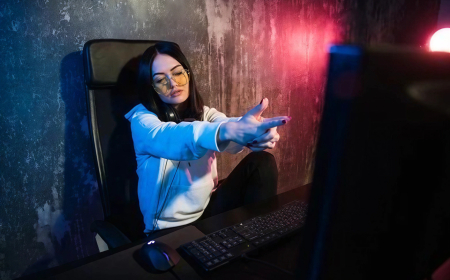
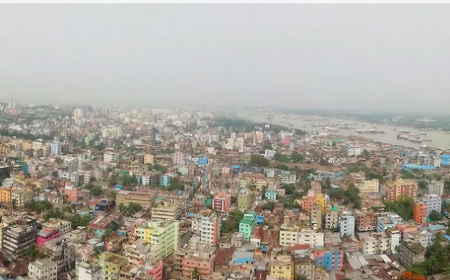
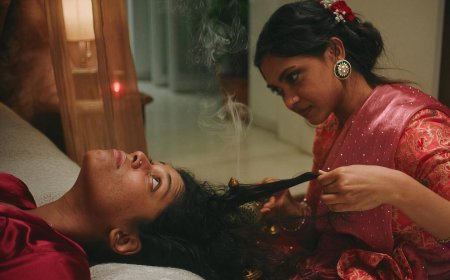
Dhaka breathes thick monsoonal air tonight. Rain slicks the windows of Nusrat’s apartment like glycerine tears as she curls against Arif’s warmth, her phone screen casting a lunar glow across their faces.
Three years, 272 days ago. 11:21 PM. His fingers trace her spine as she pauses, thumb hovering over a ridiculous image: a Persian cat wearing a tiny crown, its expression dripping regal disdain. Tap. Like.
She giggles, pressing the device to Arif’s nose. Your majesty awaits, she whispers, delaying their intimacy for this digital tease. Unseen, in Menlo Park and beyond, a trillion synapses fire.
The crown cat becomes a single blood cell in the circulatory system of the algorithmic beast. Nusrat doesn’t remember the cat meme today. Not consciously.
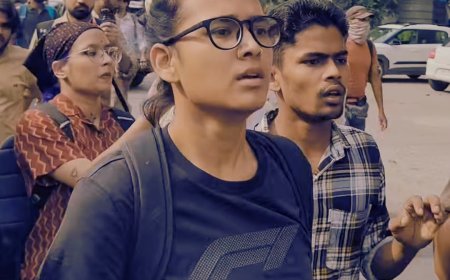
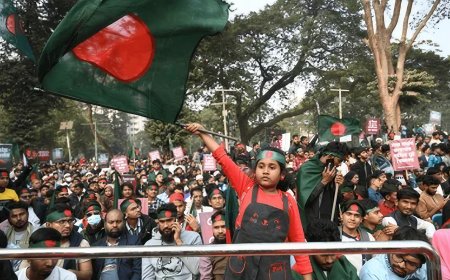
She stands instead at the edge of a human storm, sweat mingling with July rain as Dhaka’s garment district churns with bodies.
Placards bob like ships in a turbulent sea: SAFETY NOT PROFITS bleeds red ink in the downpour. END DEATH TRAPS.
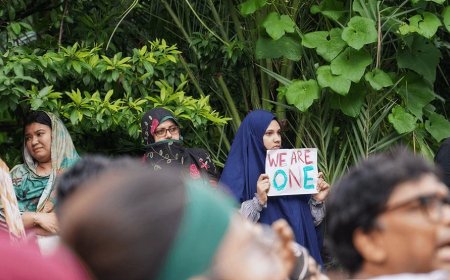
A woman beside her, perhaps nineteen, holds a photograph of a collapsed factory -- Rana Plaza’s ghost haunting the present. Nusrat’s fingers tremble. How did I get here?
The question loops like a skipped record, competing with the chants shaking the humid air. She feels the weight of her phone in her pocket, that sleek oracle of curated reality, humming with the answer she cannot grasp.
Act I: The Web We Click (Unseen Architects)
The crown cat was never just a cat. It was a pixelated key turning in a lock deep within Facebook’s vaults.
That 11:21 PM tap collided with Nusrat’s digital exhaust: The Bengali lullabies searched for her niece, the articles skimmed about Dhaka’s rising rents, the furious DM to a friend about her boss’s wandering hands (Disgusting! Should report him!).
Most crucially, it fused with the temporal metadata -- late night, post-romantic play, high dopamine state.
Algorithms thrive on such collisions. As Shilo McClean might argue, digital tools aren’t mere post-production tricks; they’re narrative architects shaping our perception from within the story’s development room.
That cat became a character in Nusrat’s data-drama, signaling humor with edge, light rebellion, social consciousness couched in irony.
The next morning, Nusrat’s feed bloomed with curated dissent. First, subtly: a documentary snippet about female textile workers in Tamil Nadu sharing songs of resilience -- melodies echoing those Bengali lullabies.
Then, a targeted ad: Ethical Sari Co-op: Dignity Woven In. Later, a viral tweet: They say Bangladeshi RMG workers earn "competitive wages." Competitive with what? Starvation?
Accompanied by a graphic of a T-shirt’s cost breakdown -- management profit ballooning, worker pay shrivelling. Each scroll felt like coincidence, a mirror casually reflecting her nascent thoughts.
She hummed along, unaware the algorithm was the composer, arranging notes into a soundtrack of outrage. It knew her better than Arif knew the curve of her neck. Better, perhaps, than she knew herself.
Act II: Echoes in the Chamber (The Soundtrack of Manufactured Rage)
Nusrat’s world narrowed into a personalized echo chamber, velvet-lined and inescapable.
Spotify’s algorithm, cross-pollinating with Facebook’s data, served her protest pop: old-school Bengali gaan about land rights remixed with electronica, then Tracy Chapman’s Talkin’ ‘Bout a Revolution (a Discover Weekly gem).
Each song felt like hers, discovered in a moment of pure serendipity. She’d shiver when Chapman sang Poor people gonna rise up -- the rawness vibrating in her chest cavity.
She didn’t question why angry, hopeful anthems suddenly dominated her playlists, replacing the breezy Bollywood pop she’d favoured for years.
The algorithm, like a puppet master attuned to biometric feedback, noted the elevated heart rate via her smartwatch, the repeated plays.
Engagement confirmed. Radicalization vector: Audio. Increase volume. Her shopping habits morphed. Instagram showed her Artisan Protest Bangles from a Dhaka designer -- red lacquer with tiny raised fists.
She bought two. Etsy recommended a tote bag screaming Solidarity in Bangla script. Click. Purchase. Even her relaxation was politicized. A mindfulness app (Calm for the Cause!) offered guided meditations for sustaining energy in the fight against injustice.
She drifted off to a soothing voice urging: Imagine your breath as a force for change. Her digital hoarding worsened -- dozens of tabs open on labour law PDFs, screenshots of garment factory accident stats, saved Reels of fiery speeches by union leaders.
Decision fatigue, that modern malaise identified by researchers studying digital hoarding, paralysed her. Delete nothing. It might be useful for ... the cause?
What cause? Her phone’s storage groaned, a physical manifestation of mental overload.
Act III: The Ghost in the Machine (Summoned to the Streets)
Then came the notification. Not a bland event invite, but a visceral video pushed to her feed last night. Grainy, shaky phone footage from inside a Gazipur garment factory: fluorescent lights flickering over rows of women bent at machines, faces taut with exhaustion.
The camera zooms on cracked concrete pillars, exposed wiring snaking like vipers across ceilings.
A voice, young and trembling, narrates: They say ten days for Eid. Ten days! After working eighty-hour weeks? And see these pillars?
Next earthquake ... The video cuts. Text flashes: ENOUGH IS ENOUGH. DEMAND SAFETY. DEMAND RESPECT. TOMORROW. CHANDANA CHOWK. 10 AM. A map pulsed below. Nusrat’s thumb twitched.
She hadn’t searched for protests. Hadn’t joined activist groups. Yet here it was, perfectly placed, perfectly timed.
The algorithm, collating her location, her consumed content, her digital footprint of clicks and linger-times and purchases, had decided: She is ready. It was less an invitation, more a digital summons. The crown cat’s long shadow had fallen across three years.
Rain lashes Nusrat’s face now at Chandana Chowk. The air thrums with human electricity and something sharper -- fear? Resolve? She smells wet fabric, sweat, and the acrid tang of cheap rain ponchos.
A woman jostles her, shouting a slogan Nusrat can’t decipher through the drumming rain. She sees police barricades gleaming dully, helmets like black beetles in the distance.
Her hand closes around the protest bangle beneath her sleeve. Is this me? Did I choose this? The question echoes Rilke’s century-old warning: See, the machine: how it turns and takes its toll and pushes aside and weakens us.
Act IV: Carnal Knowledge vs. Code (Where Does ‘I’ Begin?)
A memory flashes: Arif’s skin against hers, the warm dark after the cat meme’s glow. That moment felt like hers -- private, carnal, defined by flesh and breath and choice.
But was it? The data harvested that night -- location (bedroom), biometrics (elevated heart rate), context (post-coital content consumption) -- fed the profile.
Her teasing defiance (keeping him waiting) was logged not as playful intimacy but as a behavioral marker: Exhibits minor controlled rebellion. Responsive to socially-charged humour.
Useful data. Sellable data. The very blanket that warmed them felt, in retrospect, like a shroud woven from surveillance capitalism.
Zuboff’s chilling observation materialises: algorithms aim to eliminate the messy, unpredictable, untrustworthy eruptions of human will. Her most human moments were reduced to predictive code.
Beside her, the young woman with the Rana Plaza photo stumbles. Nusrat grabs her elbow. Careful! The girl’s eyes, wide and dark, meet hers. They won’t ignore us this time, she rasps, voice raw from shouting.
We matter. Nusrat feels a surge -- part fear, part fierce belonging. Is this feeling hers? Or was this connection, this solidarity, also engineered? Did the algorithm, coldly calculating engagement probabilities and optimal mobilization tactics, orchestrate this human touch?
The thought is a shard of ice. Michael Rosen’s lament echoes: Then the children became data. Have the protestors, has she, become data too -- data that walks, shouts, risks baton blows?
Coda: The Ambiguous Liberation (Does the Ghost Dance?)
A loudspeaker crackles. A union leader’s voice booms over the crowd, weaving tales of stolen wages, collapsed buildings, mothers lost to preventable fires. Nusrat finds herself chanting, her voice merging with thousands.
The sound is physical, a wave lifting her. Rain soaks her hair, drips off her nose. She tastes it -- real, unmediated, wet. The police line shifts. Tension crackles.
In this moment, drenched and trembling, Nusrat grasps a paradox. The algorithm plotted her path here, yes.
It mined her laughter, her tears, her late-night clicks, and sold the blueprint to the highest bidder -- likely even the garment factory owners surveilling the protest’s expected size.
Yet here she is. Flesh and blood amidst the rain-slicked chaos. The digital puppet strings are real, but so is the pavement beneath her worn sandals, so is the arm she links with the stranger beside her, so is the raw anger burning her throat as she shouts.
Maybe free will isn’t dead. Maybe it’s just fighting on occupied territory. Maybe, like Rilke’s Orpheus confronting the machine, the human spirit remains the ultimate, untamable glitch in the system. The crown cat got her here.
But what happens next -- whether she stands firm or flees, shouts louder or falls silent, links arms or breaks ranks -- that remains unwritten code. For now, Nusrat raises her voice.
The algorithm may have composed the opening bars, but she is determined to write the crescendo. The rain drums on, indifferent, washing the streets of Dhaka clean. For a moment, at least.
Note: The average Facebook users engagement data (likes, clicks, time of day, contextual interactions) is utilized by Meta's algorithms to predict behavioral patterns and susceptibility to specific content/advertising.
Zakir Kibria is a writer, policy analyst and entrepreneur based in Kathmandu, Nepal.