



























![A Ledger of the Soul: Navigating the Allah-Bhagavant Nexus in a 19th-Century Puruṣākāra Jñāna Caupara [Gyan Chauper]](https://counterpointbd.com/uploads/images/202608/image_430x256_6a93baa3b09a7.jpg)



















The Digital Jester’s Plea
We need laws that protect us from genuine harm without imprisoning our sense of humour, and platforms accountable to local contexts. Most of all, we must remember that the ability to laugh at power -- cleverly and without fear -- is not a Western import. It is a homegrown, centuries-old Bengali tradition.

Imagine a tweet from a verified, ancient account: “Seeking a skilled cyber-lawyer for my new entourage. The Raja’s court demanded wit; the Digital Raj demands bail. #GopalBharIsNotACybercriminal.”

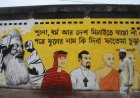
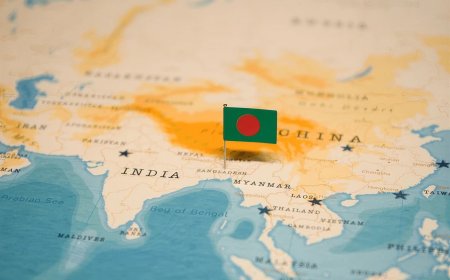
This is not fantasy. It is the reality of Bangladesh’s digital public square, where a case filed on December 1, against satirical platforms like Earki has reignited a fundamental debate. Our folk tales celebrate Gopal Bhar, the cunning jester who punctured royal egos with wit. Today, his digital descendants face police dockets, not laughter. This is more than legal overreach; it is cultural amnesia, severing a vital nerve of social critique that has always held a mirror to power.
From Folk Tales to Facebook
For generations, from the earthy jatra stages to the poems of the Bauls, we have refined the art of the coded critique. This was our everyday resistance, what scholar James Scott calls the “weapons of the weak”-- the subtle, indirect tools used by the less powerful to challenge authority. The sly folk song, the allegorical play, the cartoon in the newspaper: these were our social safety valves, allowing pressure to escape through laughter.
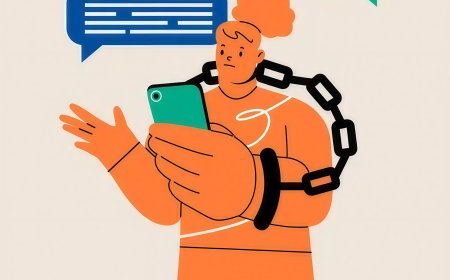
Today, that resistance has evolved. The jatra stage is now the glowing smartphone screen; the folk tale is the viral meme. But the state’s response has shifted from tolerating the jester’s license to deploying the police case. The Digital Security Act, with its notoriously broad provisions, has become the new instrument to silence the digital vidushak. As noted editor Mahfuz Anam has argued, such laws create a “culture of fear” that stifles the critical journalism and expression essential for a democracy.
When Laughter Becomes Evidence
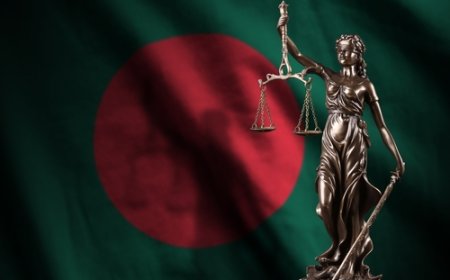
The current case, filed by a Dhaka University student leader, alleges “cyber harassment” over satirical memes. It mirrors a familiar, chilling pattern: the use of broadly-worded cyber laws as tools for harassment. As Supreme Court lawyer Sara Hossain warns, the aim is “to create a fearful environment.” Photographer Shahidul Alam states that silencing such criticism “destroys the mechanism that helps society improve.” This fear has a quantifiable impact: Bangladesh ranks among the world's ten worst countries for fundamental rights, with attacks on free speech and assembly at a record high globally.
The interim government, which rose to power pledging reform, now faces a critical test. While it has taken positive steps, international watchdogs warn its recent legislative moves risk “undermining fundamental freedoms” by replicating the previous regime’s tactics of restricting speech and association. The Committee to Protect Journalists has explicitly urged the government to repeal or amend the very cyber laws used in such cases to protect media freedom.
This contradiction is stark: a government born from the right to question now stands accused of constricting that very right.
Wits, Algorithms, and Global Speech
But this is not a simple, two-sided battle. To view it only as the state versus the satirist is to miss the triangulated, global battlefield. Our digital town square is governed by platforms and algorithms engineered for engagement, not democracy.
A meme is a “weapon of the weak” for the citizen, a data point for Silicon Valley, and, in the hands of bad-faith actors, a potential tool for cognitive warfare. As global experts warn, restrictive digital laws in one jurisdiction can set de facto censorship standards worldwide, creating a race to the bottom for free expression.
The playing field is not level; the state holds the legal cudgel, while other actors manipulate the digital fog.
A Choice for Our Digital Society
So, where does this leave our right to laugh? The choice before our society is stark. We can continue down a path where legal shadows make a nation second-guess its punchlines, where the legacy of a Gopal Bhar is prosecuted into oblivion. This breeds a brittle, fearful public sphere. Or, we can choose to recalibrate, distinguishing between malicious disinformation and satirical speech. Defamation laws have their place, but they must not be a blanket to smother all parody.
The future of our democracy is written in our comment sections and shared jokes.
We must reclaim the space for our digital jatras. We need laws that protect us from genuine harm without imprisoning our sense of humour, and platforms accountable to local contexts. Most of all, we must remember that the ability to laugh at power -- cleverly and without fear -- is not a Western import. It is a homegrown, centuries-old Bengali tradition.
It is time we stopped prosecuting it and started protecting it.
Zakir Kibria is a Bangladeshi writer, policy analyst and entrepreneur based in Kathmandu, Nepal. His email address is [email protected].