




























































Consent, Promises, and the City That Tests Them
Bangladesh has debated itself intensely this season . Now the debate shifts from imagination to implementation. Dhaka is not beyond saving. But it will not be saved by manifestos alone.

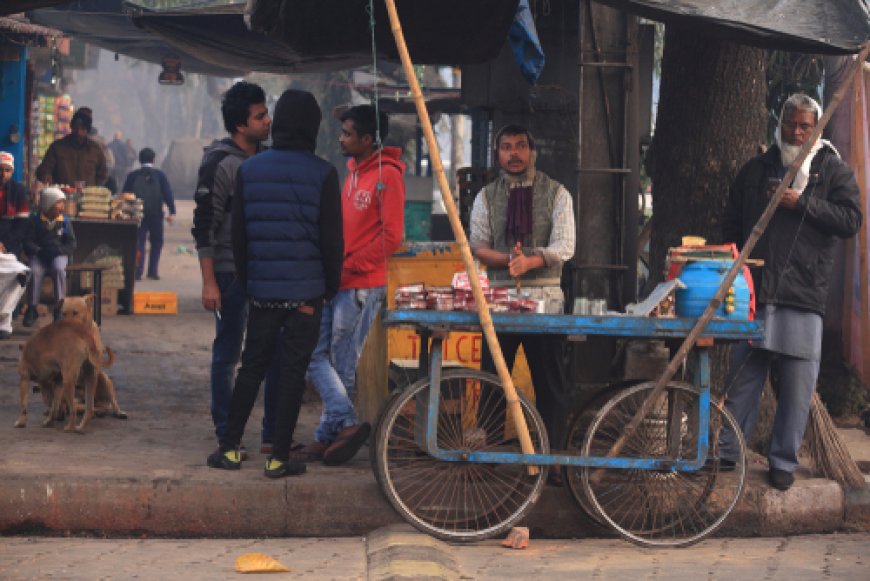
On winter evenings in Dhaka, the city softens for a moment.
Seasonal pitha stalls appear along footpaths and in narrow alleys. Steam rises from bhapa pitha as dusk settles in. Laborers pause after long hours at construction sites. Vegetable sellers warm their hands around cups of tea. Senior officials sometimes pull their cars over briefly on the way home.
Those who grew up in villages but now live in rented city rooms dip chitoi pitha into milk and, for a few quiet minutes, rebuild a rural memory inside an urban life. They try, gently, to pass that familiarity on to children who know the village mostly through stories.
In those moments, Dhaka feels less restless. These stalls are no longer only about food. They are where the country talks to itself. Bangladesh’s most honest political analysis rarely takes place in parliament or television studios.
It happens over tea, beside frying pans, amid smoke and warmth. From global wars to ward-level power struggles, everything enters the conversation. Arguments rise and fall with the steam.
This winter, one subject dominated those informal gatherings: The election and the referendum that accompanied it.
Now the ballots have been cast or are being counted. The season of speculation has ended. What remains is responsibility.
The manifestos that once competed for attention must now face something far more demanding than rhetoric. They must face governance. And the referendum that asked for public consent must now answer a harder question: was that consent truly informed?
Festivity Above, Uncertainty Beneath
In the days leading up to voting, a festive mood was unmistakable. The scent of politics lingered everywhere. Campaign posters, speeches, televised appeals, mosque announcements, billboards, and social media calls for participation created the atmosphere of a national turning point.
It felt historic. It felt decisive. Yet beneath this celebration lay confusion.
On the morning before the vote, an auto-rickshaw driver asked me what “Yes” and “No” actually meant in the referendum. He knew he had to choose one. He knew it mattered. But he did not know what would structurally change if “Yes” prevailed, or what would remain if “No” did.
Later that evening, a rickshaw puller told me he would not vote at all. His home is in Bhurungamari of Kurigram. Travelling there would cost him 1,500 to 2,000 taka, not including lost wages. Returning empty-handed after visiting relatives would carry its own social expectation. For him, voting was not simply civic duty. It was an economic calculation made after a long day of physical labor.
These are not isolated stories. They reflect a deeper democratic gap, one that is easy to overlook in moments of political excitement.
Political parties mobilized. They urged participation. They campaigned for approval. But mobilisation without explanation does not build democratic understanding. Consent without clarity becomes procedural rather than meaningful. A tick mark on a ballot cannot replace comprehension.
A survey by the Bangladesh Enterprise Institute suggested that only around 40 percent of the population was aware of the referendum date. Many expressed optimism about the country’s future, yet lacked clear knowledge of what exactly was being decided.
The July Charter, developed through discussions within the Consensus Commission, contained 47 constitutional reforms and 37 legal and regulatory reforms. That is not a minor adjustment to governance. That is structural redesign. Yet public campaigning largely highlighted only a fraction of these. The ballot itself presented just four summarized points.
The scale of reform was vast. The clarity of explanation was limited. In a democracy, consent is legitimate only when it is informed. Otherwise, it risks becoming a ritual rather than a decision.
The Battle of Manifestos
Beyond the referendum question, this election cycle was marked by an unusual seriousness toward political manifestos. Across tea stalls, political platforms were debated with surprising attentiveness. People may not quote documents line by line, but they sense patterns. They know which promises feel recycled and which attempt something new. They instinctively ask questions that are sharper than any televised debate.
Does this party understand how power actually works?
Do these promises touch real lives?
Who will be accountable when winter passes?
This election unfolded in the shadow of the July Uprising, a rupture that nearly every party felt compelled to address. It was not just another electoral cycle. It was framed as a correction, even a reset.
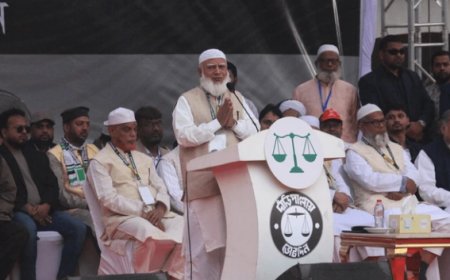
Bangladesh Jamaat-e-Islami presented a 41-point manifesto rooted in Islamic principles of justice and moral governance, framing politics through concepts such as insaf and social harmony while advocating proportional representation and technological reform.
The National Citizen Party, emerging from the student movement, offered a 36-point manifesto of Youth and Dignity. Its language centered on systemic redesign. A proposed Second Republic, digital accountability tools such as the Hisab Dao portal, GPS-tracked ambulances, mandatory undergraduate internships, diaspora engagement frameworks, and measurable tax reform targets reflected a belief that institutions can be engineered toward transparency.
The Bangladesh Nationalist Party structured its platform around nine core promises, later expanded into 51 points under the banner Bangladesh First. Its proposals leaned toward corrective reform, including family cards in women’s names, farmer loan waivers, expatriate recognition, anti-extortion hotlines, and other instruments of repair rather than structural overhaul.
Jatiya Samajtantrik Dal’s 10-point agenda went further, proposing federalism with nine provinces, a bicameral parliament, and formal worker representation.
The Democratic United Front emphasized labor rights, decentralization, cultural freedom, and grassroots democracy.
Despite ideological distance, similarities were striking. Justice and accountability dominated nearly every platform. Prosecution of past abuses, judicial reform, anti-corruption mechanisms, and institutional transparency recurred across documents. Job creation, SME expansion, agricultural modernization, inflation control, migrant training, universal healthcare, expanded social protection, and environmental resilience appeared again and again.
On paper, the country imagined transformation. Bangladesh’s tax revenue remains around nine percent of GDP. Fiscal constraints are real.
Constitutional restructuring is complex. Yet many proposals, including digital transparency portals, youth training programs, migrant skill development, and social protection cards, require political will more than new technology.
The ideas exist. The question is execution. But Dhaka waits quietly to judge.
The City That Tests Every Promise
Bangladesh’s political imagination often floats above its hardest city. Dhaka absorbs every failure of governance and magnifies it. Traffic congestion, bus syndicates, unsafe transport, housing shortages, waterlogging, fire hazards, hospital chaos, extortion networks, and pollution are not abstract policy debates. They are daily experiences.
And yet the most obvious crises remain strangely absent from serious manifesto confrontation. Major bus terminals still choke the capital. Illegal truck stands operate openly. Fare hikes arrive without service improvement. Reform announcements fade into routine disorder.
There is an old saying in Dhaka that if traffic and public transport were fixed, much of the city’s suffering would ease.
The fact that no major platform squarely confronted this structural dysfunction reveals something uncomfortable. Governance often fails not because ideas are missing, but because disorder benefits someone. Those who design policy rarely endure its daily consequences.
Dhaka is the final audit of every manifesto. It does not read policy documents. It measures results.
Representation and Exclusion
The referendum raised another structural question: Who truly gets to participate?
Postal voting expanded significantly, including for overseas citizens. Yet many low-income workers, informal laborers, and less educated citizens lacked both awareness and access. Smartphone penetration is high, but civic literacy remains uneven. Technology exists, but understanding does not automatically follow.
In Bangladesh, participation often carries financial cost. Lost wages. Travel expenses. Social obligations. For many, voting competes with survival.
A democracy that requires sacrifice from the poor but not from the powerful risks reproducing inequality at the ballot box.
Other democracies have treated accessibility as design rather than afterthought. Community-based voter education, simplified explanations, side-by-side comparisons of policy consequences, flexible voting mechanisms, and protected time off work are not luxuries. They are democratic infrastructure.
Accessibility is not charity. It is responsibility.
After the Ballots
Whether the results are still being counted or already declared, one reality remains unchanged. Now comes governance.
If justice mechanisms stall, if corruption persists, if traffic remains immovable, if public transport stays unsafe, if hospitals remain chaotic, if the capital continues to flood and burn and suffocate, then no number of manifesto points will matter. If the referendum’s reforms are implemented transparently and explained continuously, legitimacy may deepen. If they remain abstract, legitimacy may thin.
Dhaka does not respond to rhetoric. It responds to order.
The winter tea stalls will continue to host conversations. Citizens will remember who explained clearly and who relied on slogans. They will remember whether promises translated into drains unclogged, buses disciplined, courts strengthened, and wages protected.
Bangladesh has debated itself intensely this season in tea stalls, in rickshaws, in campaign rallies, in billboards, and in whispers.
Now the debate shifts from imagination to implementation.
Dhaka is not beyond saving. But it will not be saved by manifestos alone. It will be saved only when politics chooses order over profit, citizens over convenience, and accountability over improvisation.
Until then, the city will keep speaking in traffic jams, in flooded streets, in burning buildings, and in exhausted lives, long after election documents fade from memory. And in the quiet warmth of winter evenings, over pitha and tea, Bangladesh will continue to judge itself.
Nafew Sajed Joy is a writer, researcher, and environmentalist. He can be reached at [email protected].