































































Putting Bangladesh First: Two Leaders, One National Duty
In an era of polarized discourse and manufactured divisions, Dr. Yunus and General Waker-uz-Zaman showed us the path forward: Humility in the face of criticism, prioritization of the nation over self, and relentless pursuit of reform and justice.
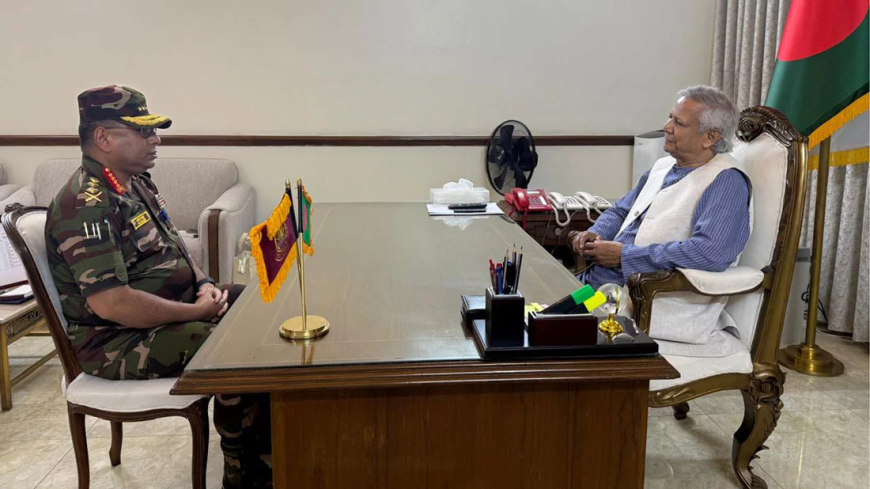
The people of Bangladesh owe a profound debt of gratitude to Dr. Muhammad Yunus and General Waker-uz-Zaman for their steadfast leadership during one of the most turbulent and challenging periods in our nation’s recent history. Following the July 2024 uprising that led to the resignation and flight of the previous prime minister, Bangladesh faced chaos, violence, economic devastation, and a barrage of misinformation and disinformation, much of it originating from sources in both India and within Bangladesh itself.
Online trolls, print media outlets, and self-proclaimed political analysts relentlessly attacked these two leaders, spreading rumors, fabricating narratives, and attempting to sow division between them. Yet the effort to drive a wedge between them repeatedly failed. Both men rose above ego and noise, placing Bangladesh first.
Their example offers a lasting lesson: True leadership requires sacrifice, restraint, and an unwavering commitment to the public good.
Professor Yunus, a Nobel Peace Prize laureate globally known for pioneering microcredit through Grameen Bank, accepted the role of Chief Adviser at a moment of extraordinary uncertainty. His sacrifices were immense: Returning from abroad at the request of student leaders amid uncertainty, facing relentless personal attacks (including long-standing legal harassment from the prior regime), and shouldering the burden of guiding a nation through transition without prior governmental experience.
The interim administration he led focused on three core duties: reform, justice, and elections.
Despite immense pressure, the interim government stayed focused on execution. Reforms moved from announcement to implementation, anchored by the July Charter and a broader package of legal and administrative changes aimed at strengthening institutions, safeguarding rights, and ensuring past abuses such as enforced disappearances and extrajudicial practices never recur.
The agenda also advanced protections for women and children, reinforced labour dignity, and emphasized accountability and national memory as essential to democratic renewal.
Internationally, the interim government sought to restore sovereignty, national interests, and dignity as guiding pillars of external engagement, explicitly rejecting a posture of dependence in foreign policy. It also advanced a long-run competitiveness strategy built on connectivity and logistics, including raising port efficiency toward global standards and expanding maritime and blue economy potential.
On the Rohingya crisis, Professor Yunus said Bangladesh succeeded in bringing the issue back to the center of global attention, referencing renewed UN engagement and a dedicated international conference.
A major economic diplomacy achievement during the transition followed Washington’s initial decision to set a 37 percent reciprocal tariff on Bangladeshi goods under its new tariff regime. The interim government negotiated a reduction to 20 percent in August 2025, and then to 19 percent under the February 9, 2026 reciprocal trade framework, including a zero-tariff mechanism for qualifying textile and apparel exports.
Another understated achievement of both the interim administration and the armed forces was their refusal to dignify professional provocation. A small online ecosystem thrives on insinuation and monetized outrage, not verification. The most telling response from those responsible for governing was institutional indifference.
The interim authorities and the security establishment did not publicly elevate them, even as they repeatedly hinted at insider influence and privileged access. That silence was not hostility. It was judgment.
Crucially, Dr. Yunus broke Bangladesh out of long-standing Indian dominance in foreign affairs. For the first time in years, we engaged India as an equal partner, not as a satellite state. He asserted that bilateral ties must be based on equity and fairness, pursued diversified partnerships (including closer engagement with China and Pakistan), adopted a more assertive stance on border and trade issues, and prioritized Bangladesh’s independent interests over one-sided dependencies.
Despite strains and rhetoric from both sides, this shift restored national dignity and positioned Bangladesh as a sovereign actor in regional diplomacy. These accomplishments, forged amid immense pressure, reflect Dr. Yunus’s integrity and dedication to a more just, humane, and democratic Bangladesh.
General Waker-uz-Zaman, as Chief of Army Staff, played a pivotal role at the moment of national rupture and throughout the transition. In his first major interview with Reuters in September 2024, he pledged full support to the interim government and tied the military’s posture to completing reforms and returning the country to electoral democracy within 12 to 18 months, emphasizing the need for free and fair elections and a professional, depoliticized military. He later reiterated publicly that the armed forces would provide all-out support for a free, fair, and peaceful election.
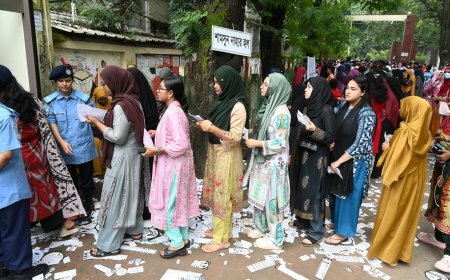
He ultimately delivered on that promise in the February 12, 2026 national election. Reuters described the vote as the country’s first competitive election since 2009, a decisive step toward restoring stability after prolonged unrest.
The election moved forward in a politically charged environment shaped by the Election Commission’s suspension of the Awami League’s registration, a decision that effectively barred the party from contesting and followed intense street pressure and a broader clampdown on the party’s activities. Whatever one’s view of that exclusion, the Army chief accepted the prevailing political reality, avoided institutional brinkmanship, and prioritized an orderly, credible vote over ego.
The country received what it needed most at that moment: A completed transition to an elected government.
The Bangladesh Army’s conduct while deployed over the entire 18-month interim period was remarkable. Under General Waker-uz-Zaman’s command, the forces demonstrated exemplary professionalism, restraint, and humanity. Their way of engaging with mobs, media, and ordinary citizens should be remembered: They acted as protectors rather than oppressors, facilitated dialogue amid tension, upheld law and order without excessive force, supported reforms and the transition to democracy, and remained steadfastly apolitical.
This approach earned widespread respect and helped rebuild public trust in institutions during a fragile time. We extend our best wishes to General Waker-uz-Zaman and the men and women of the Bangladesh Armed Forces for the remainder of his tenure and for their future service to the nation, in peace and in duty.
The synergy between these two leaders, despite occasional reported differences, was evident in their mutual cooperation, courtesy meetings, and shared focus on national recovery. They demonstrated that collaboration across civilian and military spheres, grounded in patriotism, can overcome even the deepest crises.
In an era of polarized discourse and manufactured divisions, Dr. Yunus and General Waker-uz-Zaman showed us the path forward: Humility in the face of criticism, prioritization of the nation over self, and relentless pursuit of reform and justice. Their leadership not only steadied Bangladesh through misinformation storms and internal turbulence but also laid the groundwork for a stronger, more accountable democracy.
As we move into a new chapter, let us honor their service by emulating their example, putting Bangladesh first, always. Thank you, Dr. Yunus and General Waker-uz-Zaman, for your extraordinary leadership, sacrifices, and enduring legacy.
Mirza Ahmad is an independent writer with a strong interest in politics, religion, and human rights. A graduate of the University of North Carolina at Charlotte, he brings a nuanced perspective to pressing global and regional debates.