






































![A Ledger of the Soul: Navigating the Allah-Bhagavant Nexus in a 19th-Century Puruṣākāra Jñāna Caupara [Gyan Chauper]](https://counterpointbd.com/uploads/images/202608/image_430x256_6a93baa3b09a7.jpg)


















What Nelson Mandela’s Truth and Reconciliation Offers Bangladesh Today
South Africa’s experience shows that legitimacy depends on perceived impartiality and transparency from day one. For a country at the crossroads, that is an invitation worth considering.
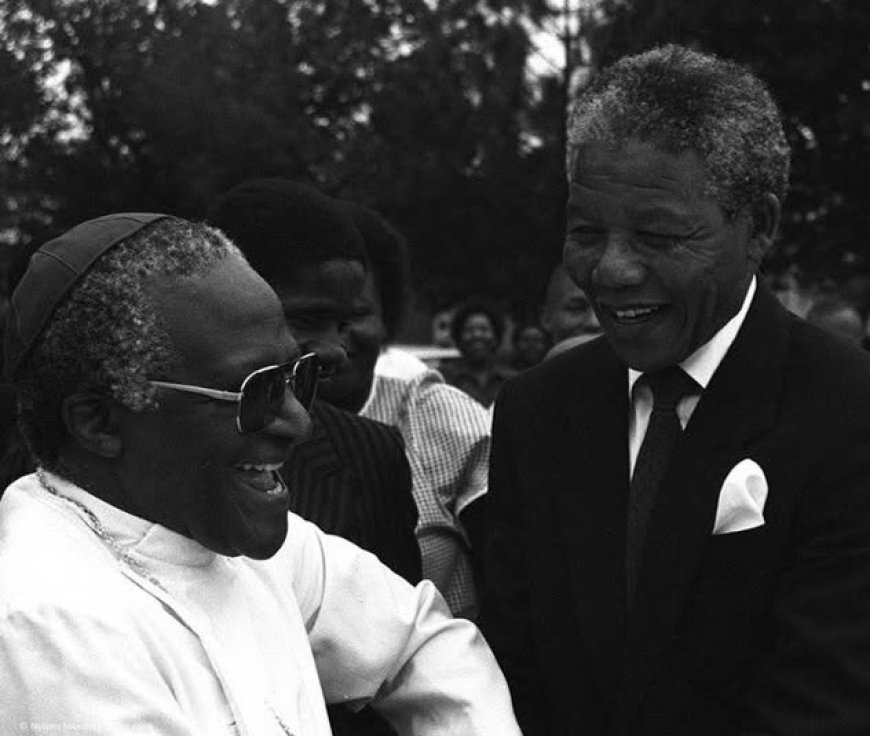
When Nelson Mandela and Archbishop Desmond Tutu steered South Africa toward a Truth and Reconciliation Commission (TRC) in the 1990s they were answering a basic question: How does a deeply divided society confront mass injustice without sliding into permanent cycles of revenge?
The South African model privileged public truth-telling, official recognition of victims’ suffering, and a restorative, not purely retributive pathway to national healing. Its aim was not to erase accountability but to transform how a nation remembers and moves forward.
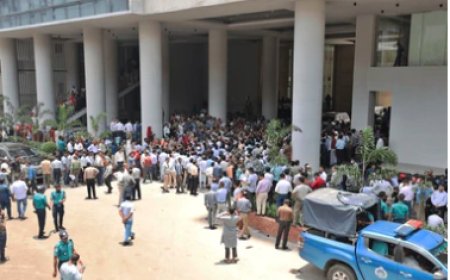
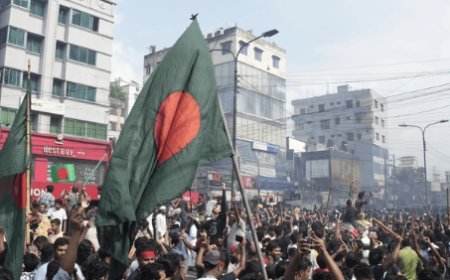
Bangladesh now stands at a comparable historic hinge. The dramatic events of July-August 2024, widespread street protests, heavy repression and the resignation and flight of Prime Minister Sheikh Hasina, left the country badly fractured: Grieving families, jailed and displaced citizens, politicized institutions, and an anxious public yearning for clarity and justice.
Independent observers documented large-scale arrests, hundreds of deaths and deep human-rights concerns during the unrest. That moment of rupture presents an agonizing choice: Pursue an exclusively punitive course that could further polarize a fragile polity, or design a carefully calibrated process that uncovers the truth, acknowledges victims, and builds shared ground for lasting democratic governance.
South Africa’s TRC does not offer a perfect blueprint, it left “unfinished business” and many victims dissatisfied, but its core lessons are strikingly relevant: Truth matters, recognition matters, and process matters.
What, concretely, could truth and reconciliation look like for Bangladesh?
A National Independent Commission With A Narrow Public Mandate:
Any credible commission must be institutionally independent, representative of Bangladesh’s diverse social and political fabric, and empowered to collect testimony publicly and in private. Its terms should be clear about the timeframe, the kinds of violations under review, protections for witnesses, and whether conditional amnesty is on the table.
South Africa’s experience shows that legitimacy depends on perceived impartiality and transparency from day one.
Prioritize Victims’ Voices and Public Truth-telling:
For many families the first demand is to know what happened to their loved ones. Public hearings, where victims can tell their stories and have them recorded in the national archive, create a shared factual record that is harder to contest or erase. This symbolic recognition is essential to restoring dignity and can reduce the psychological and political power of competing narratives.
Combine Restorative Measures With Selective Criminal Accountability:
Mandela’s TRC allowed for conditional amnesty in exchange for full, verifiable disclosure, a controversial but intentional trade-off designed to pull facts into the open and avoid wholesale obstruction by powerful actors.
Any Bangladeshi adaptation would need strict safeguards: Amnesty, if considered, should be limited to politically motivated acts that are fully disclosed and corroborated; crimes such as genocide, crimes against humanity, or clearly documented murder should remain prosecutable.
This hybrid maintains prospects for reconciliation while protecting core principles of justice.
Justice and Constitutional Development :
Reparations And Institutional Reform.
Truth without remedy risks hollowing out reconciliation. A credible process should recommend reparations; financial, symbolic, and community-based and map concrete institutional reforms (police, prosecution, intelligence, and judicial protections) to prevent recurrence.
South Africa’s TRC produced a reparations program and a long list of institutional reforms; many remain only partially fulfilled, but the recommendations provide a roadmap.
Security-Sector Buy-In and Nonviolence Commitments:
The decision by Bangladesh’s military leadership in 2024 not to open fire on protesters, widely reported during the fall of the previous government was decisive in averting even greater bloodshed. Any reconciliation architecture should secure explicit commitments from the security sector to civilian control, human-rights compliance, and cooperation with truth-seeking mechanisms.
A security sector that refuses to be part of the national truth process will undermine its prospects.
International Observation, But Local Ownership:
External actors can lend expertise, legitimacy and protection for witnesses, yet lasting reconciliation must be locally authored. International partners (regional states, UN bodies, reputable NGOs) can advise and monitor, but the final shape should be Bangladeshi; conceived, administered and owned by its people.
Why move in this direction now? Because leaving wounds unaddressed invites cycles of grievance that poison civic life and make democratic recovery much harder.
A transparent truth process would not magically erase political differences; rather, it can replace competing conspiracies and selective memories with an authoritative account, provide a forum for dignified redress, and clear room for political competition within rule-of-law bounds.
Such a path would also help reassure international partners and investors that Bangladesh seeks stable, accountable governance as it rebuilds. Recent national elections and referenda underscore the urgency of creating a political environment where participation is meaningful and disputes are resolved within institutions, not on the streets.
A Final Caveat: No Model Is Plug-And-Play
South Africa’s TRC achieved important symbolic gains, but critics rightly point to unmet promises; insufficient prosecutions, delayed reparations, and persistent inequality.
Bangladesh must study those shortcomings and design safeguards: Legal follow-through on recommendations, timelines for reparations, robust victim support, and mechanisms for independent monitoring of implementation.
In the end, truth and reconciliation are not a shortcut or a cover for impunity. They are a deliberate set of trade-offs; painful, imperfect, but potentially transformative that ask a nation to place collective truth and a shared future above instant retribution.
For Bangladesh, still healing from the upheavals of 2024, embracing a carefully designed truth process could be the first, difficult step toward knitting back the social fabric: Restoring dignity to victims, clarifying the historical record, and giving political life the breathing room it needs to return to democratic competition rather than factional animus.
If Bangladesh opts for that path, it will require political courage, sustained civil-society pressure, and international support; in short, leadership that thinks generations ahead. Nelson Mandela’s legacy is not a prescription so much as a moral problem-solving method: Confront the past honestly, prioritize victims’ dignity, and bind the nation by the hard work of shared remembrance.
For a country at the crossroads, that is an invitation worth considering.
Bangladesh, a country blessed with enormous opportunities and possibilities, deserving a respectable place globally, must think seriously to increasingly reduce the existing sharp division in the society towards building a New Bangladesh to realize its true potential before it's too late.
We must demonstrate that the Rule of Law shall prevail under any circumstances based on an Independent Judiciary.
A Gafur is a private sector professional and writer.