




































































Trump’s Second-Term Foreign Policy and the Remaking of Global Order
The question now is not only how America will wield its power, but how the rest of the world will respond to a superpower increasingly guided by transactional interests rather than shared norms.
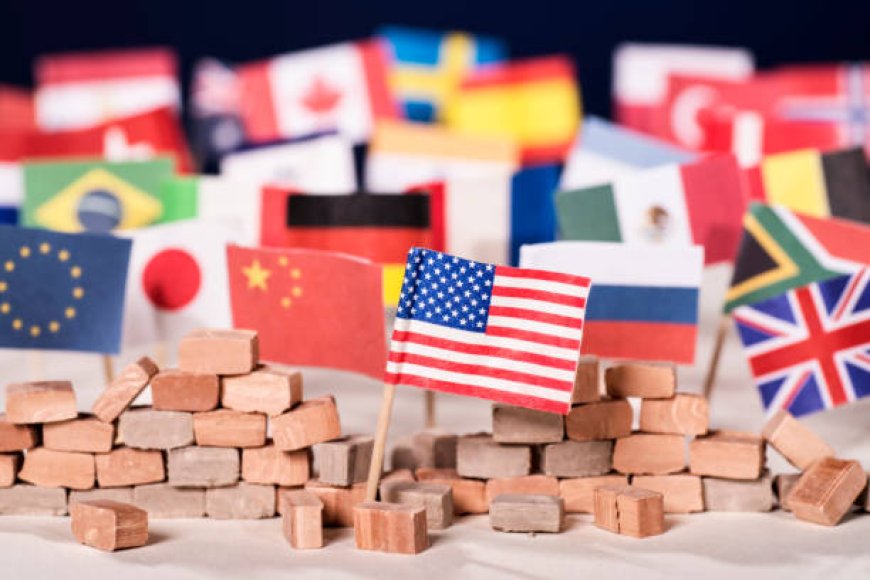
The United States has been viewed as the pre-eminent global power and principal architect of the post-Cold War international order for much of the modern era.
Yet recent moves under President Donald Trump’s second administration suggest a significant shift away from traditional multilateral leadership toward a more transactional and unilateral foreign policy.
Washington appears to be redefining diplomacy around its own national interests rather than collective global norms through the use of tariffs, economic sanctions, and visible military posturing.
Trump’s foreign policy has emphasized decisive action designed to secure American interests in dealing with conflicts in the Middle East to disputes in Latin America and strategic tensions with allies in Europe.
US Support for Israel’s interests and regional strategy, efforts to reshape trade relationships, economic and trade sanctions, pressure campaigns against Cuba and Venezuela, and tough bargaining with partners over territory and defence contributions collectively illustrate a doctrine centered on economic leverage and military deterrence-strategy that President Trump adopted in his second term.
There are widespread criticism centering this approach; this is provocative and risks undermining the cooperative foundations that sustained global stability for decades. Trump supporters counter that it reflects a pragmatic recalibration of American priorities in an increasingly competitive world where national interests and projection of power dominate the international landscape.
Either way, Trump’s policies display a clear ideological departure from the period when Washington portrayed itself as the guarantor of a rules-based international system.
The 2025 US National Security Strategy formalized this shift by prioritizing sovereignty, economic security, and strategic competition over expansive commitments to international law or global policing.
Under this framework, foreign policy tools have become increasingly direct: tariffs to secure favourable trade outcomes, sanctions to influence adversaries’ behaviour, and the continued projection of military strength to deter rivals-examples of Greenland and Venezuela have been in international focus.
Two pillars underpin this strategy.
First is the emphasis on overwhelming military capability. Trump Administration’s proposals to raise defence spending toward roughly six percent of GDP hint an intention to reinforce American dominance in an era of renewed great-power competition.
The United States remains the largest military contributor within NATO and continues to maintain troop deployments across multiple continents, underscoring its unmatched global reach even as relations with some allies grow strained.
The second pillar is economic statecraft. Trade and tariffs have become central instruments of diplomacy, used not only to address trade imbalances but also to advance broader geopolitical goals.
Washington has leveraged sanctions and market access to restrict adversaries’ oil revenues especially China, Iran and Russia, discourage strategic cooperation among rivals, and influence issues ranging from energy markets to anti-drug initiatives.
Such policies demonstrate a belief that economic pressure can be as decisive as military strength in shaping global outcomes and realization of national interests.
In the Middle East, Trump has reaffirmed strong support for Israel, backing regional initiatives designed to counter adversaries and revive normalization frameworks such as the Abraham Accords.
Arms agreements with Gulf partners and continued pressure on Iran’s nuclear ambitions illustrate Washington’s reliance on security alliances and economic inducements to maintain influence.
At the same time, the administration’s departure from earlier U.S. commitments to a two-state solution and its stance on Jerusalem have drawn criticism from those who argue that American diplomacy is losing its balancing role in regional peace efforts especially the Middle East.
Latin America has also experienced the effects of Washington’s harder line. Increased pressure on Cuba through energy restrictions and economic sanctions has exacerbated tensions, while U.S. warnings to Colombia over counter-narcotics performance have produced a relationship characterized by caution rather than confrontation.
Policies aimed at Venezuela’s oil trade and leadership disputes further demonstrate the administration’s determination to keep the Western Hemisphere within what many interpret as a revived Monroe Doctrine framework.
All these moves have resulted in a growing complex relations with allies. The administration’s willingness to impose tariffs on partners and its renewed interest in strategic territories such as Greenland have prompted concern in Europe about the durability of traditional alliances.
Although the United States remains NATO’s dominant military power, some European leaders worry that an “America First” doctrine could weaken collective security arrangements or shift defence burdens more aggressively onto partners.
Globally, Trump’s approach has accelerated debate about the future of multilateral institutions and the durability of the rules-based order. Some countries are exploring alternative alliances or new trade arrangements to reduce reliance on Washington.
Initiatives within BRICS economies to diversify away from the U.S. dollar reflect these ambitions, though the dollar continues to dominate global finance and remains the world’s primary reserve currency.
Meanwhile, looming strategic risks underscore the stakes of this transitional moment. The expiration of the New START Treaty in February 2026, which limited nuclear arsenals held by the United States and Russia -- together accounting for roughly 90% of the world’s nuclear warheads -- raises fears of renewed arms competition if a replacement agreement fails to emerge.
Such developments could compound geopolitical tensions already heightened by unilateral policies and strategic rivalries.
Proponents argue that Trump’s blunt and sometimes undiplomatic style delivers tangible results by forcing adversaries and allies alike to renegotiate longstanding arrangements.
Critics warn that a world shaped primarily by coercion and economic pressure risks eroding trust, weakening institutions, and leaving smaller states vulnerable to the ambitions of larger powers.
The perception that rules can be set aside in favour of unilateral action has already prompted calls for new “middle-power coalitions” aimed at preserving strategic autonomy.
Whether one views these developments as pragmatic realism or disruptive nationalism, it is clear that American foreign policy is undergoing a profound transformation.
The long-standing image of the United States as a consensus-builder is being replaced by that of a power willing to use every instrument -- military, economic, and diplomatic -- to secure advantage in a competitive world.
As nations reassess alliances and institutions struggle to remain relevant, the international system stands at a crossroads. The question now is not only how America will wield its power, but how the rest of the world will respond to a superpower increasingly guided by transactional interests rather than shared norms.
The outcome will shape global stability, sovereignty, and the future architecture of international order for years to come.
Mustafa Kamal Rusho, a retired Brigadier General, is a Research Director in Osmani Centre for Peace and Security Studies.